
The Middle of the Table
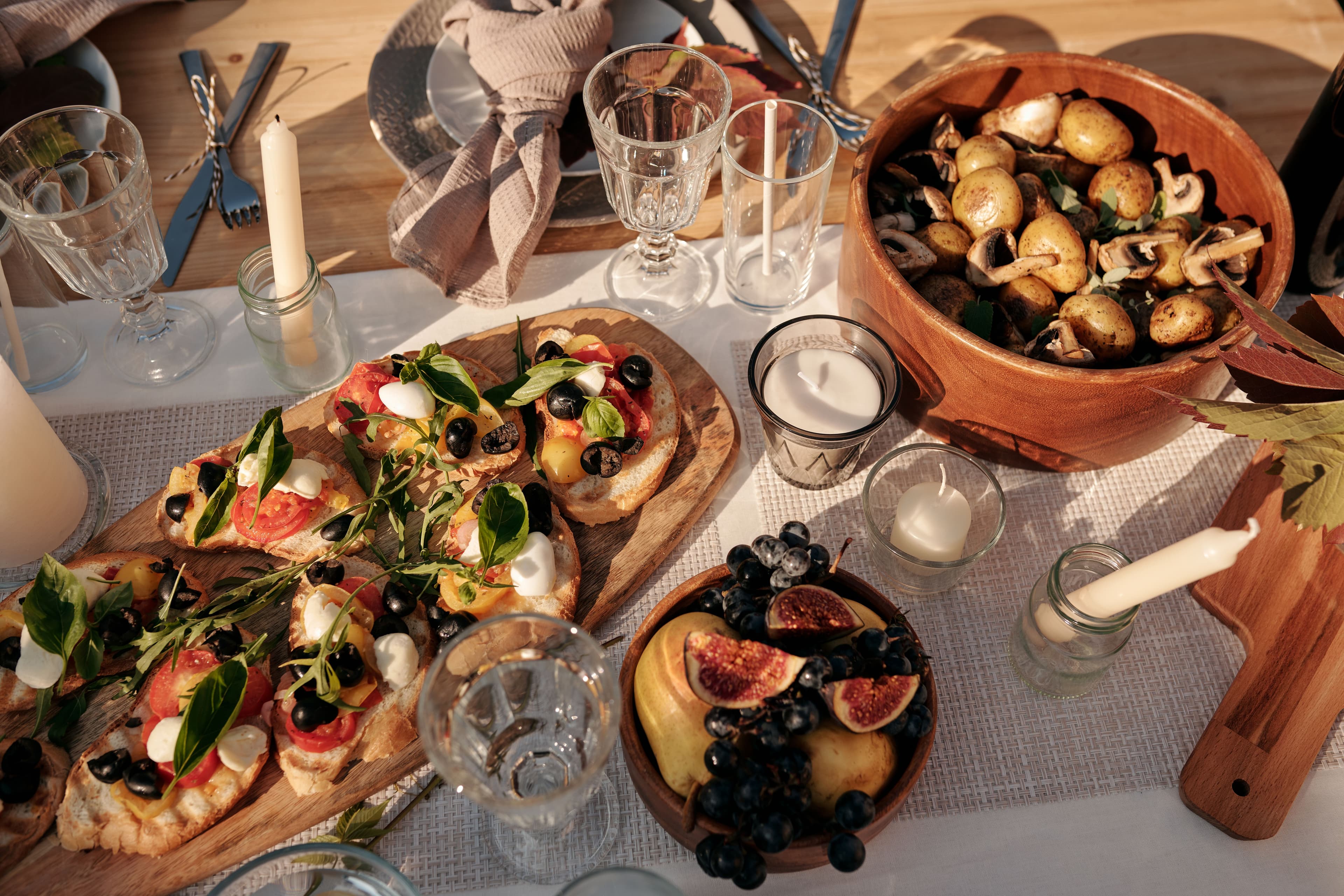
Plates, glasses and forks all have an owner. The middle is the part of the cloth that belongs to everyone.
Everything on a laid table has been given to somebody. The plate, the glass, the fork and the folded napkin sit at a particular place, and no one else would think of reaching for them. What lies between the places, the stretch of cloth nobody was assigned, belongs to the whole table, and a good deal of a meal is conducted there.
It is worth noticing, because the middle is usually either what the host has thought about most or what they have thought about least. It holds an arrangement, meant to be admired, or whatever was put down last: the post, a bottle, the salt. It is seldom treated as a place with work to do.
What passes through it
Almost everything of consequence at a meal passes through the middle. The butter travels along the row. Someone lifts the jug and fills the glass beside them, then the next, and the water stops belonging to any particular glass. Bread goes round, is torn, and goes round again. Someone says, have you had any of this? and moves a dish an inch towards the person who hasn't.
That inch is most of what hospitality amounts to at a table. In many shared meals the middle is where nearly the whole meal lives, set down in the centre and taken from by everyone, with the individual plate no more than somewhere to rest things for a moment. Where plates are private, the middle keeps something of that arrangement. It is the one part of the table where, for minutes at a time, people are looking after each other without having decided to.
It is also where the small manners live: the hand that waits while someone else helps themselves first, the after you over the last piece, the question of whether to reach or to ask. Most people know these without being able to say where they learned them.
What belongs there
The usual answer to what goes in the middle is a centrepiece, and a centrepiece is something to look at. A better test is whether more than one person will reach for it. By that test the list almost writes itself. Bread on a board. Butter, out long enough to spread. A jug of water. Honey in its jar. A bowl of figs or peaches, or clementines in winter. Whatever the meal has produced that is meant for several people. A pot of basil from the windowsill, the kind that lives happily in terracotta, that can be pinched at the table. If something is there only to be looked at, a few stems in a jug will do, and it will be the only item that nobody picks up.
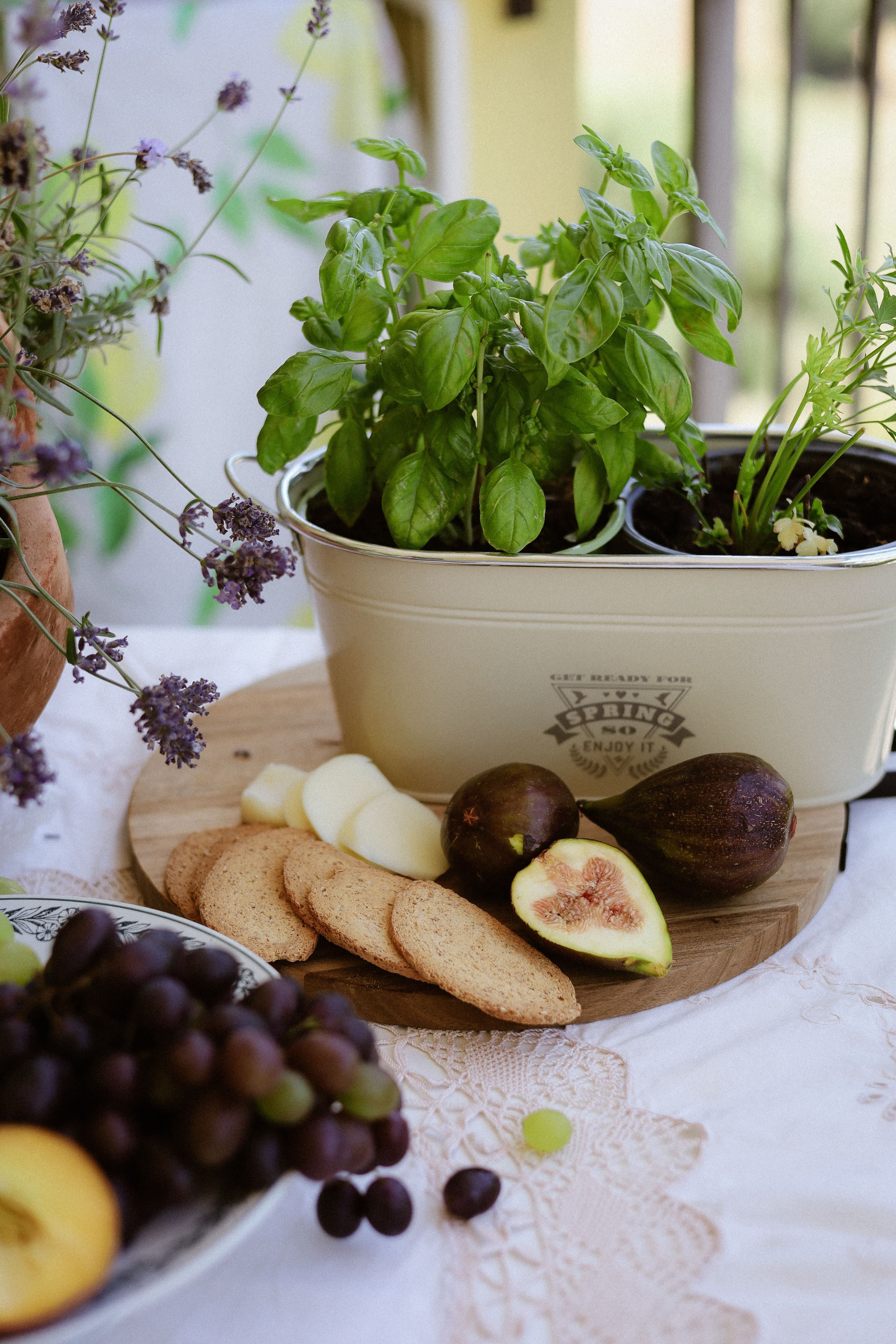
A good middle also has something in reserve. It is the one part of the table that gets used up, and so the one part that has to be topped up: the second loaf waiting on the sideboard, the other jug, the spare butter. Plates are served once. The middle is replenished all the way through, and whoever does it is quietly what lets a meal run on.
What it can't hold
Two things spoil a middle. The first is height. Anything much taller than a bottle will be moved by somebody halfway through the meal, usually with an apology, because it is in the way of the person opposite and of the conversation beyond. The second is fragility. People will not reach across something they are afraid of knocking over. A middle that nobody dares to touch is not a shared space at all, only a wall with candles on it. What belongs there can be picked up, passed along and put down a little carelessly without anybody minding.
What the meal does to it
No middle survives a long breakfast intact, and it shouldn't. The jug migrates towards the end of the table where the talk is loudest. The bread board has been turned a quarter to suit a left hand. The fruit bowl has become a place for stalks and stones, and somebody has put a spoon in something never meant to have one. A table photographed at the start of the meal looks better. A table at the end looks as though something happened.
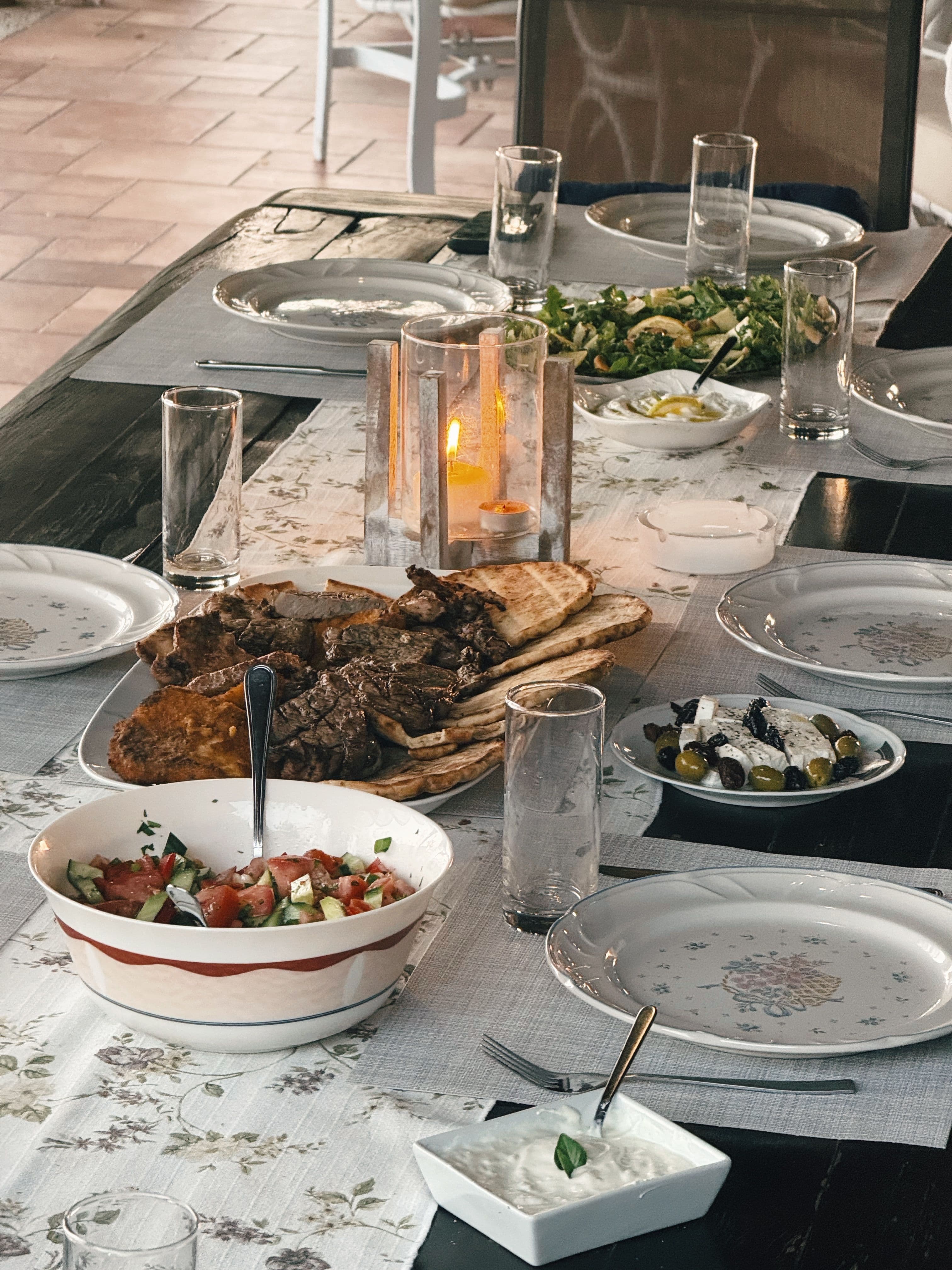
This is the case for leaving the middle slightly underfurnished at first. A middle that is full on arrival has nowhere for the meal to land.
Whose is it?
The objects that spend their lives in the middle of tables tend to become the ones a household would be sorry to lose, and hardly anyone chose them. The jug turned up one day, from a market or a parent's kitchen, and has been passed across so many mornings that it now belongs to everyone who has sat there. Plates get replaced when they chip, and nobody grieves. The board with its knife scars, the dish with a small chip in its lid, are another matter. They have been handled by every person at every meal, and have stopped being anybody's possession and become the table's. That is a kind of ownership which cannot be bought, though a bowl made to be picked up by a good many hands has the best chance of reaching it.
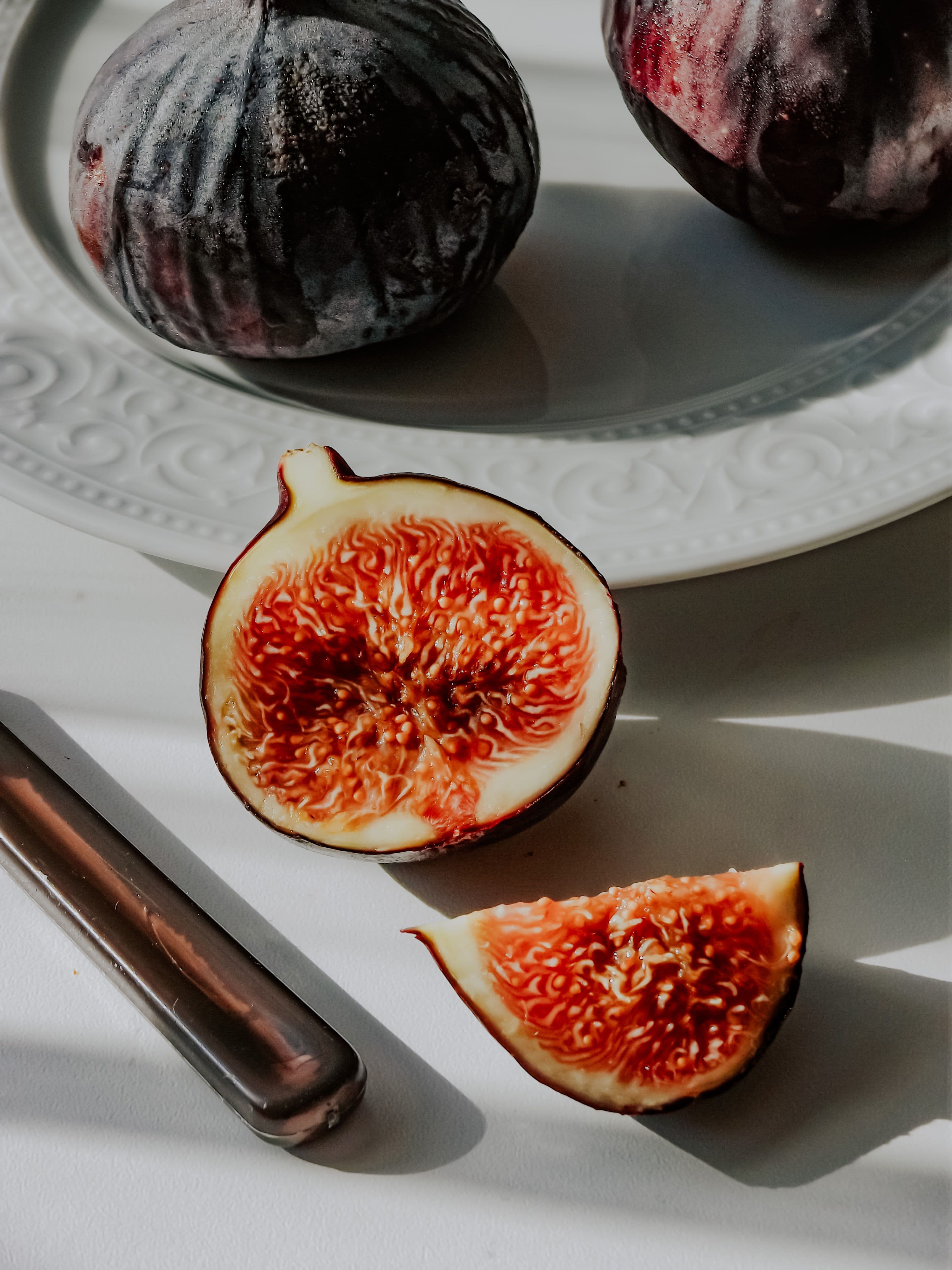
At the end of most meals there is one of something left in the middle: the last fig, the heel of the loaf. It goes round the table once and comes back untouched, because nobody wants to be the person who took it. Then somebody fetches a knife, and it is cut into as many pieces as there are people.
Keep this one
Save it to Pinterest.
Share this story
Things worth noticing
A note from Twenty Acres, occasionally. New stories, beautiful things, and the details we're keeping.