
The Old Terracotta Pot Herb Garden
A Herb Garden Does Not Need a Garden
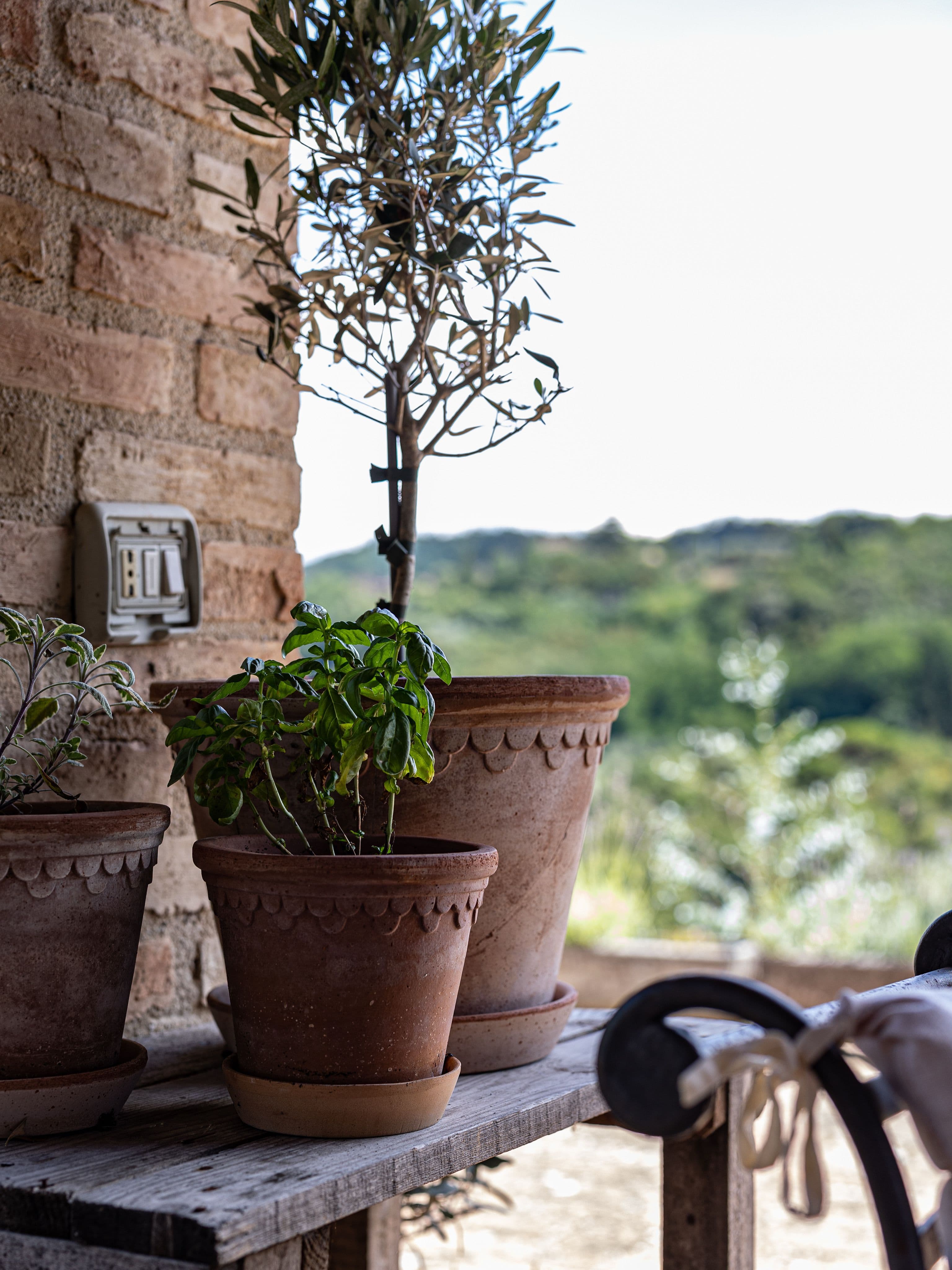
You don't need acreage for this. A balcony rail, a courtyard corner, a spot by the back door, a sunny stretch of veranda — any of it is enough. What a herb garden needs is proximity: somewhere close enough to the kitchen that using it becomes a habit rather than an errand.
Pots have an advantage a garden bed doesn't: they move. A collection that gets too much afternoon sun in summer can shift a metre into shade. A pot that struggles through a wet spell can be lifted onto a step, away from standing water. This flexibility is worth more than it sounds — it's the difference between a herb garden that survives a difficult season and one that doesn't.
This isn't a guide to growing herbs in pots in general. It's about a specific, old idea: a small collection of terracotta pots, chosen deliberately, that becomes both a genuinely useful kitchen resource and something worth looking at.
Why Terracotta?
Terracotta is porous. That single fact explains almost everything else about how it behaves.
Unglazed clay walls let air and moisture pass through them, not just through the drainage hole at the base. Water in the potting mix migrates outward through the clay and evaporates from the surface, which means a terracotta pot dries out faster than an equivalent plastic or glazed ceramic one. For plants that resent sitting in damp soil — and most of the classic Mediterranean herbs fall into that category — this is a genuine advantage. The porosity works as a kind of insurance against overwatering, because excess moisture has somewhere to go besides the roots.
The same property is terracotta's real limitation. In a hot, sunny or windy position, that fast evaporation means more frequent watering than a sealed container would need. And the clay itself absorbs water: left outdoors, full of wet soil, through a hard frost, it can crack as the absorbed moisture freezes and expands. In climates with real winters, terracotta pots are usually better emptied and brought under cover for the coldest months, rather than left to face the freeze-thaw cycle year after year.
Terracotta isn't universally the right choice. It suits drought-tolerant, sun-loving herbs particularly well, and it's a poor match for anything that wants consistently moist soil. Choosing terracotta is a decision about what you're growing, not a decision made for its own sake.
Choose the Herbs Before the Pots
Start with what you cook, not with how many pots look good together.
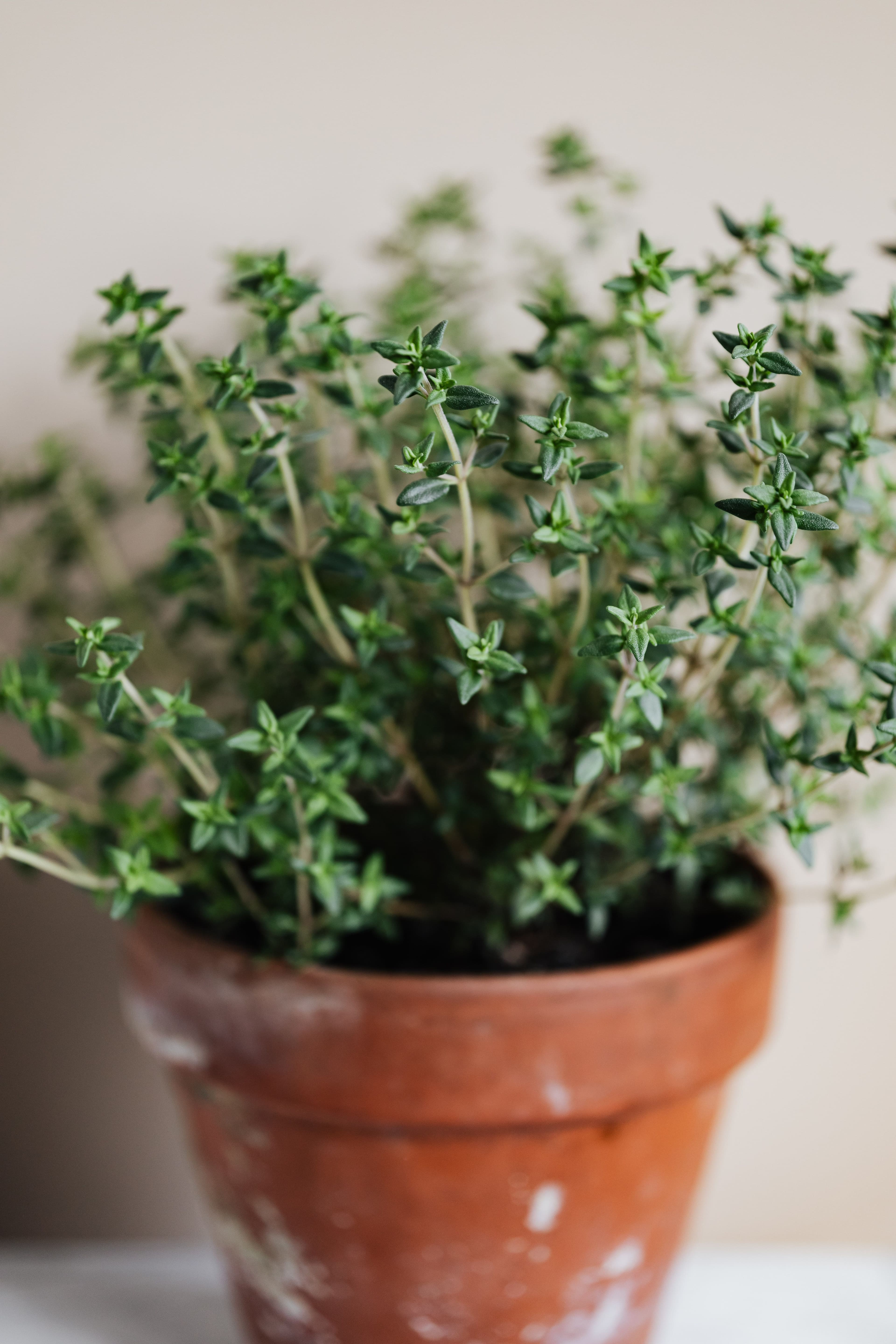
A useful starting group for a sunny, well-drained position is rosemary, thyme, sage and oregano. All four are Mediterranean in origin, all four prefer full sun and soil that dries out between waterings, and all four are forgiving of the kind of inconsistent attention a working kitchen garden actually gets. That doesn't make this the only viable combination — a household that cooks differently might reasonably build around parsley, chives and dill instead, accepting that those herbs want more consistent moisture and a different watering rhythm. The principle matters more than the specific list: choose herbs whose growing needs roughly match each other before you choose the pots to put them in.
One Pot or Several?
Separate pots, one herb each, are usually the better starting point, for reasons that only become obvious after a season of use.
Each herb can be watered to its own needs rather than a compromise. Pots can be moved individually — into more sun, out of a downpour, closer to the kitchen door during a week you're cooking with one herb more than the others. Harvesting and pruning are easier when you're not working around a neighbouring plant's roots. And when one herb inevitably struggles or dies back, replacing a single pot is simple; replacing a third of a shared container usually isn't.
That said, herbs with genuinely matched requirements can share a larger container successfully, and there's a real aesthetic case for it — a well-proportioned mixed pot can look more considered than four small pots in a row. The rule that actually matters is: group by growing requirements, not by how the plants look together. Rosemary, thyme, sage and oregano can share a large, well-drained pot precisely because they want the same thing from it. Basil and rosemary generally can't, because basil wants moisture rosemary's roots don't.
The Herb That Gets Its Own Pot
Mint is the exception that proves the rule, and it deserves its own section because it's the mistake almost everyone makes once.
Mint spreads by rhizomes — underground runners that travel outward from the base of the plant and send up new shoots as they go. In open soil this makes it genuinely difficult to contain; even a fragment of rhizome left behind can regrow. In a shared pot, mint's roots will compete directly with slower, more restrained herbs for space and moisture, and mint usually wins. It isn't a question of mint being poorly behaved — it's simply built to spread, in a way rosemary and thyme are not.
The practical rule: mint gets its own pot, always, regardless of how much space you have. A container in the 30–40cm range gives it enough room to be productive without becoming a project. If you want to keep it especially in check, standing the pot on a hard surface rather than directly on soil or gravel stops any rhizome that does find its way through the drainage hole from establishing itself outside the pot.
Choosing the Pots
Size. Bigger, within reason, is more forgiving. A larger volume of potting mix buffers against the two things container herbs struggle with most — running out of root space and drying out too quickly between waterings. A single rosemary or sage plant does well in something in the 30–35cm range once established; thyme and oregano can manage in something a little smaller. There's no single correct size for every herb or every climate — a pot that's generous in a mild, humid climate might dry out awkwardly fast in a hot, exposed one.
Drainage. Non-negotiable. Every pot needs an unobstructed drainage hole, and in wet weather it's worth raising the pot slightly on feet or pieces of broken tile so the hole can't be blocked by waterlogged ground underneath it. Terracotta's porosity helps, but it isn't a substitute for an actual way for excess water to leave the pot.
Shape. Follows the plant. Rosemary and sage, which develop a woody, upright structure, do well in a taller pot that gives their root systems some depth. Thyme, which stays low and can trail attractively over an edge, suits something shallower and wider. Match the pot's proportions to how the plant actually grows rather than choosing on appearance alone.
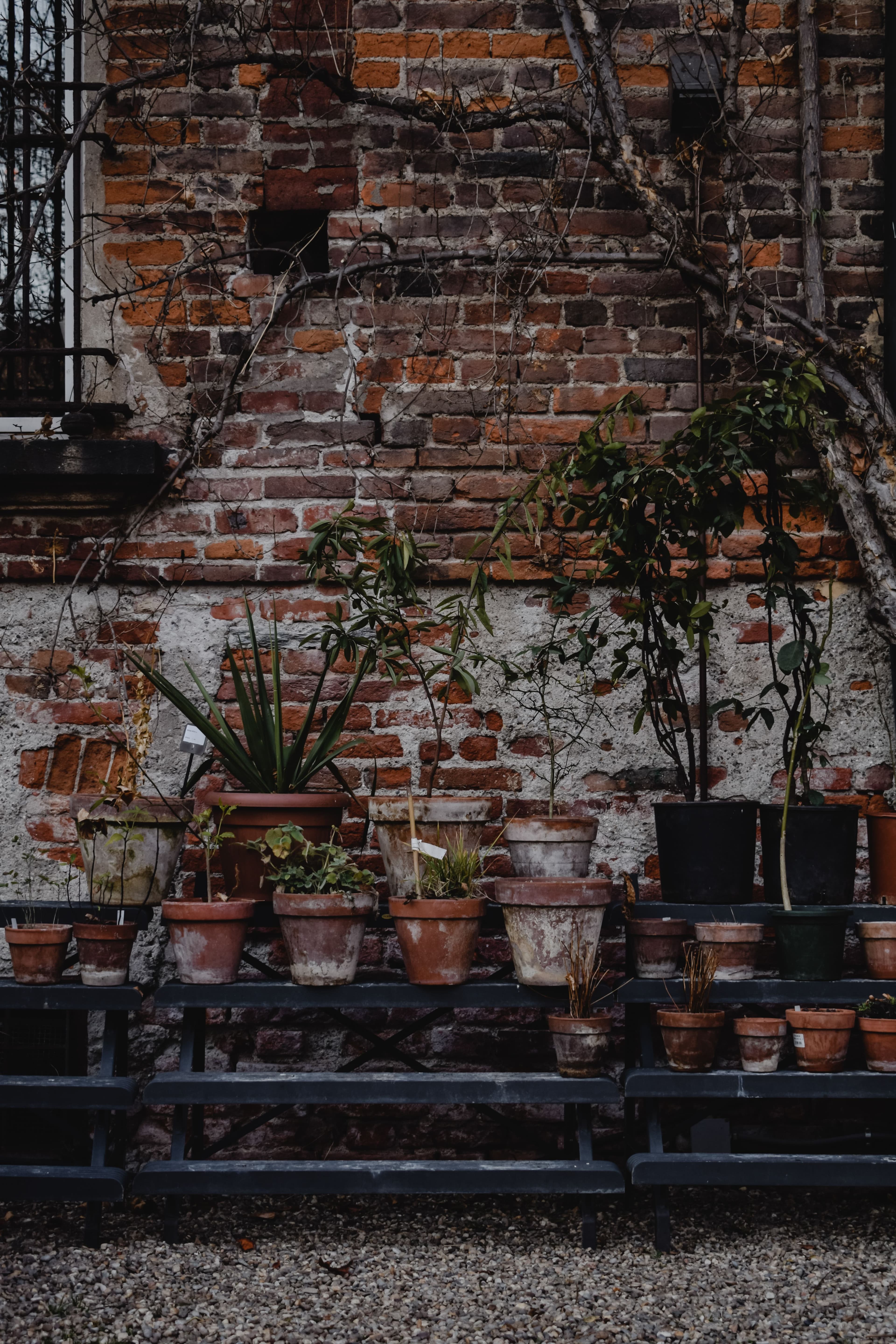
Old terracotta. Genuinely aged pots develop a patina worth having — pale mineral bloom where water has wicked through the clay and evaporated, moss in the damper corners, a softened, uneven colour that a new pot doesn't have. This is mineral deposit, not damage, and it's part of what makes old terracotta look right rather than staged. It isn't something to manufacture artificially on a new pot; it's better earned over a few seasons of ordinary use.
Soil and Drainage
Use a proper container or potting mix rather than soil dug from the garden. Garden soil compacts inside a pot in a way it doesn't in open ground, which chokes off the air roots need and undermines the drainage terracotta is meant to provide in the first place.
For the Mediterranean herbs — rosemary, thyme, sage, oregano — a mix that drains fast is more important than one that's especially rich. Adding coarse sand, fine gravel or perlite to a standard potting mix improves drainage and better mimics the poor, free-draining soils these herbs evolved in. Herbs that want steadier moisture, like parsley or chives, are better served by a standard potting mix without that addition.
There's no single soil recipe that applies everywhere — humidity, rainfall and pot exposure all change what "well-draining" requires in practice. Treat any specific ratio you read as a starting point, not a fixed formula.
Where to Put the Herb Garden
The most useful principle is also the simplest: put it somewhere you'll actually walk past while cooking. A beautiful herb garden at the far end of a garden gets used a fraction as often as a modest one by the kitchen door.
Beyond convenience, most of the herbs in a typical terracotta collection want real sun — several hours of direct light a day, more in cooler climates, slightly less tolerable in very intense heat. A north-facing wall in the southern hemisphere, or a south-facing one in the northern hemisphere, is usually the most reliable position. Exact requirements vary by herb and by how strong the local sun is, so treat "full sun" as a starting principle to adjust against what you observe in the first season, not a guarantee.
A Four-Pot Mediterranean Garden
A practical starting arrangement: one pot each of rosemary, thyme, sage and oregano, positioned together in a sunny spot with reliable drainage.
Rosemary, the tallest and most upright, works well toward the back or centre of the group, where its height doesn't shade the others. Sage, broad-leaved and similarly substantial, sits well alongside it. Oregano spreads and benefits from being trimmed back regularly to stop it crowding its neighbours. Thyme, low and trailing, suits the front edge, where it can spill slightly over the rim of its pot without being smothered.
All four share a genuine rhythm: bright light, sharp drainage, and watering only once the top layer of potting mix has actually dried out. That shared rhythm is exactly why this grouping works as a practical, low-maintenance starting point rather than four unrelated plants that happen to sit near each other.
Water According to the Plant, Not the Calendar
Resist the instinct to water on a fixed schedule. Containers dry at different rates depending on the pot's material, its size, the weather, and the plant itself — a fixed "water every three days" rule will overwater some pots and underwater others in the same collection.
Terracotta dries faster than plastic or glazed ceramic, by design. A hot, windy position dries a pot faster than a sheltered one. And rosemary and thyme, native to dry, rocky ground, tolerate — and prefer — drying out between waterings far more than moisture-loving herbs like basil or parsley do. The only reliable test is to check the soil itself: push a finger into the top few centimetres, and water only once it's genuinely dry there, not simply dry on the surface.
Harvest Little and Often
Regular, moderate harvesting keeps most herbs productive — it encourages fresh growth rather than letting the plant become woody and sparse. Pinching or cutting stem tips rather than stripping whole branches at once tends to serve the plant better over a season, though the right rhythm varies by herb and by how vigorously it's growing at the time. There's no single universal rule for exactly how much can be safely removed at once; when in doubt, harvest a little, watch how the plant responds, and adjust.
The Garden Changes With the Climate
This is where a genuinely useful herb-garden article has to stop pretending one set of instructions works everywhere.
Australia. Intense sun and fast evaporation, especially inland and in summer, can mean daily watering for terracotta pots in the hottest months, even for drought-tolerant herbs. Afternoon shade, or moving pots out of the harshest western sun, can make the difference between a productive summer and a collection of scorched, exhausted plants.
Mediterranean Europe. The closest match to the conditions these herbs actually evolved in — terracotta and drought-tolerant Mediterranean herbs suit each other here about as well as they can anywhere.
UK and northern Europe. The bigger risk usually isn't drying out but the opposite: prolonged wet periods and winter frost. Good drainage matters even more here, and terracotta pots left outside through a hard winter are genuinely at risk of cracking — bringing them under cover, or at least off bare wet ground, over the coldest months is worth the effort.
United States. Too varied to generalise about meaningfully. A terracotta herb garden in coastal California, humid Florida, arid Arizona and cold-winter New England each face a different primary challenge — drought, humidity and fungal risk, extreme heat, or hard freezes — and the specific answer depends on which of those applies locally.
There is no universal watering calendar, and no single climate note that applies everywhere this article might be read. The four-pot arrangement above is a starting structure; the actual maintenance rhythm has to be built around wherever the pots actually sit.
Let the Pots Become Part of the Garden
The aim isn't a styled "herb garden aesthetic" assembled for one season and photographed once. It's a small collection of pots that gets more useful, and quietly better-looking, the longer it's actually used — patina developing on the clay, herbs cut back and regrowing, pots occasionally replaced as one wears out or a plant is swapped for another.
That's the actual test of whether it was worth doing properly. Not whether it looked good in its first month, but whether it's still there, still being used, in its fifth year.
Keep this one
Save it to Pinterest.
Share this story
Things worth noticing
A note from Twenty Acres, occasionally. New stories, beautiful things, and the details we're keeping.