
The Everyday Ceramic Bowl
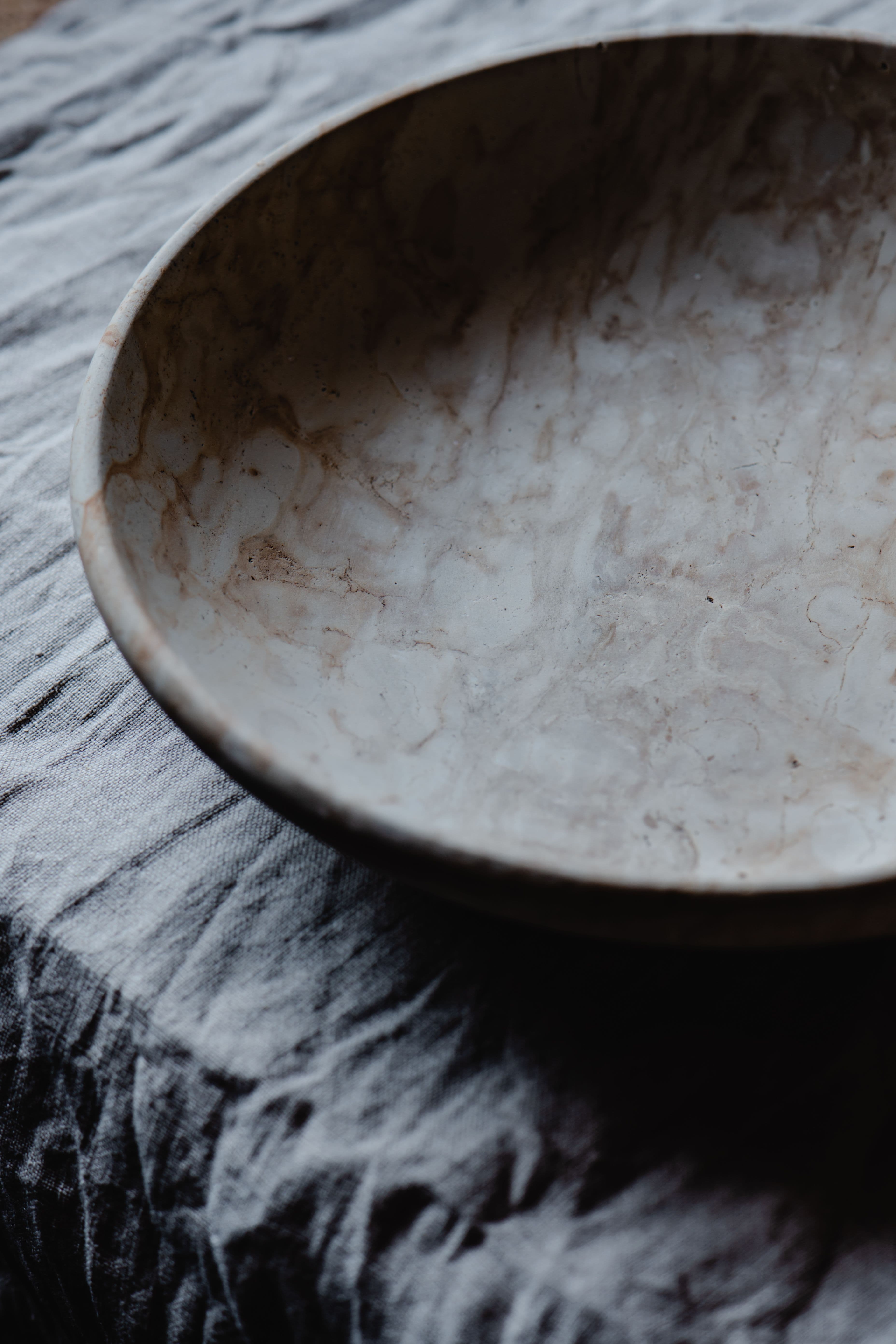
A bowl is handled more than almost anything else in a kitchen — picked up empty and put down full, stacked and unstacked, washed, filled with breakfast, then soup, then pasta, carried to a table and back again, most days more than once. Nothing else in a dinnerware collection works that hard, which leaves it very little room to be wrong. A chair you dislike can sit in a corner; a vase can go unused on a shelf. A bowl that doesn't sit well in the hand, or feels awkward once it's full, announces itself every day. Good design here is physical rather than decorative: the proportions, the weight, the way the rim meets the lip, the way the base meets the table matter more than any pattern printed on the glaze.
A well-designed everyday bowl tends to become almost invisible in the rhythm of a household — you stop noticing it until it chips, or breaks, or is replaced by something slightly wrong, and its absence is suddenly obvious.
This isn't a buying guide, and it isn't a ranking of bowls to add to a cart. It's an attempt to explain what separates a genuinely good everyday bowl from one that only looks like it, so the next time you're holding one in a shop or at a market stall, you know what you're actually assessing.
What Makes a Good Everyday Bowl?
Strip away style and decoration, and a good bowl comes down to a short list of physical qualities:
- Proportion — the relationship between height, width and depth, and whether it suits how you actually eat.
- Weight — not heavy or light, but how it feels once the bowl is full and in use.
- Rim — thickness, comfort against the mouth, and how cleanly it pours.
- Foot and base — how the bowl sits on a table and how it behaves when stacked.
- Material — the clay body and how it was fired, which shapes durability and how the bowl ages.
- Glaze — the finish, and how it wears rather than how it photographs.
- Durability — whether it can survive ordinary handling, not showroom handling.
- Stackability — whether it nests cleanly with the rest of your dinnerware.
- Versatility — whether one shape can do the work of several.
- Repairability and replacement — what happens when, inevitably, one piece breaks.
Treat this as a working checklist, not a formula. None of these qualities matters in isolation; a bowl is the sum of how they work together.
Ceramic, Stoneware and Porcelain: What Actually Matters
"Ceramic" is often used as though it were a specific material. It isn't. Ceramic is the broad family — anything shaped from clay and hardened by firing. Stoneware, porcelain and earthenware are categories within that family, and the differences between them come down largely to the clay used and the temperature it's fired at.
Stoneware is fired at high temperatures until dense and largely non-porous, which is why it's become the default choice for everyday dinnerware: substantial, chip-resistant, able to hold up to daily handling. Porcelain is made from a finer clay and fired even hotter, producing a harder, thinner, more refined body — the reason porcelain can look delicate while still being genuinely strong. Earthenware is fired at lower temperatures and stays more porous beneath its glaze, giving it a warmer, more rustic character, usually at the cost of durability and a greater tendency to chip.
These are generalisations, not fixed rules — the specific clay body, glaze and firing schedule a maker uses shifts where an individual piece sits within that range. A bowl for daily pasta and porridge asks for different things than a bowl kept for special occasions, and the more useful comparison isn't ceramic versus stoneware — it's this:
| Material | What actually matters |
|---|---|
| Stoneware | Dense and substantial; the standard choice for everyday durability |
| Porcelain | Fine-grained and light, with real strength for its refinement |
| Earthenware | Warmth and character, usually at the cost of durability |
| Handmade ceramic | Depends entirely on the specific clay, firing and glaze — "handmade" describes a process, not a material |
A bowl described as "handmade ceramic" hasn't told you anything about how tough it is. It could be dense, high-fired stoneware built to survive a decade of dishwashing, or a softer, lower-fired piece better suited to occasional use. The word to look past is "handmade." The words to look for are the ones describing the clay and the firing.
Shape Matters More Than Decoration
Before glaze, before colour, shape determines whether a bowl earns its place in daily rotation. A deep, narrow bowl suits soup and porridge but fights you on pasta. A very shallow, wide bowl is elegant for salad but lets soup go cold faster and spills more easily when carried. A cereal bowl is rarely a good pasta bowl, and a pasta bowl is rarely a good soup bowl.
The most useful everyday shape tends to sit between these extremes — deep enough to hold a proper serving without a food guard rim, wide enough that grains, salad and pasta can be tossed rather than piled. There's no single correct diameter here; proportions vary by maker and by what you actually cook. The test isn't whether it looks like a classic bowl — it's whether the same shape can move from breakfast to a weeknight dinner without feeling wrong for either.
The Weight Test
Weight is where a lot of good bowls fail, largely because most people only pick one up empty.
There's a real difference between substantial and heavy. A substantial bowl feels grounded and stable — presence in the hand, made rather than moulded. A heavy bowl is simply hard to lift once it's full, awkward to hold while eating standing at a counter, tiring in a hand already holding a spoon.
The only reliable test is to pick the bowl up and imagine it full — of soup, pasta, cereal and milk. Would you want to carry it across a room, or hold it in one hand while eating? A bowl that feels wonderful empty on a shelf and cumbersome full at the table has failed the test that actually matters. There's no universal ideal weight to aim for — it depends on your hands, your habits, and what you'll be filling it with — but the test itself holds regardless.
The Rim, Foot and Base
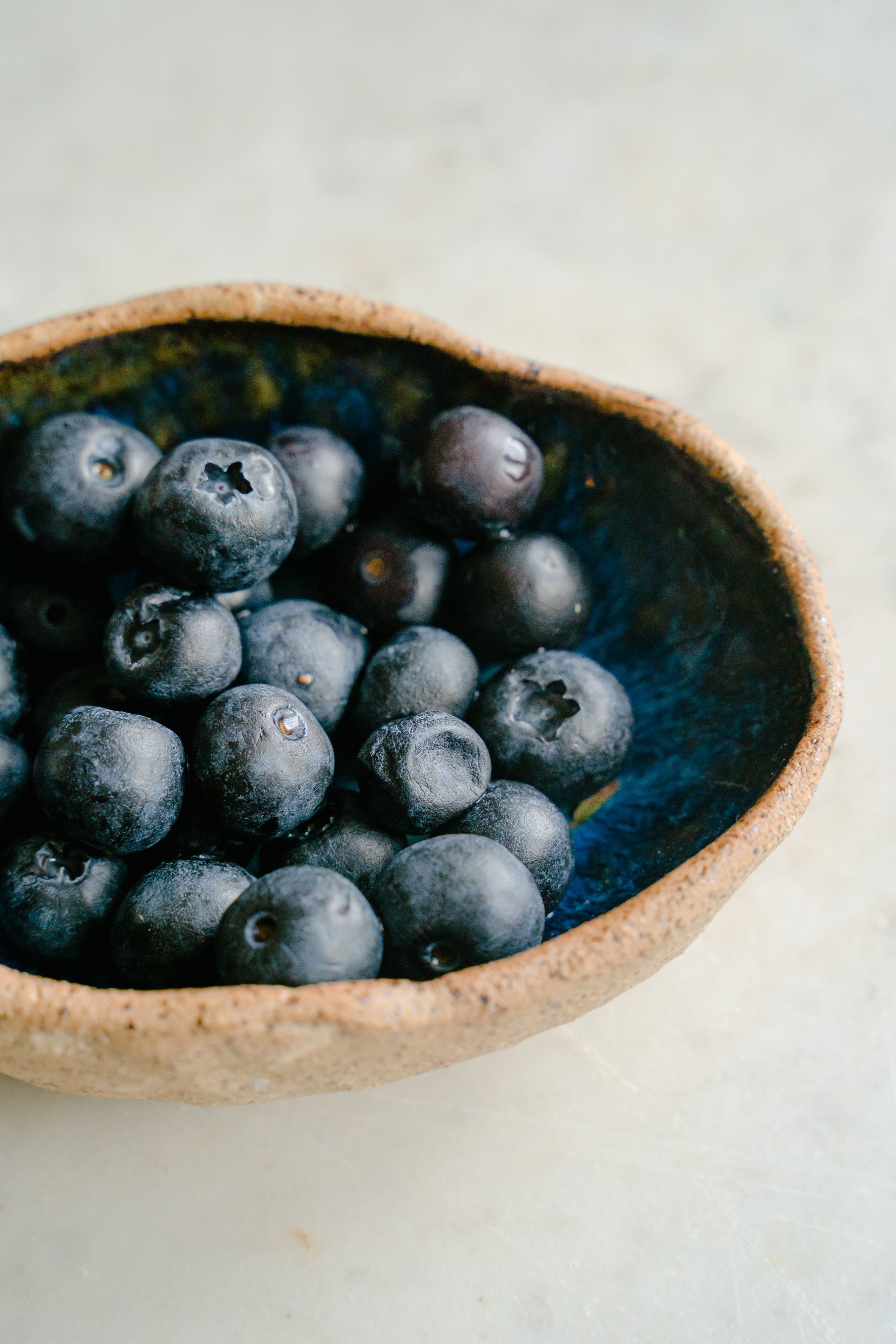
These three points of contact do more work than most buyers consider.
The rim is where the bowl meets your mouth and, if you're pouring liquid, where it meets the world. A rim that's too thin can feel sharp and chips more easily. One that's too thick can feel clumsy. The rim's profile also affects how cleanly a bowl pours — worth checking if you'll ever tip broth or milk directly from it.
The foot — the raised ring on the underside — determines how stable the bowl is on a table and how well it stacks with others of its kind. An unevenly formed foot can leave a bowl slightly wobbly even on a flat surface, and is the part most likely to chip a countertop or another piece during stacking.
The base governs balance overall: whether the bowl sits flat and steady, how it transfers heat from hot food to the table beneath it, and how easily it can be lifted without your fingers slipping under the rim. None of this is visible in a photograph — it's only apparent once you've held the object.
Glaze: Beautiful at First, Better With Age?
Glazes come in enormous variety — matte, gloss, speckled, reactive, textured — and the finish is usually what first draws the eye. But the more useful question is what a glaze looks like after a year of ordinary use, not on the first day.
Ceramic and stoneware dinnerware often pick up faint grey or metallic-looking marks over time from cutlery. This is one of the more misunderstood things about everyday dinnerware: those marks are usually metal transfer, not actual scratches in the glaze. A well-fired, hard glaze is harder than the stainless steel used in ordinary cutlery, so what looks like a scratch is a thin deposit of metal left behind as the fork or knife moves across a surface it can't actually damage — the same principle as a pencil sharpener working on a softer material than itself. Softer or lower-fired glazes are the exception; they can genuinely scratch. Where the harder-glaze case holds, the marks are cosmetic and can be lifted with a mild abrasive rather than treated as structural damage — though it's worth testing an inconspicuous spot first, since coloured or decorative glazes can respond differently to abrasive cleaning than a plain glaze will.
Crazing — a fine network of surface cracks in the glaze — is a different matter, caused by the glaze and clay body expanding and contracting at slightly different rates. On some finishes this is a deliberate, controlled aesthetic effect; on others it signals a poorly matched glaze, and over time it can let moisture into the body of the piece. Worth knowing the difference before deciding whether a crazed finish is a feature or a fault.
Handmade or Manufactured?
There's a comfortable assumption that handmade automatically means better, and it doesn't hold up under scrutiny.
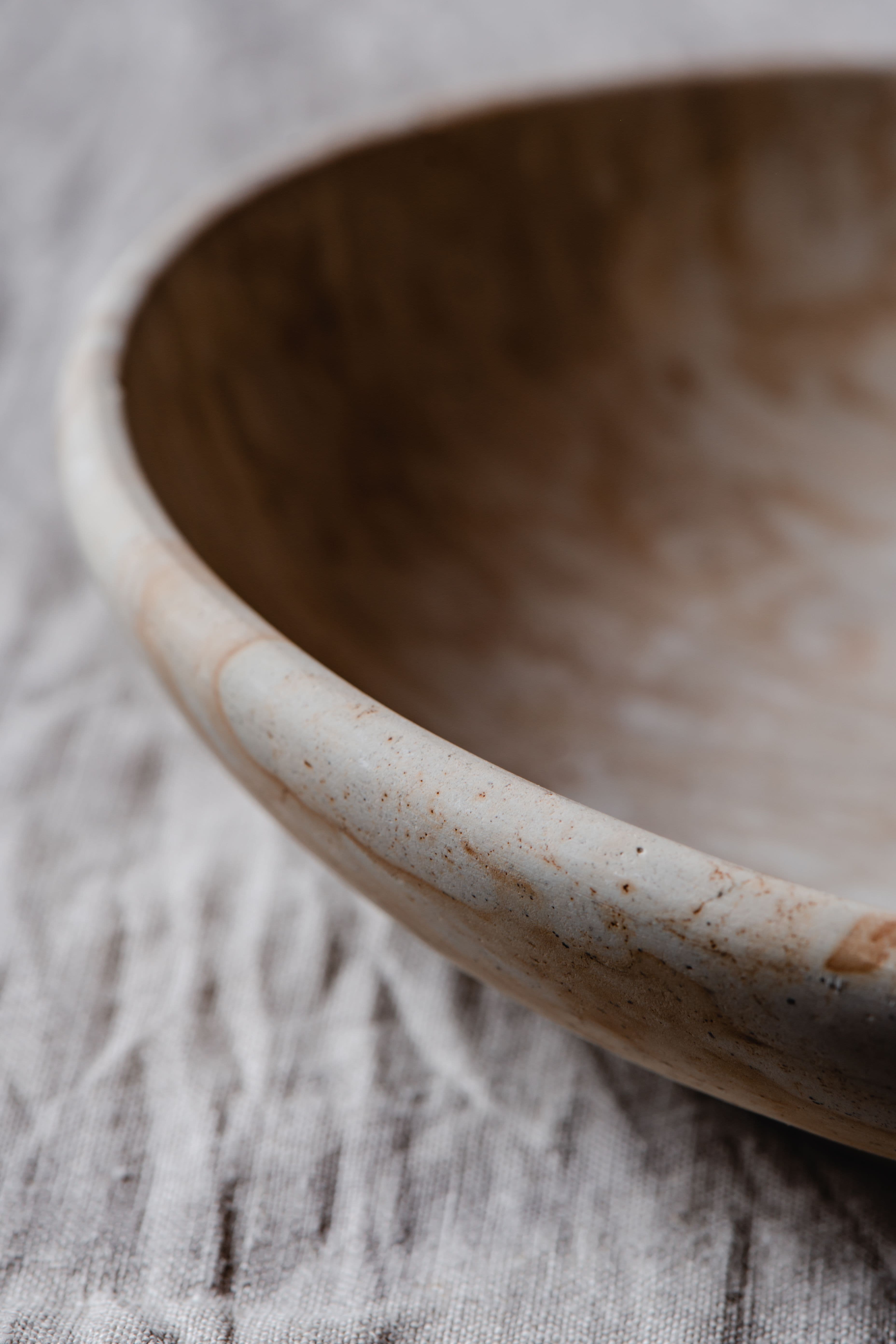
Handmade pieces offer genuine advantages: individuality, tactile variation piece to piece, a direct connection to a maker rather than a factory line, and often a more considered relationship to material and firing. Many small-batch potters working in high-fired stoneware build pieces explicitly intended for daily use and eventual replacement, not as precious objects meant for a shelf.
Handmade production carries real compromises too. Dimensions can vary between pieces, which matters if you want a set that stacks and matches cleanly. Replacing a single broken bowl from a small-batch run years later may simply not be possible if that glaze or form has moved on — and batch-to-batch variation, part of the appeal for some buyers, is a genuine drawback for anyone who wants consistency across a set.
"Handmade" isn't, on its own, a reason to buy something. Choose the object in front of you — its proportion, its weight, how the glaze has been applied, how it feels in the hand — rather than the story being told about how it was made.
What Should an Everyday Bowl Survive?
A bowl earning a permanent place in daily use needs to survive, without fuss, regular dishwasher cycles, ordinary cutlery, stacking, hot and cold food, and the occasional knock.
One rule is worth holding firmly: never assume a bowl is dishwasher-safe, microwave-safe or oven-safe simply because it's labelled ceramic or stoneware. These properties depend on the specific glaze, clay body and firing used by that maker, and can vary piece to piece even within the same broad material category. Confirm with the actual manufacturer rather than extrapolating from the material name.
It's also worth understanding thermal shock in simple terms, because it explains most "the bowl just cracked" stories. Ceramic doesn't crack from heat itself — it cracks from a rapid, uneven change in temperature, when one part expands or contracts faster than the rest and the resulting stress exceeds what the material can absorb. A bowl going from the freezer straight into a hot oven, or a hot bowl straight under a cold tap, is a far greater risk than the same bowl simply holding hot soup. Denser, high-fired stoneware and porcelain tolerate this better than earthenware, but no everyday dinnerware is immune to sudden extremes — resistance is a matter of degree, not a guarantee.
Building a Small Dinner Set
There's a case for buying fewer pieces, chosen carefully, rather than a full matching set bought all at once. Four bowls cover most households day to day; six allows for guests or a slower replacement cycle when a piece eventually breaks.
Rather than insisting on an exact pattern match, build around related pieces — a shared clay tone, a shared glaze family, a consistent scale — so a bowl bought later, or replacing a broken one, doesn't need to be an identical reissue of the original. Neutral glazes and simple, related forms make this easier than a highly specific pattern that may not exist in five years' time, and it sets up the rest of a considered kitchen the same way: plates, serving pieces and glassware chosen for how they'll be used and replaced over years, not how they look together on the day they're bought.
The Ten-Year Test
The most useful question to ask about any everyday bowl isn't "do I like this now." It's:
Will I still want this bowl in ten years?
Ten years of breakfast. Ten years of pasta, soup, washing, stacking, moving house, replacing whatever inevitably breaks along the way. A bowl that passes this test isn't necessarily the most striking one on the shelf — it's the one whose proportion still feels right, whose weight still feels considered, whose glaze has aged into something you like rather than something you're tolerating, and whose shape has quietly proven useful for more meals than you expected when you bought it.
That's the object worth keeping. Not the best bowl on paper. The one you'd still choose, without thinking twice, a decade in.
Keep this one
Save it to Pinterest.
Share this story
Things worth noticing
A note from Twenty Acres, occasionally. New stories, beautiful things, and the details we're keeping.