
The Silver Worth Using
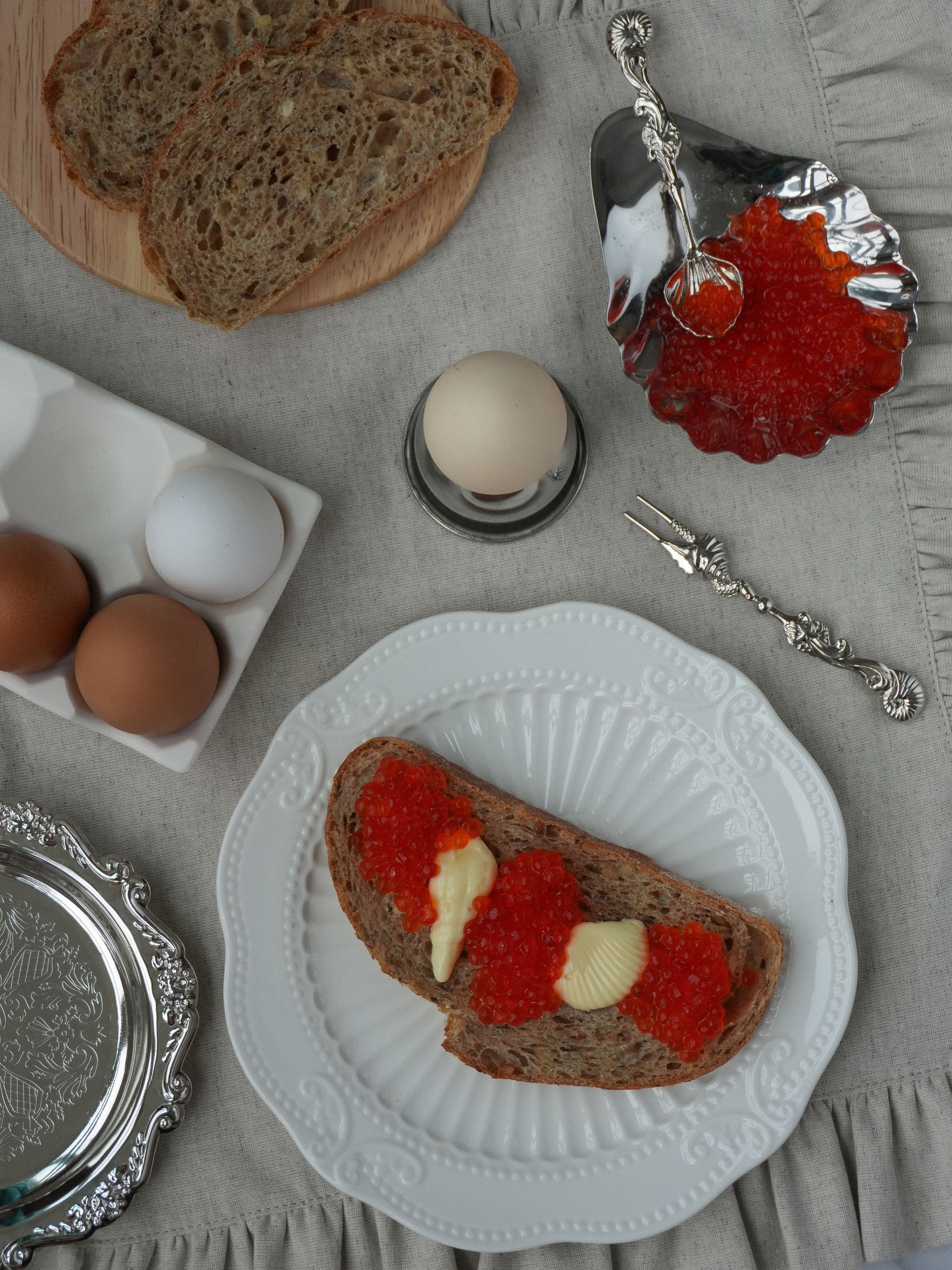
There is a particular kind of spoon that lives at the back of a drawer, wrapped in cloth, brought out twice a year. And there is another kind — usually older, usually a little duller — that sits in the everyday cutlery tray and gets picked up without anyone thinking about it. The second spoon is almost always the better one to own. Not because it looks better. Because it has been used.
Somewhere along the way, silver became a thing to protect rather than a thing to live with. It moved from the table to the cabinet, from daily use to occasional display, kept for the dinner that might justify it. The justification rarely arrives on schedule. Most of it sits, waiting for an evening that is grander than the ones that actually happen — the cupboard of things kept for best is rarely as empty as it should be.
This isn't an argument for buying silver, or for treating it as some kind of moral upgrade on stainless steel. It's a smaller observation: that silver, glass, linen and the other good objects of a table are built to be handled, and something changes in them — and in the person using them — when they finally are.
Silver Wants to Be Handled
There's a difference between owning a thing and living with it. Owning is possession — the object exists, it's yours, it sits somewhere in the house. Living with something means it has a role. It gets reached for. It shows up in the small, unremarkable moments of a week rather than only the ones marked on a calendar.
Silver kept for best skips that second part entirely. It's owned, admired occasionally, polished before it's needed and put away again after. What it never gets is a history. A fork that's been used for twenty years of breakfasts looks different from one that's been used four times — not because it's more valuable, but because it carries evidence of a life alongside it.
Part of the instinct to protect beautiful things makes sense. Good silver isn't cheap, and it can mark, dent or lose its shine if it's mistreated. But protecting an object from its own use isn't really protection — it's a kind of storage. The spoon in the drawer is safe. It's also, in the way that matters, unused.
What Actually Happens to Silver
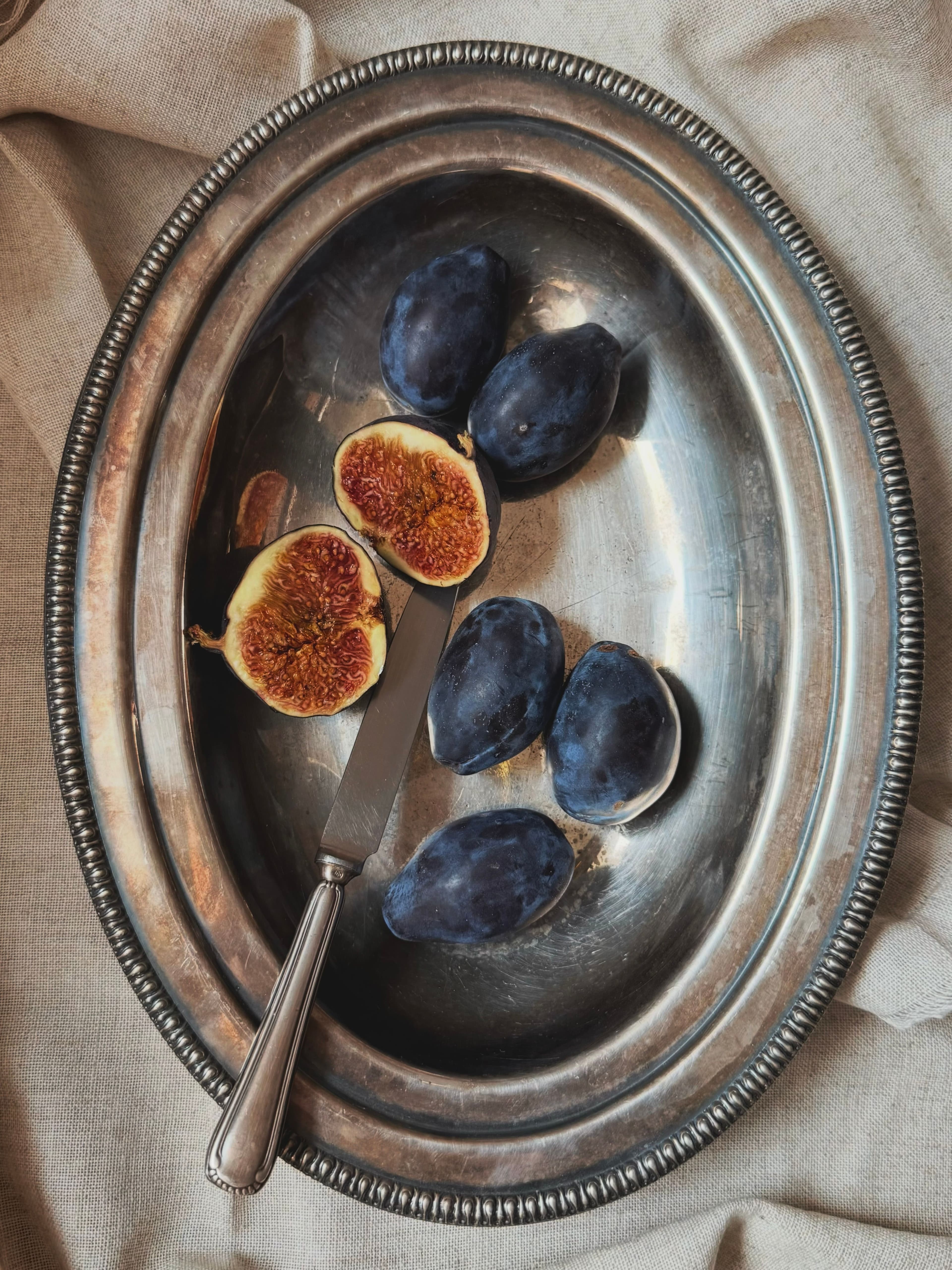
Sterling silver isn't pure silver — pure silver is too soft to hold a shape, so it's alloyed, almost always with a small amount of copper, to give it strength. That's part of why it can be worked into fine flatware in the first place.
Tarnish is a separate matter from wear, and it isn't really about use. It forms when silver reacts with trace sulfur compounds in the air, whether a piece is handled daily or sealed in a drawer. Anti-tarnish cloths and lined chests don't work by keeping air out; they contain fine particles, often silver or copper, that react with those sulfur compounds first, drawing them away from the object stored inside. And counterintuitively, silver used and washed regularly often tarnishes less than silver left untouched — the light film is wiped away before it has a chance to build, where a piece sitting in a drawer simply darkens undisturbed.
Wear is different again, and it's the part that actually comes from handling: a faint softening of engraving, a smoothing across a bowl or handle where a thumb rests most often, one piece in a set worn very slightly differently from the rest because it's been the favourite. None of that is damage — it's the physical record of a piece being used as it was made to be. A dent or a deep scratch is a separate thing, worth calling what it is rather than folding into the same romantic story.
Older or secondhand pieces are worth a second look before daily use. Hallmarks can help confirm the metal and, on many British and Australian pieces, the maker and date, though reading them accurately is a specialist skill. Plated silver, common since the Victorian era, looks similar to solid sterling but will eventually wear through to the base metal beneath if polished hard for long enough, which is worth knowing before an inherited piece is polished harder than it can take.
The Table Beyond the Silver
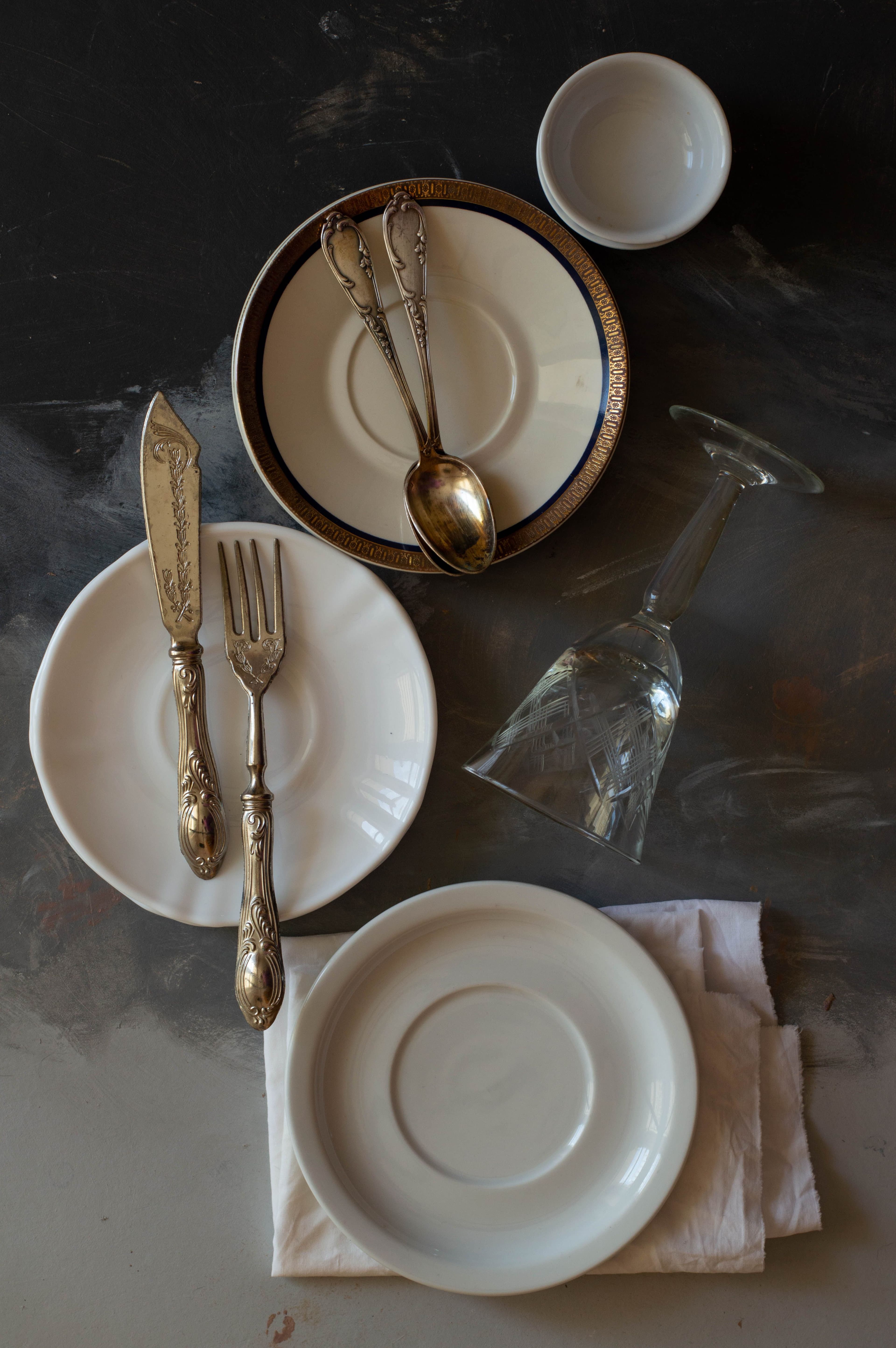
Silver rarely sits alone on a table, and the same logic applies to almost everything else that ends up there. A glass develops the same relationship to use — the one reached for without thinking, slightly different from the others in the cupboard not because it's finer but because it's familiar. Linen softens with washing in a way new linen simply hasn't had time to do yet; a tablecloth or napkin that's been through a hundred washes has a drape and a hand-feel that no amount of quality at the point of purchase can shortcut. Ceramics pick up the faint crazing and small marks of years of actual meals. None of it is decline. It's what happens when an object stops being an idea of itself and starts being a thing that's actually used.
What's interesting is how these things behave together rather than separately. A worn spoon against a new plate looks like a mismatch. A worn spoon against a plate that's also been used for years, on a cloth that's soft from washing, reads as a table that's simply lived-in — coherent, not because everything matches, but because everything has a comparable history. That coherence is hard to manufacture and easy to lose sight of when new pieces are added one at a time without much thought for what they're joining.
Why Old Things Feel Different
There's a temptation to assume old automatically means better, and it's worth resisting. Plenty of older tableware was made cheaply, and plenty of new tableware is made with real skill and will last as long as anything from a hundred years ago. Age isn't the thing doing the work.
What older, inherited or secondhand pieces often have is a different starting point: they were frequently made when hand-finishing, heavier gauges of metal and higher silver content were simply more standard across a wider range of price points than they are now, because the manufacturing economics were different. A set bought new today at a comparable weight and finish to a set that was mid-market seventy years ago is often, correspondingly, a good deal more expensive. That's a real difference, worth knowing, but it's about material and construction, not sentiment.
The sentiment is real too, though, and it's worth naming honestly rather than dressing it up as something more objective. An inherited spoon carries a specific, personal history that no amount of quality in a newly bought one can replicate — not because the metal is different, but because the story is. Both things can be true at once: a piece can be genuinely, measurably better made, and separately, quietly, more meaningful because of where it came from.
None of which means a mismatched drawer of silver — one grandmother's pattern, a few odd pieces picked up secondhand, one or two bought new to fill the gaps — is a problem to be solved. A set that matches perfectly is one kind of table. A set assembled slowly, from several sources, over years, is another, and it isn't a lesser one. It simply tells a longer and less tidy story, which is its own kind of interesting once the table stops being measured against the idea of a matching set in the first place.
An Ordinary Tuesday
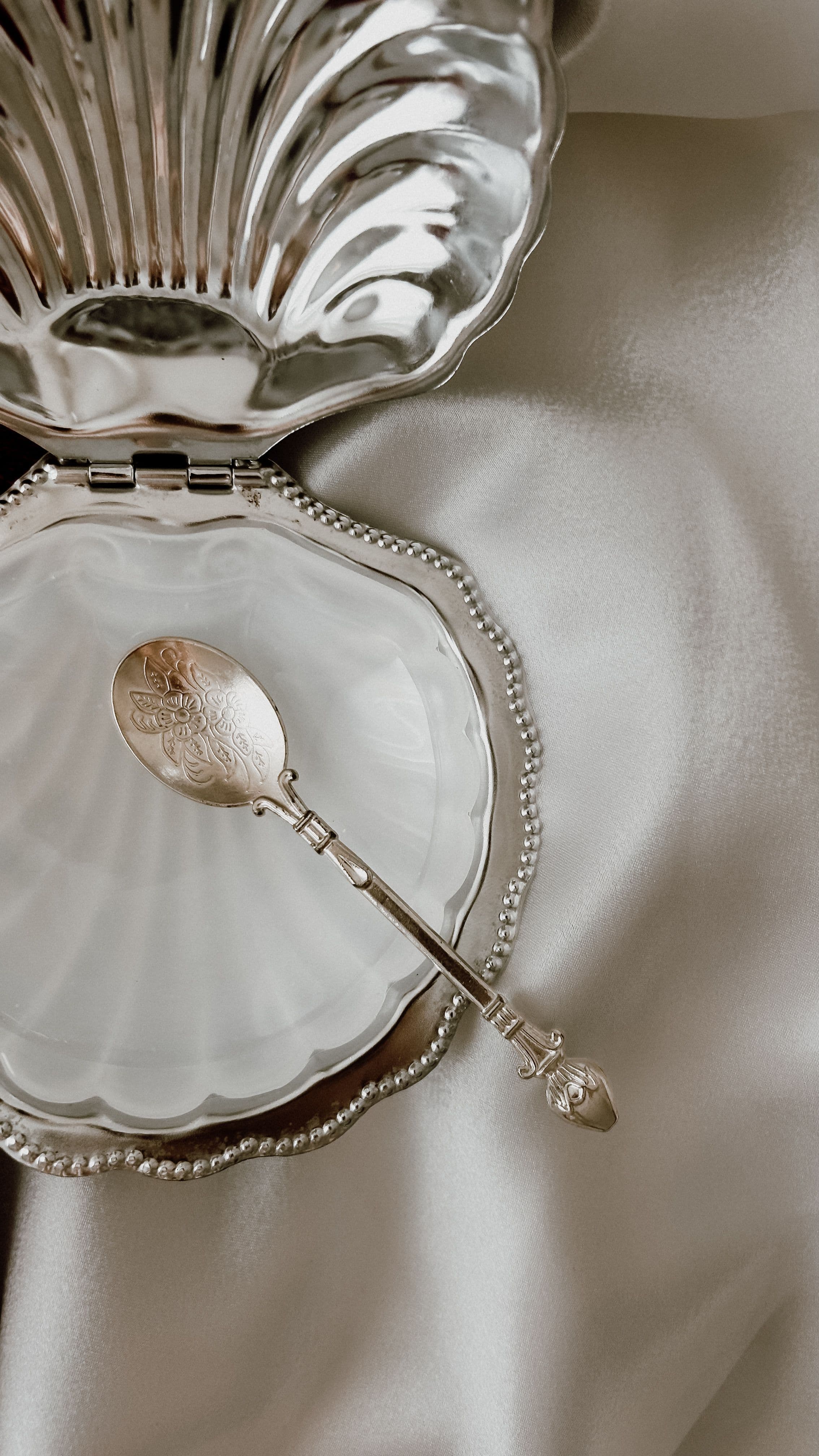
None of this requires an occasion. A table for one, set with a proper spoon rather than whatever's nearest in the drawer, changes very little about the meal itself and quite a lot about the ten minutes spent eating it. Coffee in a cup that's actually pleasant to hold. A slice of cake on a plate rather than eaten standing at the counter. A glass, at the end of a long day, that isn't the nearest tumbler but the one that's somehow become the one that gets reached for.
These are small decisions, made repeatedly, that add up to something larger than any single instance of them. A guest arriving for dinner is a reason to set a table well. The absence of a guest is not, in itself, a reason not to. Most of a life is made of the days nobody else sees, and a surprising amount of what a table is actually for gets used on precisely those days, if it's allowed to be.
There's also a particular kind of object that becomes, almost by accident, the one that gets used every single day — a specific mug, a particular knife, one glass out of a set of eight. Nobody decides this in advance. It happens through repetition, the way a favourite chair happens, and it's usually only noticeable in hindsight, once the object has quietly become part of the routine rather than an occasional guest in it. That's worth paying attention to, because it's a fairly reliable sign of which pieces in a cupboard are actually earning their place and which are simply stored.
Looking After Without Becoming Precious
None of this is an argument for carelessness. Silver still needs occasional polishing — not because the tarnish is dangerous, but because most people prefer the brighter finish, and polishing well means handling the piece often enough to know when it needs it. Crystal and fine glass are genuinely more fragile than everyday glassware and deserve a bit more care when washing and storing, though a great deal of it is more dishwasher-tolerant than it gets credit for; manufacturers vary, and it's worth checking rather than assuming either way. Linen gets washed, sometimes ironed, occasionally mended. Ceramics chip, and a chipped plate is either retired or kept for kitchen use rather than the table, depending on where the chip sits and how much it bothers you.
The point of maintenance isn't to keep everything in a permanent, untouched state. It's to keep things in good enough condition that using them regularly remains a pleasure rather than a risk. A piece that's cared for and used will eventually show both — the small marks of a life and the evidence of having been looked after — and that combination is, in the end, more interesting than either a piece kept pristine because it's never touched, or one that's been used hard and never maintained at all.
Bring It Out
The drawer of silver, the shelf of good glasses, the linen folded away for a dinner that hasn't happened yet — most of it is simply waiting for permission that was never actually required. A Tuesday is not a lesser occasion than a Saturday. Breakfast is not a lesser meal than dinner for eight. The things kept for best are, more often than not, simply the things that haven't yet been asked to do the job they were made for.
They can start any day.
Keep this one
Save it to Pinterest.
Share this story
Things worth noticing
A note from Twenty Acres, occasionally. New stories, beautiful things, and the details we're keeping.