
The Glasses Worth Using
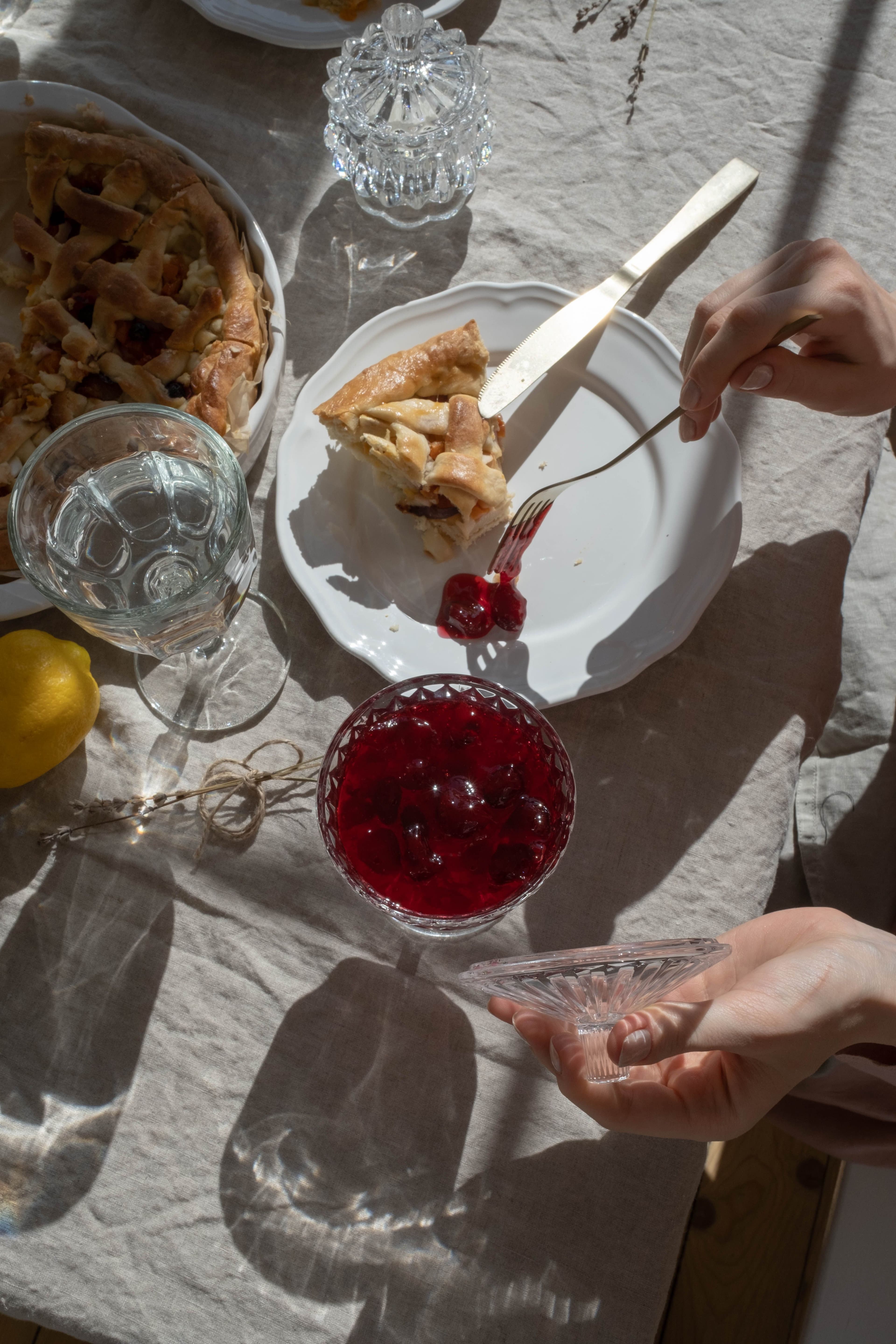
Beautiful glasses should not wait for dinner parties. Most of the time they sit behind glass doors or wrapped in tissue at the back of a cupboard, brought out twice a year and put away again before the dishwasher steam has cleared. In between, the water gets drunk from whatever glass happens to be nearest the tap.
It is worth asking why. A good glass earns its place by being used, not by being kept. Water, orange juice, a glass of wine on a Tuesday, something sparkling because it is Friday and there is no particular reason — none of it needs to be special for the glass to be worth using. The glass is what makes a moment feel considered, not the other way around.
The Things We Keep for Best made the broader case for this: that beautiful objects are not diminished by ordinary use, and that waiting for an occasion that may never come is its own kind of loss. Glasses are simply the clearest example of it. They are handled every day, they are made to be held, and a cupboard is the one place they cannot do the thing they were made for.
A Good Glass Changes an Ordinary Drink
Pick up a well-made glass and the difference registers before a word is needed for it. There is weight in the base — enough to feel steady on a table without feeling heavy in the hand. The stem, if there is one, holds its balance rather than tipping toward the bowl. The rim is thin enough that it barely registers against the lip, which changes how a drink is tasted as much as how it looks.
Clarity does its own quiet work. Held up to a window, a good glass takes the light and throws small, precise lines through it rather than a general blur. Two glasses touched together in a toast make a different sound depending on what they are made of — a dull clink from thick, ordinary glass, a clear, sustained note from something better made. None of this is decoration. It is what the object is actually doing while it is being used.
Water tastes the same regardless of the glass it sits in, and no one is arguing otherwise. What changes is the small ceremony of pouring and drinking it — the sense that a moment, even a very ordinary one, has been given a little attention. That is most of what a good glass is for.
What Makes Crystal Different?
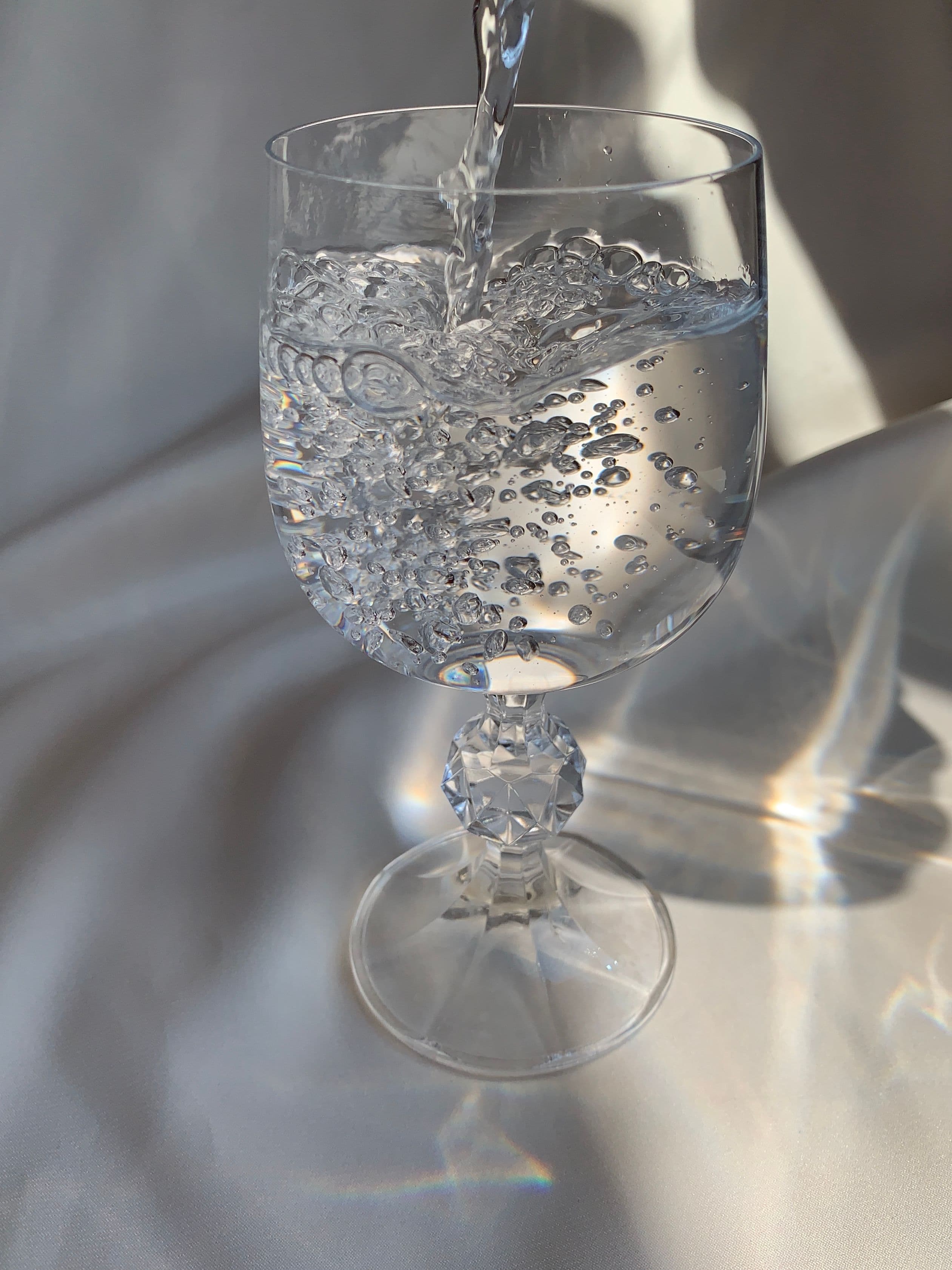
"Crystal" describes a range of glass formulations rather than one fixed material. Traditional crystal became valued for its clarity, weight and brilliance in light, as well as for the way its composition allowed it to be finely cut and polished. That is the origin of the deep, faceted patterns associated with cut crystal glassware.
Not all crystal contains lead, and it is worth being precise about that rather than assuming the two are the same thing. Traditional lead crystal is one category among several. Modern manufacturers also produce lead-free crystal, formulated to keep much of the clarity, brilliance and pleasing weight that made crystal desirable in the first place, while improving on durability. Waterford, RIEDEL, Zwiesel and Nachtmann each work across different parts of that spectrum, and the differences between them tend to show up more in weight, cut and finish than in any single technical claim.
None of this needs to become a chemistry lesson to be useful. The distinction that matters day to day is simpler: crystal, in its various forms, is made and cut to behave differently in the hand and in the light than ordinary pressed glass. That difference is what a glass is actually offering, and it is worth knowing in outline rather than taking entirely on trust.
The Glass You Use Most
The glass that matters most in most households is not the wine glass kept for occasions. It is the water glass, because it is the one asked to do the most work — at breakfast, with lunch, beside a book in the afternoon, with dinner, on the nightstand overnight. A good water glass earns its keep in a way a special-occasion glass, used four times a year, simply cannot.
This is where the habit of keeping things for best runs into its clearest contradiction. The glass reserved for something worth celebrating spends the whole year waiting for that day, while the glass doing the most daily work is often the cheapest, least considered thing in the cupboard. Reversing that — choosing the water glass with the same care usually given to the wine glass — changes more about ordinary life than a good champagne glass used once a year ever will.
Orange juice at breakfast, sparkling water on a Wednesday evening, a glass of something cold on a warm afternoon: none of it asks for an occasion. It only asks for a glass worth using.

A Small Collection Is Enough
A cupboard full of glassware that rarely gets touched is not generous. It is mostly storage. A smaller collection, chosen with more care and used more often, does more for a household than a large one kept mostly for best.
Four categories cover most of what an everyday household actually needs: a water glass, an everyday wine glass sturdy enough for regular use, a champagne glass, and a tumbler for the drinks that do not need stemware at all. Beyond that, more glasses tend to mean more that sits unused rather than more that gets reached for.
This is not a case for replacing a whole cupboard at once. It is closer to a filter for what gets added to it going forward: does this get used, or does it get kept.
Coupe, Flute or Tulip?
Champagne glasses come in three shapes that each do something slightly different. The coupe, wide and shallow, shows off colour and clarity, though it lets bubbles and aroma escape faster than the others. The flute, tall and narrow, keeps the bubbles rising in a long, visible line and holds the chill a little longer. The tulip narrows again slightly at the rim, which gathers aroma the way a wine glass does while still keeping something of the flute's fine stream of bubbles.
None of the three is strictly correct, and the differences matter more to people tasting wine closely than to everyone else. What matters more for everyday use is simpler: a champagne glass does not need to wait for New Year's Eve. It can just as easily hold sparkling water at breakfast, or the good stuff on an ordinary Friday for no occasion at all.
Some of the Best Glasses Are Old
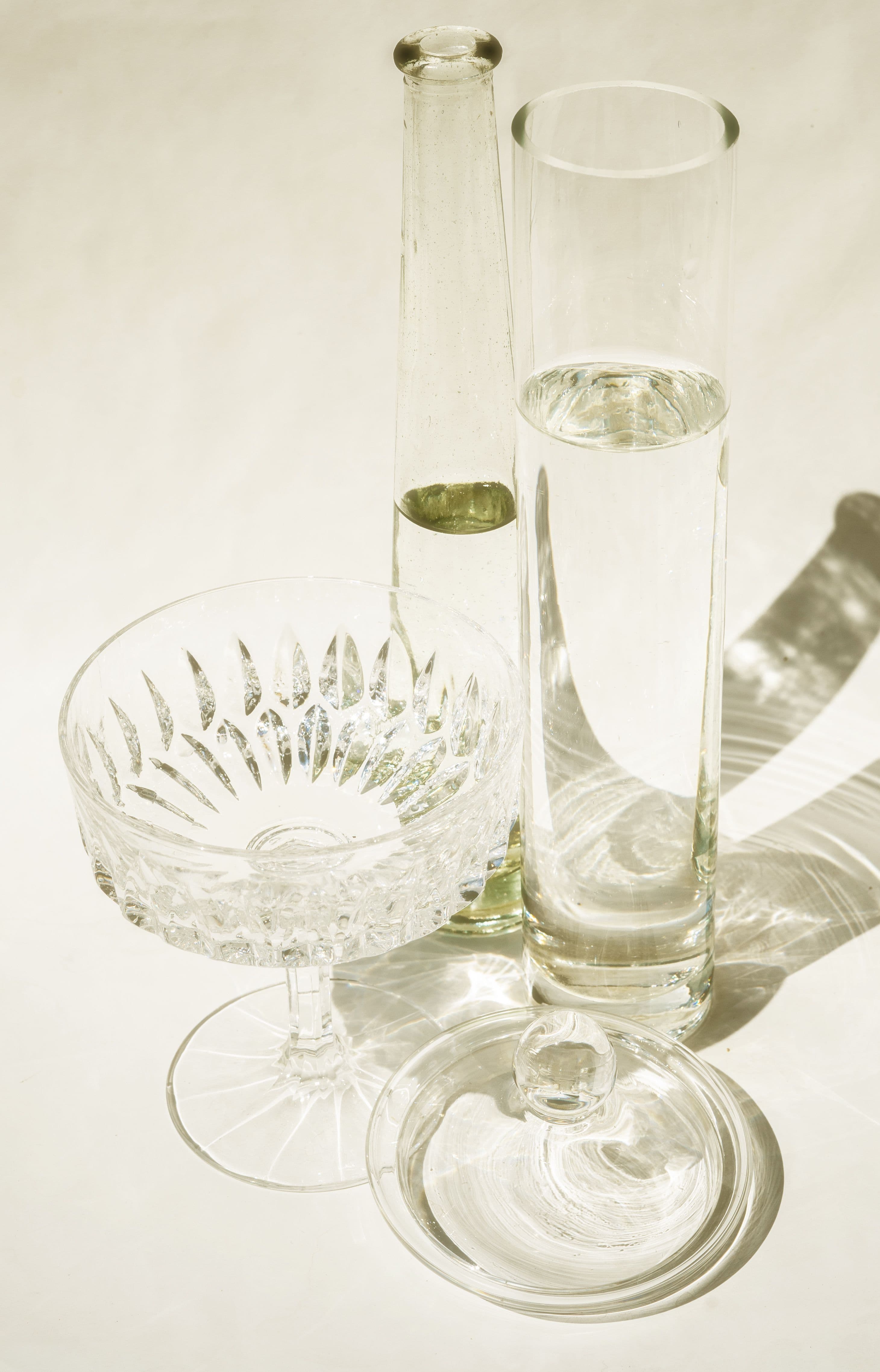
Some of the most interesting glasses in a cupboard were never bought new. They were inherited, found in an antique shop, picked up second-hand, or left over from a set someone started decades ago and never finished. A set does not need to match to be worth using — a mismatched collection, gathered slowly rather than bought all at once, can make a table feel more lived in than one where every piece came from the same box.
I use Waterford glasses at home, mostly because they were given rather than sought out, and the ones I reach for most are not the newest pieces but the older ones — the ones that show, faintly, how long they have been in use. That is not a flaw. It is evidence that the glass has actually been part of a life rather than kept apart from one.
Vintage crystal glasses often carry small signs of the decades they have passed through — a slightly different cut, a weight modern manufacturing rarely repeats. None of that is nostalgia for its own sake. It is simply what happens when an object is allowed to be used for a long time by more than one person.
Looking After Good Glasses
Good glassware asks for very little, but it does ask for some consistency, and the first thing worth establishing is that there is no single rule that covers all of it. Some crystal is best washed by hand. Some modern formulations are specifically designed and tested for dishwasher use and greater durability, though that doesn't guarantee a glass will look exactly as it did new after years of washing. Manufacturers differ, sometimes within their own ranges, and the instructions for the particular glass in front of you matter more than any general rule about "crystal" as a category.
Where hand washing is the right approach, warm rather than hot water and a soft, lint-free cloth used while the glass is still slightly warm will keep the surface from developing the faint cloudiness that comes from water spots left to dry on their own. Handle stemmed glasses by the stem or the base rather than the bowl where practical, particularly when washing or drying, since the bowl is the thinnest and most vulnerable part of the glass. Store glasses upright rather than resting on their rims, which keeps pressure off the most delicate edge of the piece, and leave enough space between glasses that they are not touching or stacked directly on top of one another.
None of this is complicated. It comes down to one principle: follow the care instructions for the particular glass, rather than a blanket rule assumed to apply to all crystal equally.
The Twenty Acres Edit
A cupboard does not need to be full to be worth having. A few glasses that actually get reached for do more for a household than a shelf of pieces bought for an occasion that rarely arrives. The three below are not offered as better or worse than one another — they are different answers to the same question: what a glass worth using actually looks like, depending on what gets reached for most.
Waterford Lismore Tall Iced Beverage (opens in a new tab) answers it as a water glass. Waterford's Lismore pattern, created in 1952, carries the diamond and wedge cuts this article has already described — the kind of traditional crystal with real weight in the hand. This particular glass is sized for everyday water, juice or something over ice, not only wine, which is the point: a glass this considered does not need to be saved for the table. It asks more of an ordinary drink than a household glass usually does, and that is exactly what makes it worth using for one.
RIEDEL Veritas Sauvignon Blanc (opens in a new tab) answers it as a glass shaped for a purpose. It belongs to RIEDEL's Veritas collection, built on the idea that a glass's shape genuinely changes how a wine opens up, with a bowl designed specifically around Sauvignon Blanc's fruit and acidity. It will not turn a Tuesday bottle into something else, but it is a reminder that a glass can be chosen for what is actually going into it, rather than whatever happens to be nearest the cupboard door.
Zwiesel Pure Allround (opens in a new tab) answers it as the glass that does not ask to be thought about at all. Made from Tritan crystal, a lead-free formulation built for durability as much as clarity, it moves between red wine, white wine, water and whatever else is poured, and goes in the dishwasher without ceremony. It is the least precious of the three, and that is exactly its use: the glass a household can reach for without first deciding whether the moment deserves it.
Use Them
The best glass in the cupboard is not necessarily the one that looks most impressive when the doors are opened. It is the one that gets reached for — for water before bed, for orange juice in the morning, for wine with dinner, for something sparkling because it happens to be Friday.
Beautiful things do not become less beautiful because they are used. If anything, use is what gives them their history — the small marks and signs of age that come from a life actually lived alongside them, rather than one spent behind glass. None of it needs an occasion. It only needs a glass worth using.
Use the glasses.
Keep this one
Save it to Pinterest.
Share this story
Things worth noticing
A note from Twenty Acres, occasionally. New stories, beautiful things, and the details we're keeping.