
The Pleasure of Going Nowhere in Particular

On a day on the water with nowhere to arrive, and what a coast looks like once you have left it.
For the first twenty minutes the coast is still the one you know. Then it begins to come apart. A headland that seemed part of a single line slides forward and shows a gap behind it, and in the gap is a bay that no road reaches. The town you walked through yesterday shrinks to a pale sliver between two hills, and you understand that you have only ever seen it from inside.
The morning started the way boat mornings do, with the noise of a quay at work: ropes slapping, a van reversing, somebody hosing down a deck. All of it fades behind you in the first few hundred metres, and what replaces it is not silence exactly. It is the sound of a place that does not need you to do anything.
Nobody has said where you are going. There is a direction, because a boat needs one, and a rough idea about lunch. But the day has not been arranged around arriving. At some point the engine is switched off, and what follows is made of small noises: water talking against the hull, a rope tapping a mast, someone turning a page.
Ordinarily travel is subtraction. The part between here and there is the part to be got through, shortened wherever it can be. A boat has no between. The passage is the thing itself, and it moves at a pace that lets you watch the land do what land does when it is seen from the side: flatten, fold, turn blue at the edges. Detail goes first. Roofs, then windows, then the lines of terraces, until the whole shore is a drawing of itself in two or three colours. Then, as you swing in towards another stretch of it, the detail returns in the opposite order.
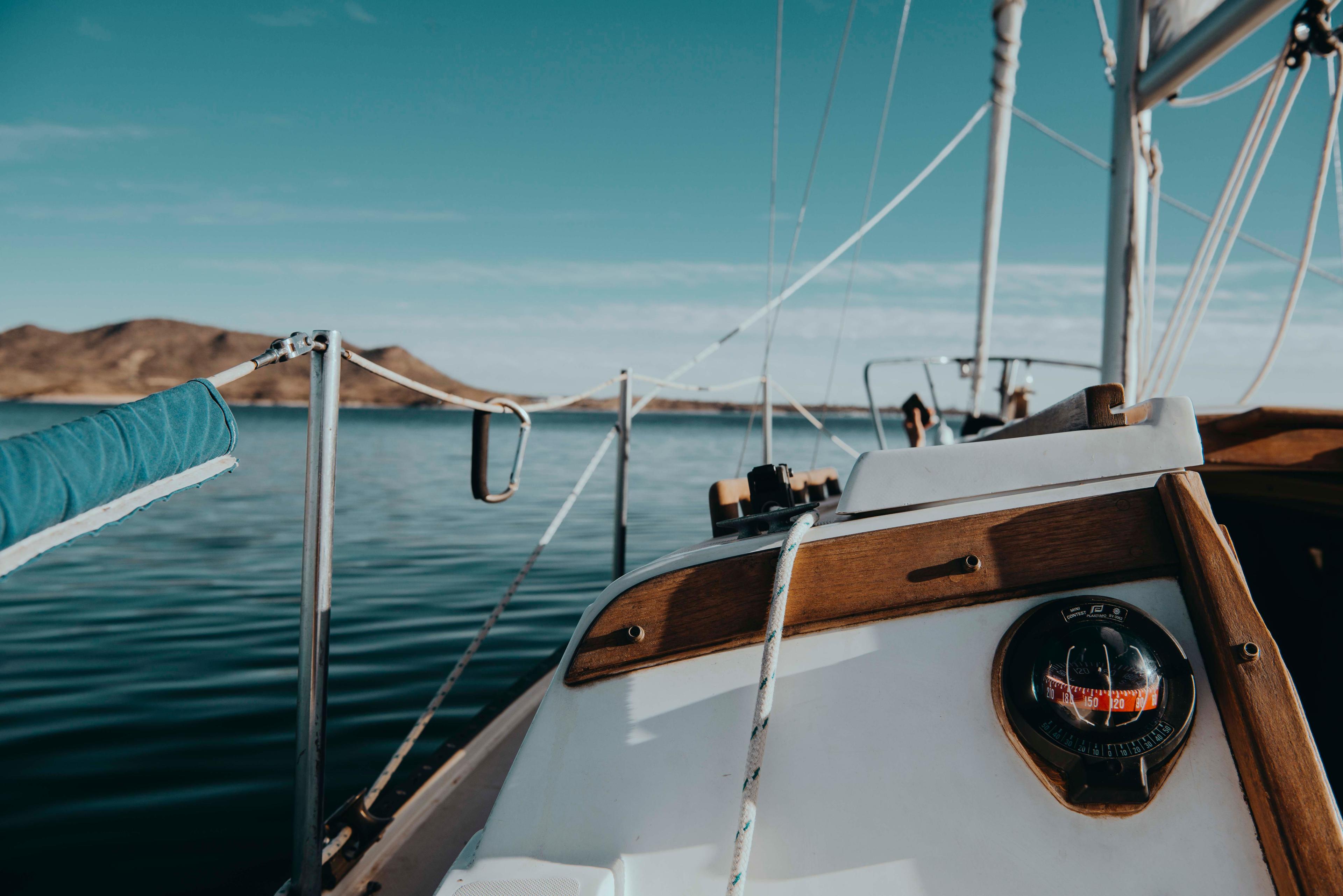
The water has a geography of its own, which a traveller on land never sees. Over sand it runs pale green, so shallow-looking that you could be fooled into thinking you could stand. Over rock it turns to ink. Over weed it is the brown of strong tea. Whoever is at the helm reads this the way you would read a face, and before long you are reading it too. Sand is where the anchor goes. Rock is where it does not. The place where the colour changes in a clean line is where the afternoon will be spent.
You find the spot without having looked for it. There is a cove, reached by water or by a path nobody keeps up, and the boat turns into it slowly, as though the cove had to be asked. The anchor goes down over sand with a long rattle. The engine falls silent. The boat swings round on its chain to face the way it came, and then the first swim, which is always the same: a sharp breath at the surface, a second of disbelief, and the odd ease of a body that has been jolted about all morning and is now, at last, weightless.
Looking down through the water you can see, for the first time, what has been holding you: the anchor lying on the sand with its chain in a loose curve behind it, small shadows of fish going over. It looks absurdly modest for the job. Then you turn over and the boat is above you, a white shape against the sky, smaller than it felt this morning, and you understand something about scale that the shore never taught you.
Lunch is whatever is in the cool box, eaten with salt drying on the skin. A loaf torn instead of sliced. A tin of something good. Peaches that have to be eaten leaning over the side, because there is no other sensible way to eat them. A wet towel hangs on the rail and is dry again by the time anyone thinks of it. Nobody looks at a menu or a map. The afternoon has no agenda to fall behind on, and so, strangely, it is longer than afternoons usually are.
There is some evidence that this is not only sentiment. In 2010 the psychologist Mathew White and his colleagues showed people 120 photographs of natural and built scenes, half with water in them. Scenes with water were rated more highly for preference, for positive feeling and for how restorative they looked, and built scenes with water, a harbour or a waterfront, were rated about as warmly as green countryside. A later survey of more than 17,000 people in 19 countries found that people recalled all kinds of waterside places as restorative. These were ratings of pictures and recollections, not a day at sea, and water is not automatically calming. But they suggest that the pull of the sea is not something we have simply been taught.
It would be dishonest to pretend that this kind of freedom costs nothing. Somebody has to be watching the depth, the wind and the fuel, and deciding which of the many possible nowheres is a safe one for the afternoon. The pleasure of drifting without a plan is a loan from whoever is paying attention to those things, and the more completely you can forget them, the more attention is being paid on your behalf. That is worth remembering when we come to who is in charge of the boat.
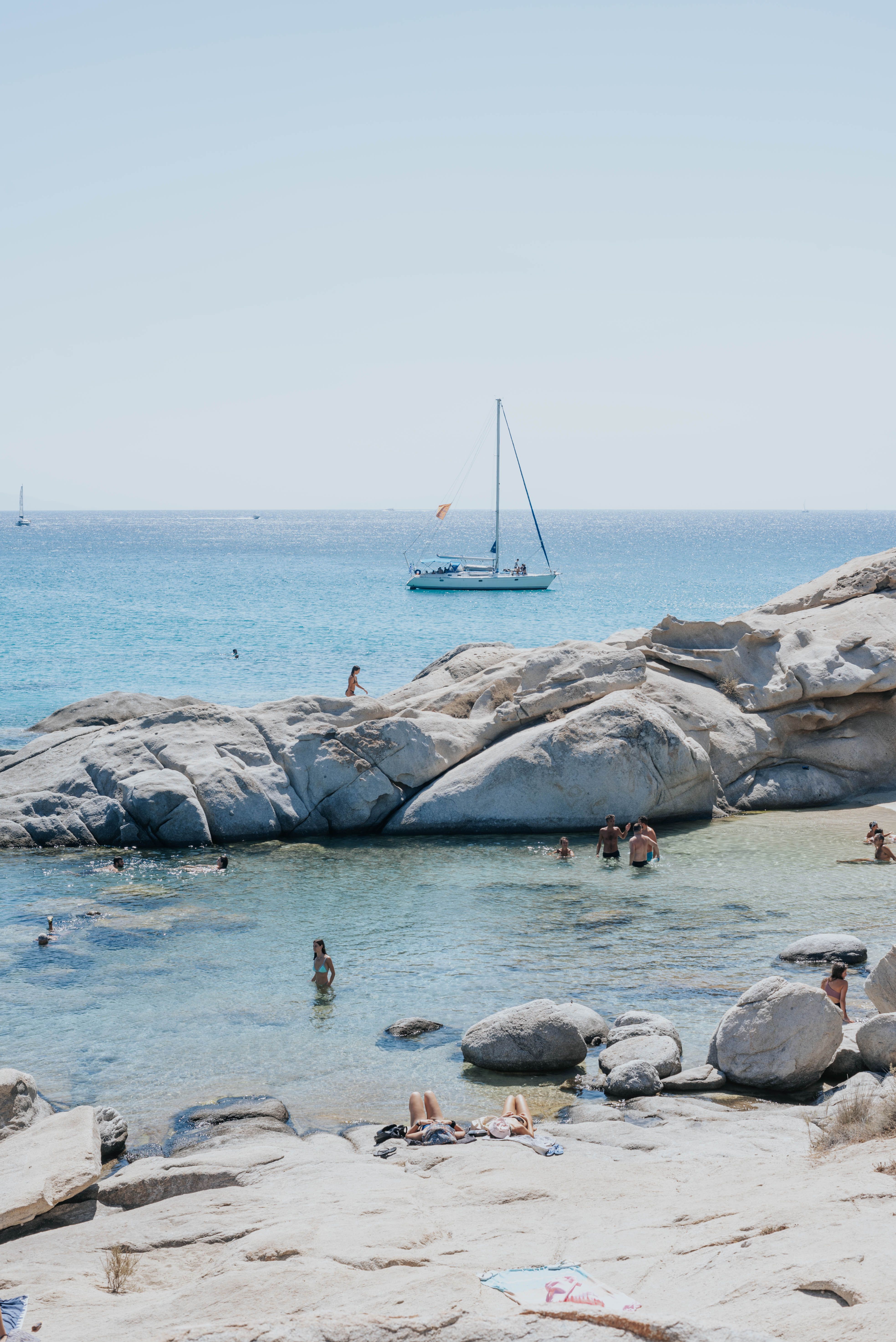
What a boat adds is a way of seeing places from the side they were built to face. A town on a coast has a front, and the front is the sea. The long waterfront, the church tower set where a sailor would look for it, the jetty that is the town's real front step: all of it was arranged to be read from the water, and from the water it reads as one composition. On land you wander into a place by its back streets. By boat you arrive at its face. You may never set foot ashore, and still feel you have been introduced.
Nobody on board speaks much about it. By mid-afternoon the conversation has loosened into the kind that leaves long gaps and does not mind them. Someone dozes with a hat over their face. Someone else trails a hand over the side. A larger boat passes a long way off and its wake arrives minutes later, a slow rolling that lifts the hull and puts it down again and is gone. The thought of doing anything else has not occurred to anyone.
Going back is the only part of the day with a destination, and even that is taken the long way round the point, because it is not yet five. The light is lower. The land has become solid again as you approach it, detail returning terrace by terrace, until the town is a town, with people in it, and the quay is just a quay.
That evening, on a map, the day would look like nothing: out from the harbour, round a headland, a loop, back. It would convince no one that anything had been achieved. But from the shore the headland is a single line again, and you know better now. You keep looking towards it while you eat, as though to check that the bay is still behind it.
Keep this one
Save it to Pinterest.
Share this story
The Twenty Acres Club
An archive of things worth noticing. Receive our private seasonal notes on the wardrobe, the house, travel and the small details that make a life its own.