
The Little Harbour
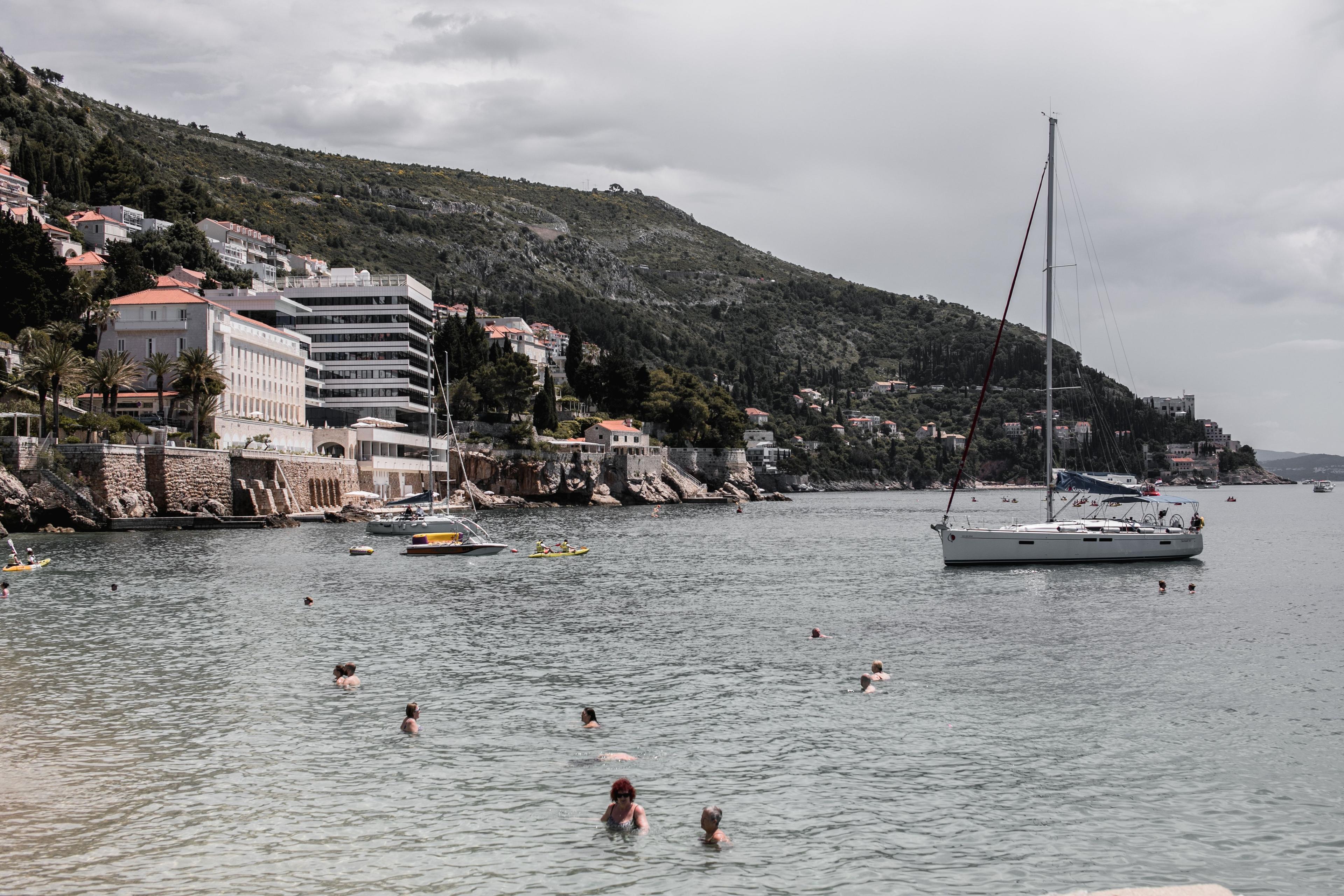
On what it is to arrive at a small coastal town from the water, and what makes a harbour worth stopping for.
The approach is the first thing a harbour gives you, and the best harbours make a show of it. On the Greek island of Hydra, a narrow gap opens between two old fortified arms, each with its row of cannons, and then the water widens into an almost circular basin ringed by tall stone houses, cafés and tavernas. The houses face inwards, towards the water, which is to say towards you. A town on a hill does not look at the sea like this. A town built round a harbour looks at whatever has just arrived.
That is what separates arriving by boat from arriving by road. By road, a place reveals itself in the wrong order, through its outskirts and its car parks. By water you come to the front door, and what you see first is what the town most wanted to be seen. It is worth knowing what makes that arrival worth having.
What a harbour is for
A harbour exists to be arrived at. Everything about it has been decided by that fact: the quay is where the town stops and the sea begins, and the cafés and chandlers and old customs sheds are strung along it because that is where people are. A place worth stopping for, from the water, usually offers a few simple things. You can step off the boat and be in a town in a single stride, with no taxi and no timetable. There is somewhere to eat within sight of the water. There is somewhere to swim, either from the boat or a short walk away. And the place has some reason of its own to be walked around: an odd street, an old fort, a market, a church on a rock.
None of these is rare. What is rare is all of them together in a harbour small enough to take in at a glance.
A harbour also shapes the town behind it. Where the shore is steep the houses climb, tier on tier, so that the whole place is built like an amphitheatre round the water, and a visitor arriving by sea sees the lot at once. It is a town designed to be looked at from one spot, the spot where you are now.
One harbour, in detail
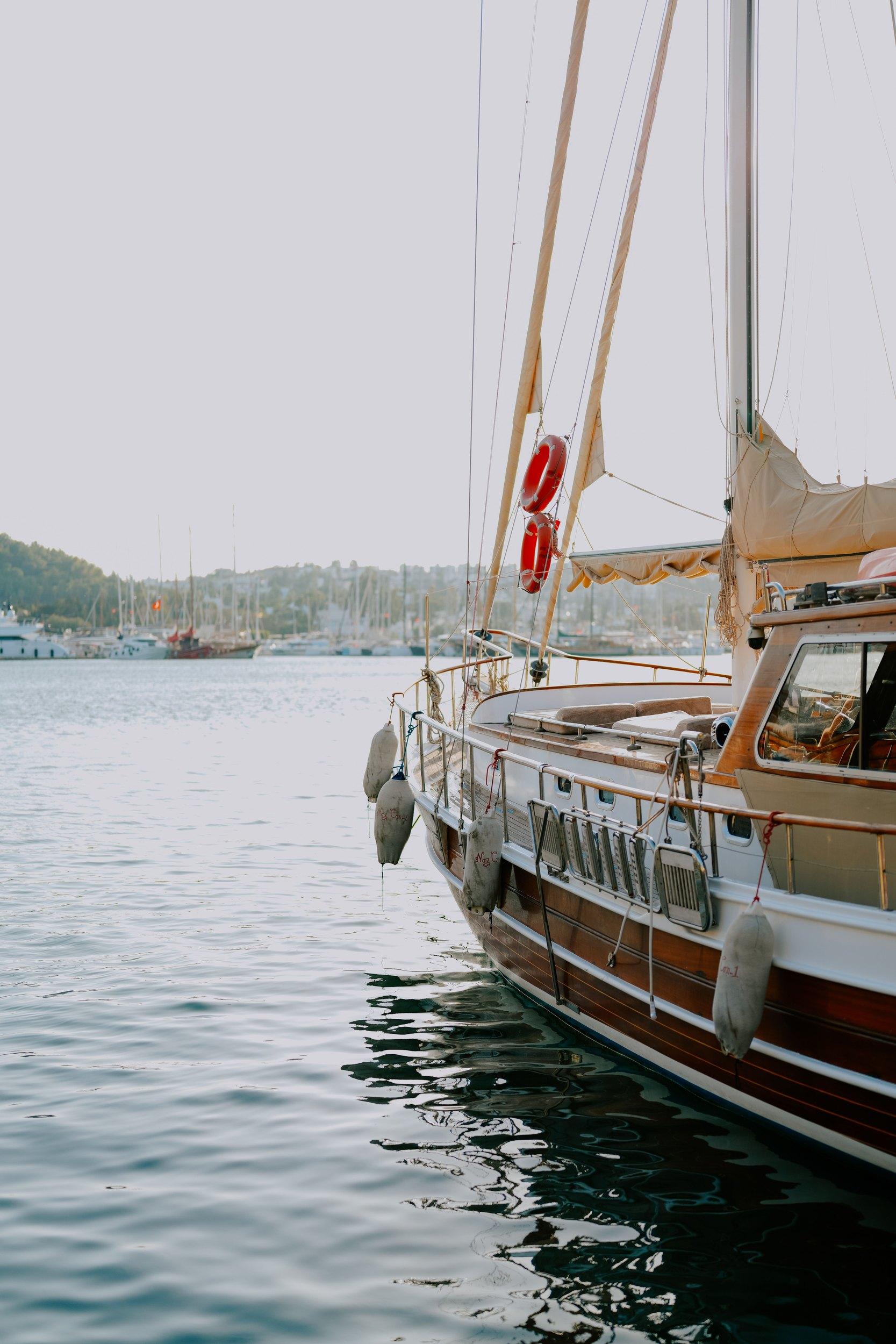
Hydra is a useful example, because sailing guides and travel writers describe it consistently and because it makes the point so sharply. There are no cars on the island. Goods are moved by donkey and mule, and passengers by water taxi, and the pace of the waterfront is set by hooves on cobbles instead of engines. Boats moor alongside the quay or stern-to, with their own anchor out. In the busy months the harbour fills up. Guides note that it gives good shelter from the prevailing summer winds, can turn choppy when a strong southerly blows, and that the water taxis themselves can set up a swell in the basin.
Swimming is easy to find. Rick Steves, writing about the town, describes a spot right in the town itself, with steps down to a few small concrete platforms and ladders into the sea, and a few beaches within an easy walk: Mandraki, Kaminia and Vlychos. In the evening, after the day-trippers leave, the lights of the tavernas come up on the water and the harbour becomes what it has been for a long time, a small town, quiet at the edges, with its boats tied up in front of it.
The harbour has its morning, too. Mules arrive along the waterfront with food, bottles and parcels, and the quay sorts itself out around them. A boat on that quay is not a spectator. It is part of a working scene, tied up between a fishing boat and a café, and the town goes on around it.
That is one description of one harbour, drawn from other people's accounts. It is not a recommendation, and it says nothing of what any particular boat would find on any particular night.
Not every harbour is for every boat
This is the honest part of arriving by water, and it is easy to forget when a place looks as good as a postcard. A harbour has limits. There is only so much quay, so much depth and so much room to turn, and a place that is lovely to look at may have a narrow entrance, a small number of berths and a long queue for them in August. A longer boat has fewer places to put itself. A crowded quay can mean mooring with an audience, because in many Mediterranean harbours stern-to mooring is done in front of the waterfront cafés, and a bad first attempt is watched by a great many people with coffee.
So the question to ask of a harbour is not only whether it is beautiful. It is whether your boat fits it, what time of year you would arrive, and where else you would go if it did not. A little harbour full of other people's boats is a poor stop. A second choice, three miles on, with a quiet anchorage and a long walk into the town, may be the one you remember. A skipper or an operator who knows the area can usually tell you which, and that is worth asking before you decide on a boat or an itinerary.
A harbour is also, simply, a place to eat with your boat in view. There is a particular pleasure in a table on the quay, with a glass and a plate and your own mooring lines in sight, and an unspoken agreement that nobody will keep an eye on the clock. A long lunch ends, if the water is warm, in a swim from the stern, and the afternoon is the better for it.

Arriving, and leaving
There is a ritual to it that no description quite carries. The boat slows. Someone goes forward with the mooring lines. The anchor is let go at the right distance from the quay, the stern is backed in, and the lines are taken ashore and made fast, and for a few minutes everyone on board is busy and no one speaks. Then it is done. The engine stops. The quay is a metre away, and a town you had only been looking at is suddenly a place you could walk into.
You do, a little later, in the order that suits the place: a drink at the first table that has a view of the boat, a walk to the end of the front, a swim before dinner from the rocks. In the morning, the quay is empty and the water is flat, and a rope that was dry last night is damp and smells faintly of the sea floor. You cast off. For the first minute the harbour is still the whole world, a circle of houses with you at the centre of it. Then the gap opens, and it becomes, almost at once, a place you have been.
For those considering Hydra by water, Sailo's Hydra boat listings (opens in a new tab) offer a place to begin exploring the boats listed in the area.
If this is what you are looking for, it helps to start with the harbour and work backwards to the boat. Choose a coast, then two or three small harbours on it that suit what you want of an evening, and only then ask what kind of boat would take you comfortably between them.
Keep this one
Save it to Pinterest.
Share this story
The Twenty Acres Club
An archive of things worth noticing. Receive our private seasonal notes on the wardrobe, the house, travel and the small details that make a life its own.