
A Few Days Between Harbours
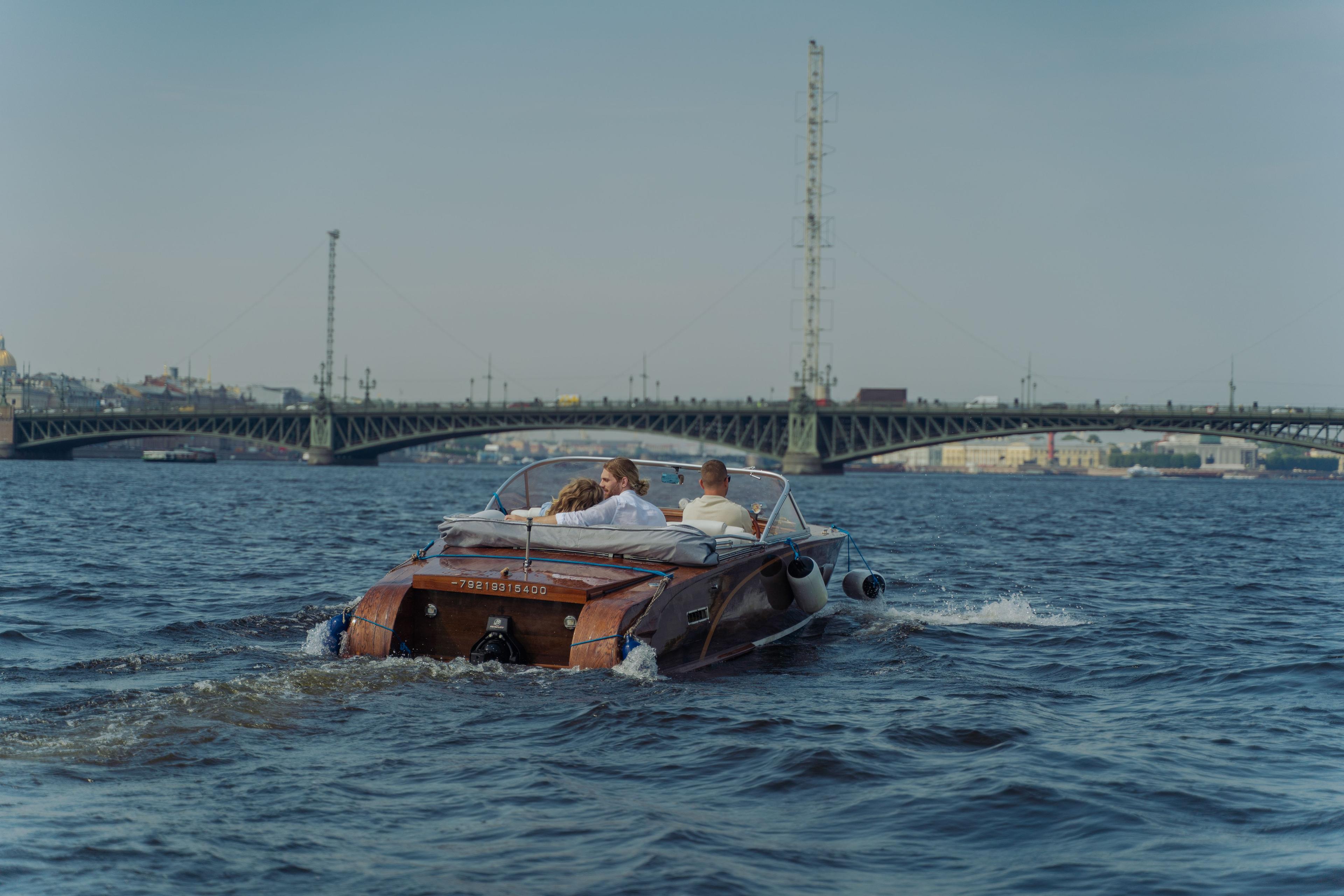
On a holiday that moves, and what is worth understanding before you plan one.
On the third morning the first question is not what to see. It is which way the wind is. Somebody has been up before the others, looking at the sky and the flag on the next boat, and by the time coffee has been made there is a plan of sorts: round the point before the afternoon breeze gets up, a swim at the second bay, and a harbour for the night with a decent place to eat. Nobody argues. The boat will take whatever route you agree on. It is the only holiday in which the bedroom travels with you.
That is the difference worth understanding about spending several days aboard. On land, a holiday is a series of arrivals and departures with luggage in between. On a boat, the luggage never moves. You wake in the same cabin, in a different place every morning, and the journey and the accommodation are one thing. Days acquire a rhythm of their own: a morning passage, a swim, a late lunch at anchor, an afternoon harbour, an evening ashore. It is slower than it sounds and fuller than it looks.
Researchers in the Netherlands, studying nearly a thousand holidaymakers, found that people were happier than non-travellers in the weeks before a trip, which they put down to anticipation, and that only trips described as very relaxed left people happier afterwards. It is one self-reported study, but it fits what most of us already know: the planning is part of the holiday, and it is worth doing with some care.
The first day is the least romantic. There is a base, a briefing and a supermarket, a boat to be walked round and its equipment explained, a lot of bags carried and a lot of food argued over. Then a rope is let go and the first harbour slides away, and the practical business of the morning turns, without anyone noticing, into the holiday.
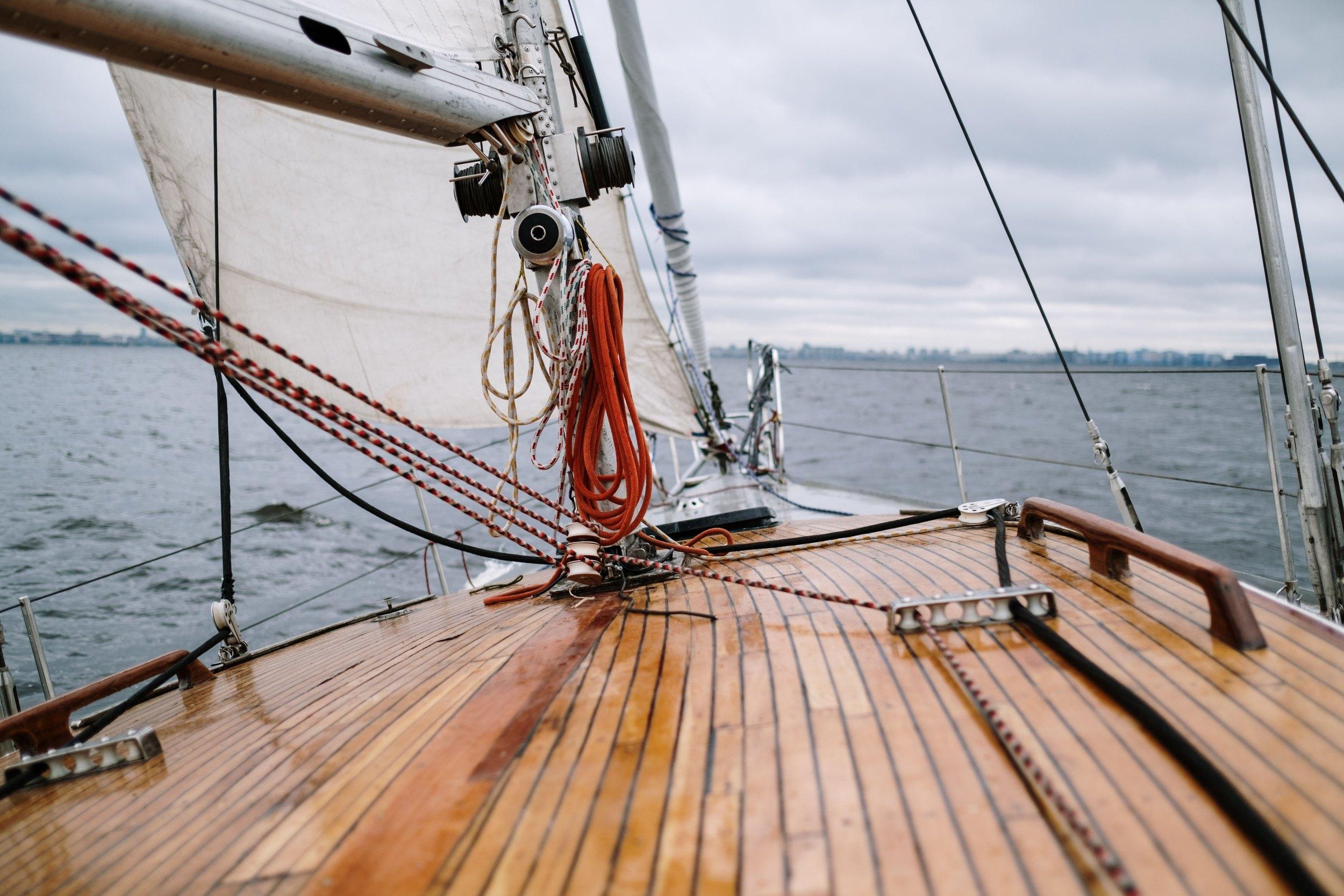
Who is steering
The first decision, and the one that shapes everything else, is who runs the boat. Charter operators describe it in broadly similar terms, though details differ.
A bareboat charter means you hire the boat without crew and run it yourself, handling navigation, anchoring, provisioning and cooking. Operators ask you to show that you are capable of it. A skippered charter adds a professional skipper to the same arrangement, and many first-timers choose it, because the skipper handles the boat while you decide where to go. A crewed charter includes a captain and usually a cook or hostess, along with the work of provisioning, and the experience is closer to a small private hotel that happens to move. A fourth option, a cabin charter, sells individual cabins on a crewed boat, and is common on larger sailing boats and traditional wooden gulets.
No one of them is the right answer in itself. The question is how much of the boat you want to be responsible for, and for how many days.
What changes the answer
Experience matters first, and the rules about it differ from place to place. In the Whitsundays in Queensland, Tourism Whitsundays says no formal boating licence is required for bareboat charters, though operators assess your competency before you leave and give a briefing on navigation, weather, anchorage and radio. Much of Europe is stricter. Operators there commonly ask for a certificate of competence, such as the RYA Day Skipper or the International Certificate of Competence, along with experience on a boat of similar size, and in some places a VHF radio certificate. One Croatian operator says at least one person aboard must hold a skipper's licence. Some operators and owners will add a skipper if your experience falls short of what a boat requires.
The size of the group governs the boat, because a boat is as big as its cabins and berths, and most people want a bunk that is not a saloon seat. Duration matters too. A single week suits many people, and in much of the Mediterranean charter weeks commonly run from Saturday to Saturday, though operators vary. If you are new to this, a skipper for the first day or two is often available as a way to learn the boat before taking it on alone.
Destination changes everything else: the season, the tides, how crowded the harbours are, what is permitted. The Whitsundays, for example, lie within the Great Barrier Reef Marine Park, and an operator will tell you what permits and rules apply. Some water is sheltered and forgiving. Some is not. A good operator or skipper will know, and a good itinerary is built around the answer.
Weather is the real itinerary. Distances on a chart suggest a tidy plan, and the wind makes its own arrangements, so the sensible plan has slack in it, and an evening that was meant for one harbour may become an evening in another. Life aboard is smaller than it sounds. On many boats water is limited, showers are short, cabins are compact and the saloon is where everyone meets, and groups that get on well on land sometimes find they get on better, or worse, with so little space. Both are worth knowing beforehand.

What is worth checking before you book
The quoted price is usually not the whole cost. Operators' own guidance says the charter fee for a bareboat typically covers the boat, its equipment and basic insurance, with fuel, marina and mooring fees, final cleaning, local taxes, food and drink and any hired crew paid separately. A security deposit is held on a card, or in some cases taken in cash, and released if the boat comes back undamaged; some operators offer a damage waiver in its place, with a smaller refundable portion. On crewed charters, running costs are usually gathered into an advance provisioning allowance, which some operators put at roughly a fifth to a third of the charter fee and settle at the end according to what was spent.
It helps to ask a few plain questions of anyone you are considering. What exactly is included, and what is paid on arrival? Which area may the boat cruise in? What is the deposit, and when is it released? Who will be skipper, and what will the briefing cover? How many people can sleep comfortably, and where? What happens if the weather turns? None of the answers is universal. All of them are available for the asking, and a good operator is glad to give them.
For a starting point in one of the cruising areas discussed here, Sailo's Whitsundays boat listings (opens in a new tab) show boats listed in that part of Queensland.
Imagining it
Once those are settled, the holiday takes shape quickly. A boat chosen to suit the group and the water. Two or three harbours that appeal, a night or two in each and a stretch of open water between them. A day set aside, deliberately, to do nothing in a cove. It is a holiday you can plan, and the planning is rather like the holiday: a run of small choices, made with more attention than a package would require.
The last morning has its own quality. The boat is cleaned, the lines are coiled and the key is handed back. The harbour is a few days older and so are you. What you remember is not the schedule. It is the second morning, with the wind getting up, the coffee going cold on the deck while two people argued kindly about which bay came next.
Keep this one
Save it to Pinterest.
Share this story
The Twenty Acres Club
An archive of things worth noticing. Receive our private seasonal notes on the wardrobe, the house, travel and the small details that make a life its own.