
A Long Weekend, Well Spent
On the rhythm of a few days in a house, and why the best of them are not the fullest.
Nothing has happened yet. The coffee is being made, the kitchen door is open to a morning that smells of cut grass and damp stone, and the day has not acquired a plan. Someone is moving about upstairs. Someone else is standing at the table with a pencil, writing bread on the back of an envelope. That is the entire schedule, and it is enough.
A long weekend is three nights and a little more. It is too short to be a holiday and too long to be an errand, and it has a shape of its own that is not simply a smaller version of something larger. Researchers who measure what holidays do have found the effect to be real but modest. A 2009 meta-analysis led by Jessica de Bloom found small improvements in health and well-being during time away, which faded soon after people returned to work. A later analysis, which reworked that data and added more studies, found a similar pattern, with the length of the break making no measurable difference to the size of the effect, and its authors suggested regular short breaks over a single long one. These are averages for employees and they cannot say whether any particular weekend will do any particular person good. A holiday is not a cure, and it does not last. But it does suggest that a long weekend is not a lesser thing.
What is it for, then? The answer may lie less in what is done than in how much of it is noticed. The psychologists Fred Bryant and Joseph Veroff use the word savouring for attending to and appreciating a good experience while it is happening. In one survey of 282 people, those who said they typically kept their attention on the present moment during good events reported more positive feeling, and those who said they were usually distracted reported less. It was self-report, so it cannot say what causes what. It does fit the plain experience of a day with room in it. You notice what is in front of you because there is nothing else asking.
Out, and back
A rule of thumb, which is ours and not the researchers': one appointment a day, and let the house do the rest. The market on the first morning, a swim on the second, a long walk on the third. More than that and the house becomes a base camp that you only return to in order to sleep. Fewer and the weekend loses its edges. The aim is a few days that feel full without feeling overfilled, and the difference is usually a single plan.
The only appointment of the day is the market, and it is not really an appointment. It is a reason to leave the house, and a good house gives you one: a reason to go out that guarantees you will want to come back. You walk down the lane with the envelope in your pocket and a basket that someone has found in the hall. You buy what looks good and not what a recipe wanted. You buy a little more than you need, the way people do who will be cooking for other people. Someone at a stall, with no reason to flatter you, says that these are the last of the plums, and you take all of them.
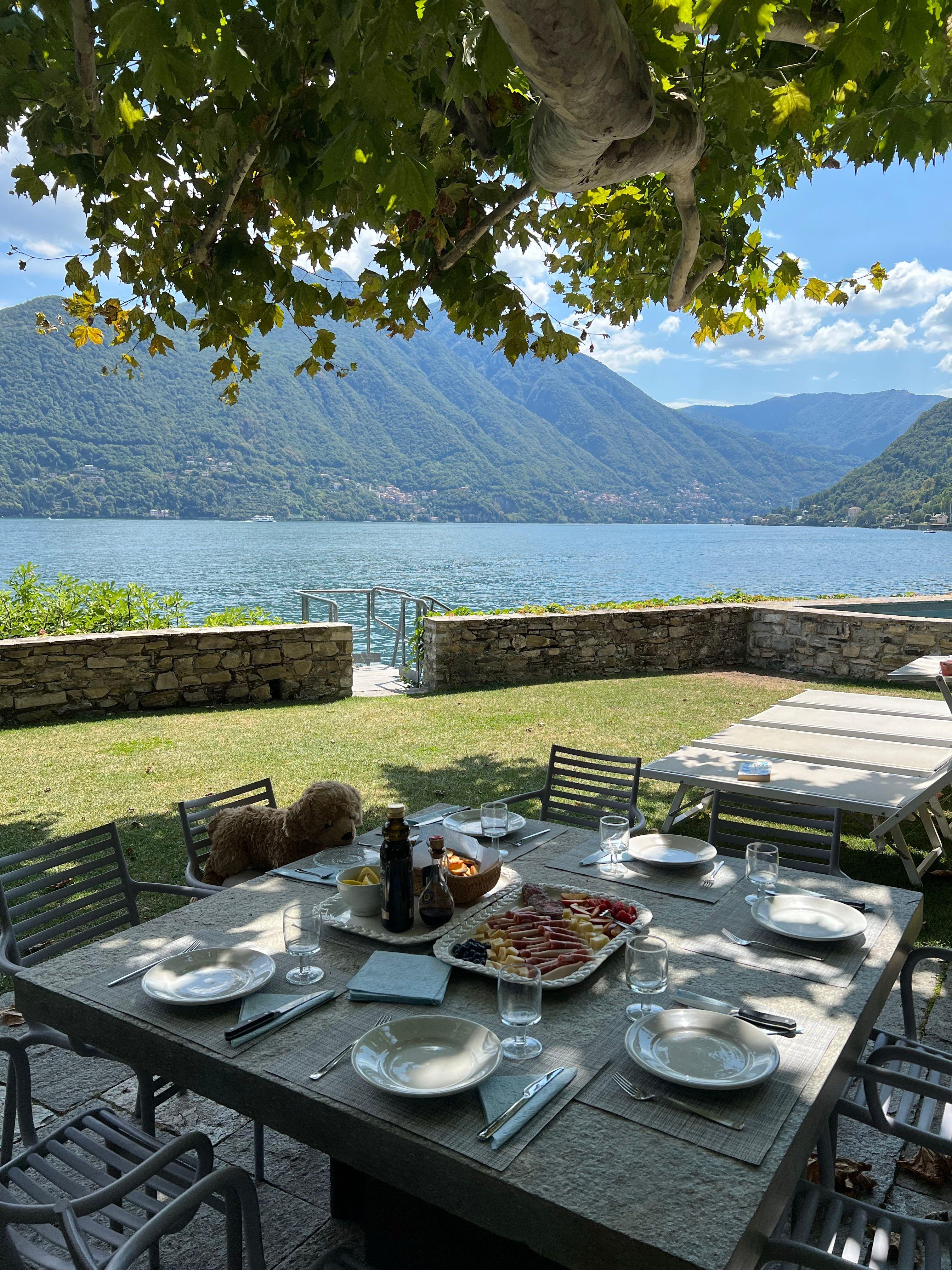
The return is half the point. The house, which until now was somewhere you slept, becomes the place where the food is. You put the bags on the table and the table becomes the centre of the building. Nothing is cooked so much as assembled: bread, tomatoes, something sharp in a jar, a cheese, a knife with a worn handle that has plainly done this a thousand times. Lunch at the house has no bill and no booking, and it has no end that is not decided by the people eating it. It stretches until someone says they might wash up, and nobody believes them.
The long afternoon
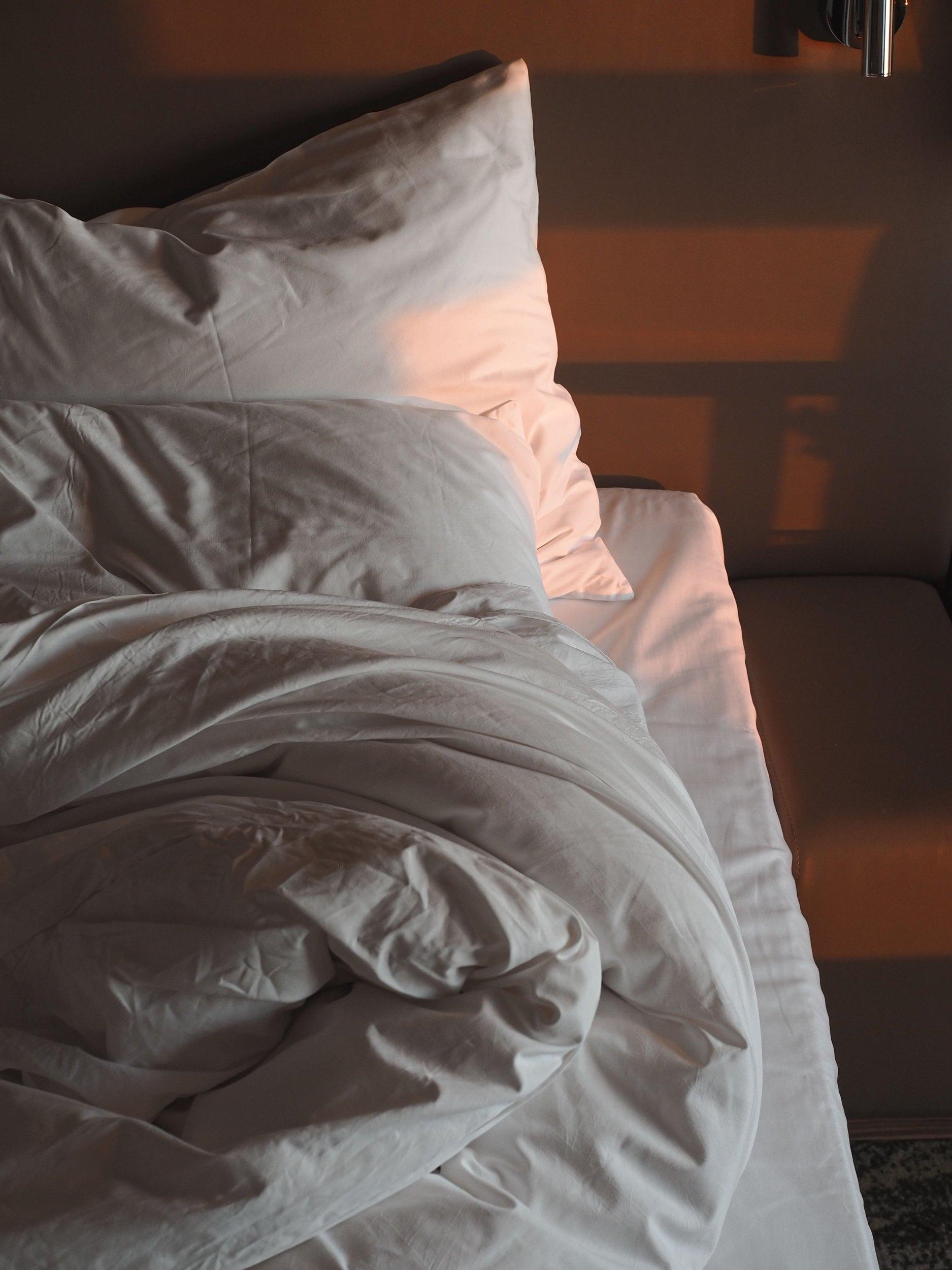
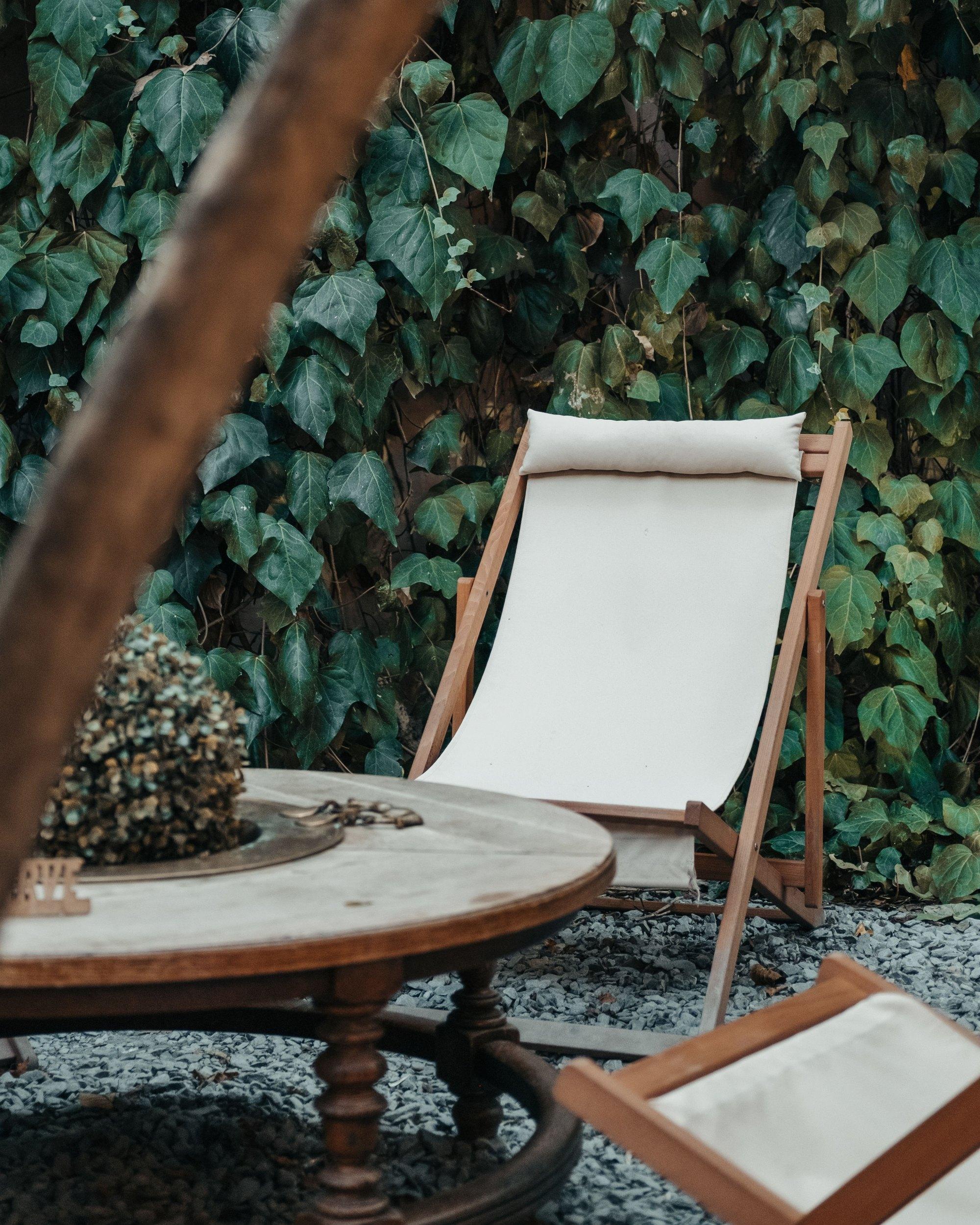
The afternoon is the part nobody plans and everyone remembers. Someone sleeps. Someone reads the same page three times and is not troubled by it. A garden chair is moved to follow the shade, and then moved again. By now you have begun to live in the house and not merely to visit it. You know which door lets in the draught, which board is loose, where the good cups are kept.
A game of cards begins that no one is winning. A call is made to someone who is not here and ended sooner than usual. The shade of the tree has travelled six feet, and the table has gone with it. There is a state, rare and not worth trying to produce, in which you do not want to be anywhere else, and the afternoon is where it tends to turn up, if it does.
Children, if there are any, understand this better than the adults. They find the one room that has a door worth shutting and make it theirs by lunchtime. The grown-ups take longer, because they keep checking whether they ought to be doing something, and the afternoon, being patient, waits for them to stop.
It is also where a long weekend differs most from a trip with a list. Nothing on the day's agenda has been left undone, because nothing was on it. There is no sense of being behind. The house, with its beds and its kitchen and its garden, has already provided every activity that is needed, and the only decision left is whether to move.
The evening gathers
By six the house begins to gather itself. A lamp is lit in a room that did not need one yet. Someone washes lettuce at the sink. People come into the kitchen without being asked, as they do towards warmth, and find that there is a job for each of them: laying the table, finding the matches, deciding which of the three bottles is the right one for what is being cooked. The evening is made of small tasks given freely, and the work is much of the pleasure.
Whoever the house is holding this weekend, family or friends or only two people and a dog, sits down to something that began at the market. The talk wanders. Candles are lit, then discovered to be unnecessary, then lit again. It is not an occasion. It simply has the quality of one, because everything that went into it was done by hand and nobody was in a hurry to have it done. Afterwards there is a walk to the end of the lane in the dark, mostly to see how dark it is, and the sound of the dishes being done by whoever is left in the kitchen.
The last morning
The last morning brings a sharper attention. Everything is slightly more visible because it is about to be over: the crack in the ceiling, the way the kettle begins to sing before it boils, the smell of the kitchen at that hour. You find yourself doing small things slowly. You strip a bed. You wash the cups. You close the shutters you opened on Friday and are surprised to be sorry.
Listed afterwards, the weekend contained very little: a market, a lunch, an afternoon, a table. It was full all the same, and not because anything much happened. It was full because each part was given room, and because the house was the point of it and not somewhere to sleep between points.
On the kitchen table is the envelope with bread on the back, which has been used for three days as a list, a coaster and a place to do a sum. You put it in your pocket. You are not sure why.
In the car, the weekend begins to do what weekends do, which is to compress. By Tuesday it will be four or five images. In the same survey that found a link between attention and positive feeling, the habit of telling other people about good events went with greater life satisfaction, and that may be why the drive home so often turns into a recital. Do you remember the plums. Do you remember the card game nobody won. The telling is part of how it is kept.
Keep this one
Save it to Pinterest.
Share this story
The Twenty Acres Club
An archive of things worth noticing. Receive our private seasonal notes on the wardrobe, the house, travel and the small details that make a life its own.