
The First Evening Away

On the hours in which a journey becomes a stay, and how little they ask for.
You are standing in a corridor with a bag on one shoulder, reading a room number off a key card, and part of you is still answering an email. The drive was only two hours. That is what makes it odd. You could be home by ten, and some of you has not yet left.
The room is a stranger's, made ready for no one in particular. The bag stays where it landed, and for a while it stays shut. Then you take out only what the evening needs: something to change into, the charger, a toothbrush. The rest remains zipped, as though the room has not yet been agreed to.
What follows is a run of small acts of occupation, none of which anyone would call an activity. The window is opened to find out what sort of street this is. The overhead light goes off and a lamp goes on. The bathroom taps are turned to learn which way is hot. The bed is pressed once with a flat hand, a gesture many people make and few can explain. The door is tried a second time, to be sure it locked. Within five minutes the room has moved, very slightly, from the hotel's to yours, and you could not say what you changed.
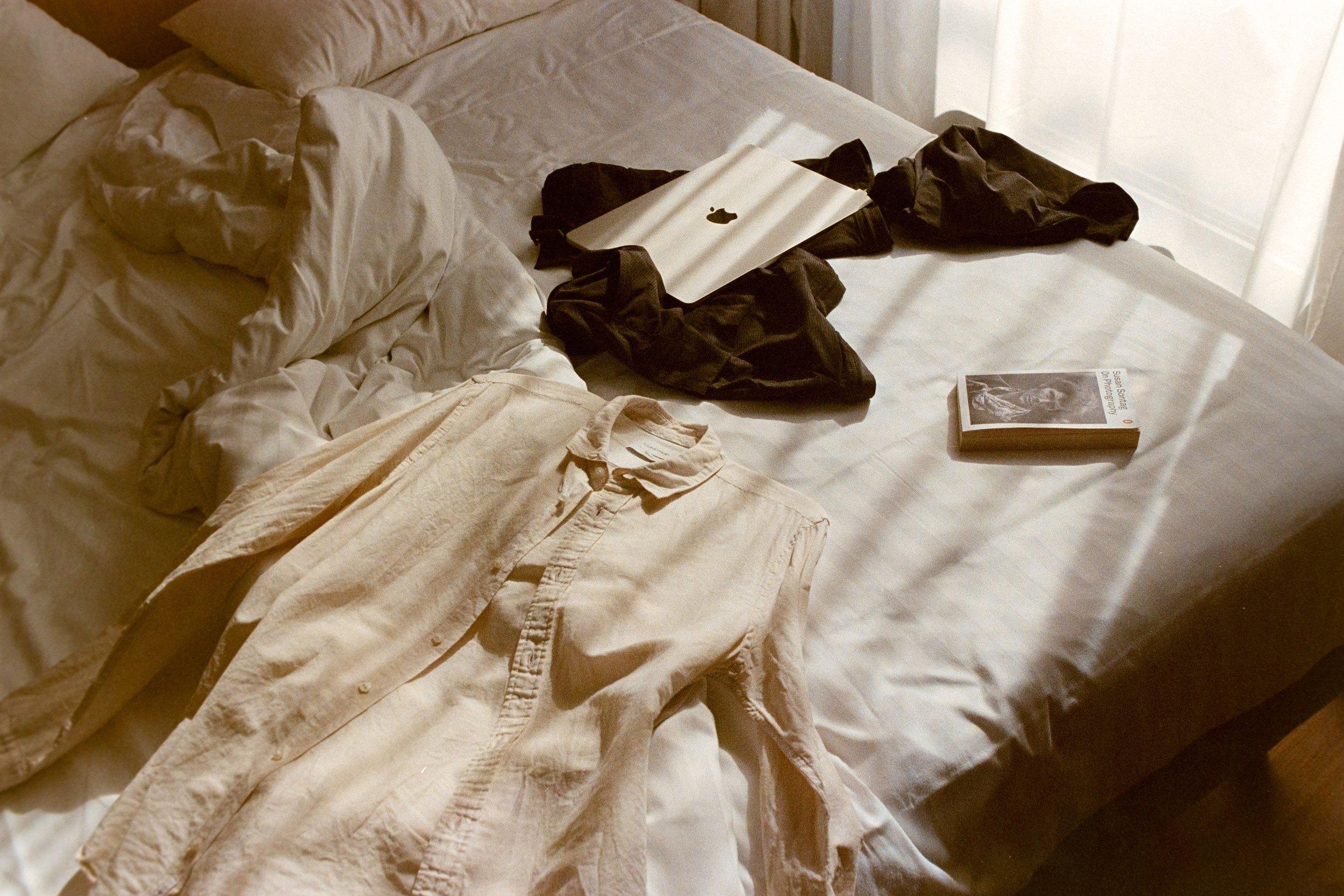
These are not idle. The first night in an unfamiliar place is known to be a poor one, and in 2016 researchers at Brown University found a possible reason. Thirty-five young, healthy volunteers slept in a laboratory on two nights, a week apart. On the first night only, a network on the left side of the brain slept more lightly than its counterpart on the right and reacted more strongly to unusual sounds, as though keeping watch. It was a small study of sleep, not of evenings, and "keeping watch" is the researchers' hypothesis. But it is hard to see someone try a door twice without thinking of it. Something in us is still checking that the place is safe, and the little rituals of arrival are how we say that it is. That reading is ours, not theirs.
At home, the changeover is built in. There is the commute, the keys in the bowl, the shoes by the door. Away, nobody has built it, and it has to be improvised. This is why arriving is not the same as having arrived. The body reaches the key card first. Being away follows by a slower route, and the occupational psychologist Sabine Sonnentag, who studies how people recover from work, has a name for what has to catch up: psychological detachment, which means not simply being away from the job but ceasing to deal with it in your head. A journey does not deliver that. You can sit in the room and still be composing a reply.
The place itself does some of the work. Wendy Wood and her colleagues followed students who transferred to a new university and found that habits such as watching television survived the move only where the circumstances that cued them survived too. Habits are held in place by rooms, chairs and times of day, and a strange room has none of these. It may be why, away, you find yourself eating at an hour you never would at home, or going twenty minutes without reaching for the phone. It was a study of students and their routines, not of holidays, but it suggests that the permission to behave differently is not only a feeling. Some of it is simply that the cues are missing.
It is tempting to hurry this stage. The first evening collects plans: a table booked for eight, a view to be reached before it goes dark, a feeling that the hours are paid for and ought to be used. None of that is wrong. But it keeps the evening in the register you have just come from, where every hour has to produce something, and the change of setting is wasted on it. An evening away is allowed to have no result.
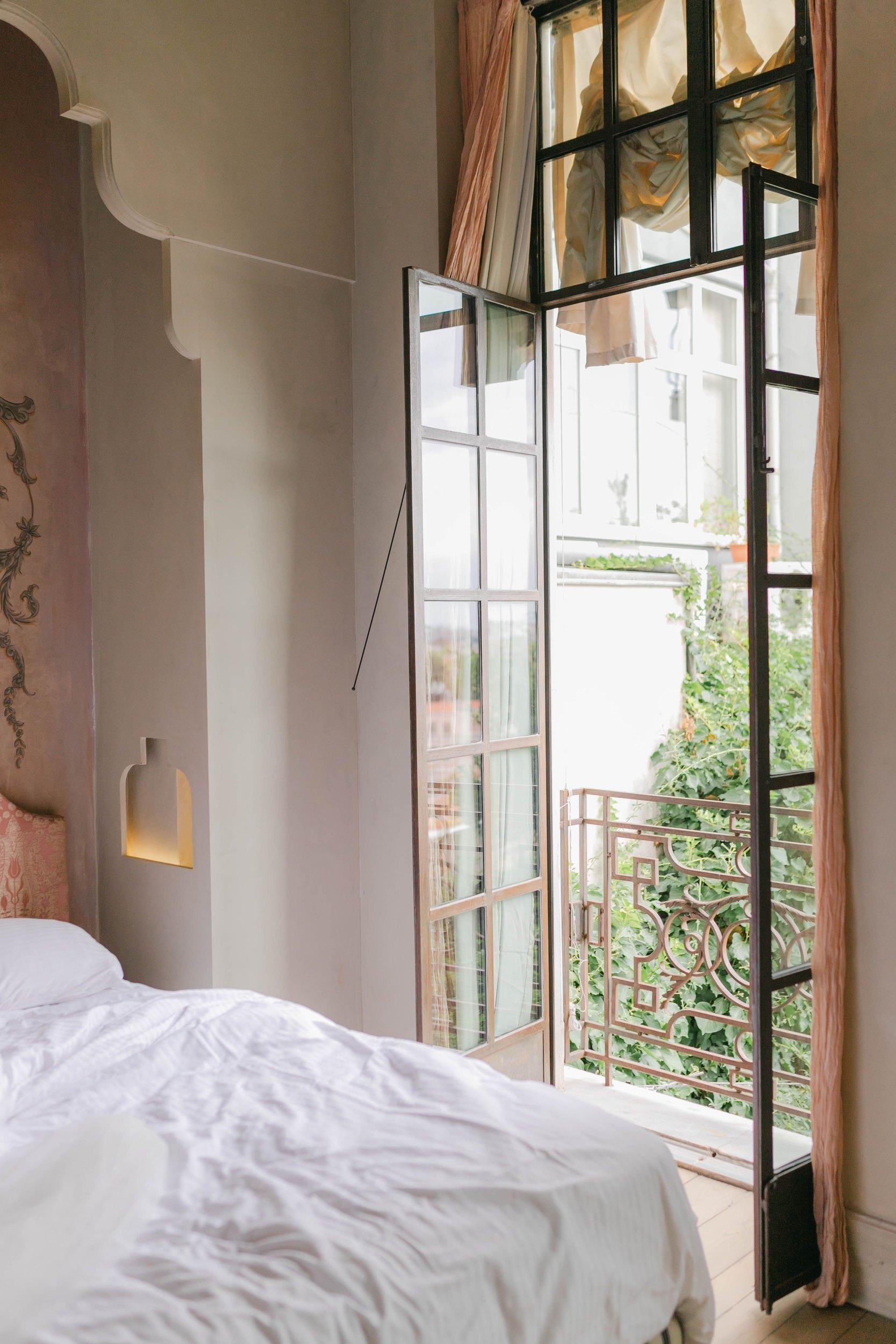
If you go out at all, go out lightly. Walk to the end of the street and back, or round one block in the direction nothing has been recommended. The aim is not to see the place but to see it at its ordinary hour: someone locking a shop, someone hosing a step, people coming home with bread. A town is doing its Friday, and would be whether you were here or not. There is a particular relief in that. For once the day is going on without you.
Eat early or late, or not at all. It is worth noticing which clock you are on. Dinner at the hour you would eat at home means the timetable has come with you. Dinner at an hour you would never choose means it has been left behind, and the stay has begun. Have a drink on the way back, or don't. The evening has no job, and if the best thing on offer is a bath and a sound from the street, that is a whole evening.
If there is a choice, arrive before dark. The first evening needs an hour or two to unfold, and a room reached at eleven at night has none of that to give. It can only be slept in. It is the most practical thing to know about a short break, and it costs nothing.
Somewhere in it, without announcement, a thought goes all the way to its end. Nothing interrupts it, neither the thing you ought to be doing nor the phone, and you notice only because it has not happened for a while. That is the moment of arrival. The bag is still zipped by the door. It can stay there until morning.
Keep this one
Save it to Pinterest.
Share this story
The Twenty Acres Club
An archive of things worth noticing. Receive our private seasonal notes on the wardrobe, the house, travel and the small details that make a life its own.