
The Room Everyone Ends Up In
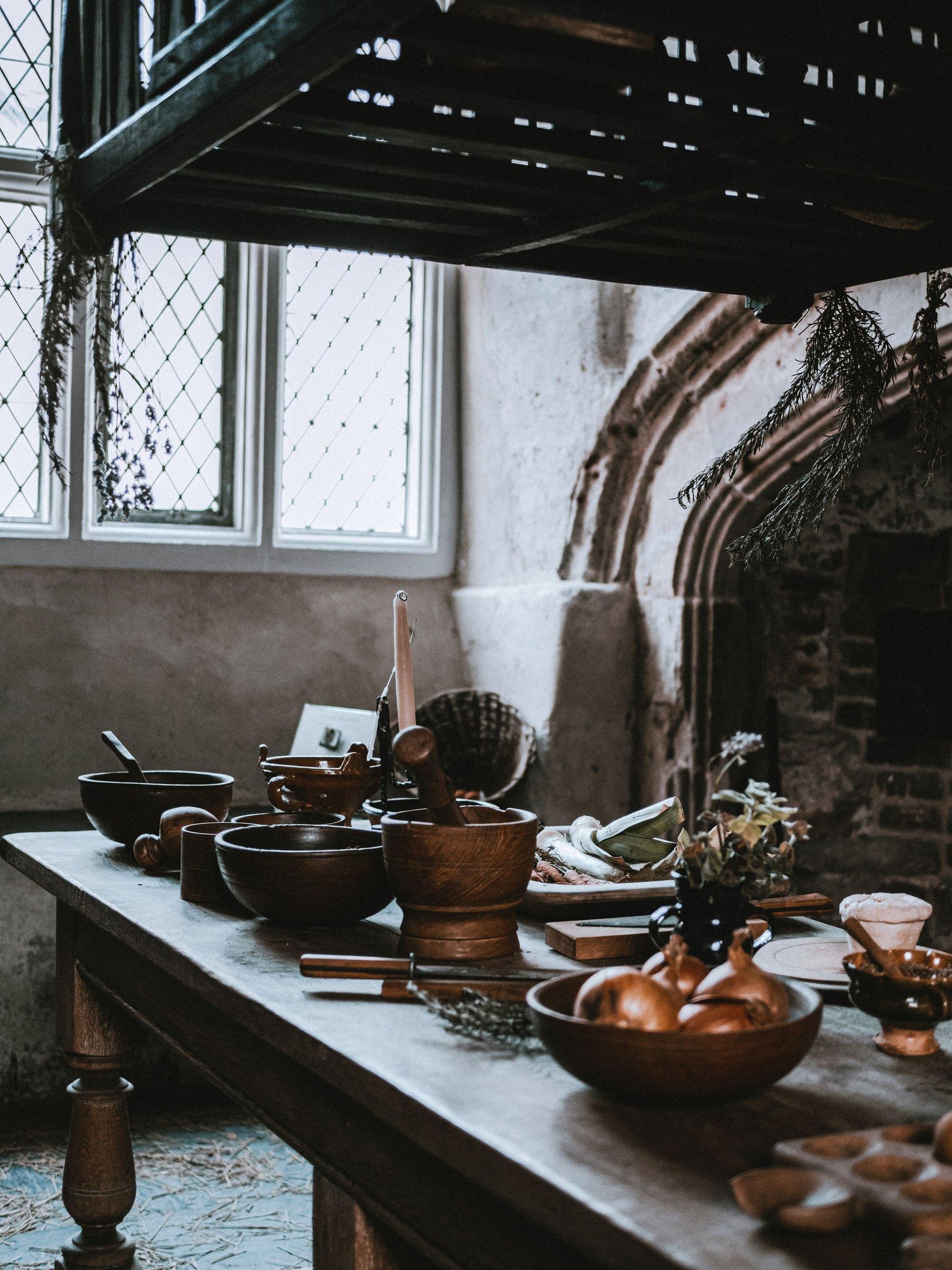
There is a sitting room, and it has been made comfortable. The good chairs are in it, and a lamp has been turned on, and somebody has plumped the cushions. And yet, an hour into the evening, nobody is there. They are standing in the kitchen. One is leaning against the bench with a glass, one is perched on a stool that was never meant to be sat on for long, and one is holding a tea towel without any intention of drying anything. The person cooking has stopped asking them to go through.
It happens in almost every house, and it happens whatever the kitchen is like. A cramped galley, a farmhouse room with a range, a narrow flat with one window over the sink: people drift there, and stay. It is worth asking why, because the answer says a good deal about what a house is for.
Where the work is
The simplest explanation is that the kitchen is where something is happening. A sitting room is a place to wait in. A kitchen is a place where a meal is coming into being, and that is more interesting to be near than any arrangement of furniture. There is steam, and noise, and the small drama of whether the sauce will come together. There is the chance of being handed a spoon and asked for an opinion.
It is also easier to talk while standing beside someone who is busy. Conversation in a kitchen has somewhere to rest. When it pauses, there is an onion to look at, or a pan to stir, and nobody has to fill the silence. People say things over a chopping board that they would not say across a coffee table. The same is true, later, at the table itself, and it is why a table nobody has to leave so often begins with a kitchen everyone was allowed into.
Warmth, in the plain sense
For most of the history of houses, the kitchen was simply the warm room. The fire for cooking was the fire for living, and on a cold evening there was no question of where the household would sit. Many older country houses still carry this in their bones: the kitchen at the back, close to the yard and the woodpile and the garden, with the big table in the middle of it and the door that is used far more than the front one.
Central heating has made every room warm, in theory, and still the kitchen keeps something of its old pull. A kettle on, an oven open, a pot that has been simmering for an hour: these are a particular, gathered kind of warmth that a radiator does not quite reproduce.
Built to be used
A kitchen is also, more than any other room, a room of materials that are meant to be handled. Timber benches that take a knife mark and a water ring. Tiles that can be wiped. A stone sink. Bowls that go from the shelf to the bench to the table and back again, many times a day. Nothing in a good kitchen is precious, because nothing in it can afford to be. That makes it a forgiving place to stand. You can put a glass down anywhere. You can lean.
It is no accident that the objects people become most attached to are so often kitchen objects: a wooden spoon gone dark at the end, a chipped mixing bowl, an everyday ceramic bowl that has been used so often it is reached for without looking. They are the household's tools, and they carry its routines.
What it asks of a house
None of this means every kitchen has to be large, or open to the rest of the house, or designed around entertaining. Some of the best kitchens are small enough that two people must move around each other with care. What they share is less a layout than a willingness to be shared: a place to put a glass, a stool or a step to sit on, a bench that is not entirely covered with appliances, a light that is kind in the evening.
The same is true of the house around it. In a country house in particular, the kitchen is often where the house meets everything outside it: muddy boots at the door, the dog's bowl, vegetables brought in from the garden still with soil on them. Its materials have to cope with all of that, which is part of what a country house is made of.
Letting it happen
There is a version of hosting that tries to keep guests out of the kitchen, so that the meal appears as if by magic. It has its occasions. But more often the evening goes better when the kitchen is allowed to be what it already is. The cook gets company. The guests get something to do with their hands. Nobody has to pretend that a meal is not being made.
Later, much later, the plates are stacked by the sink and the sitting room is still waiting, lamp on, cushions plumped. Somebody suggests moving through. Nobody moves. There is a little wine left, the bench is warm from the oven, and the conversation has found its level. The kitchen, as usual, has won.
Keep this one
Save it to Pinterest.
Share this story
The Twenty Acres Club
An archive of things worth noticing. Receive our private seasonal notes on the wardrobe, the house, travel and the small details that make a life its own.