
Christmas in New York
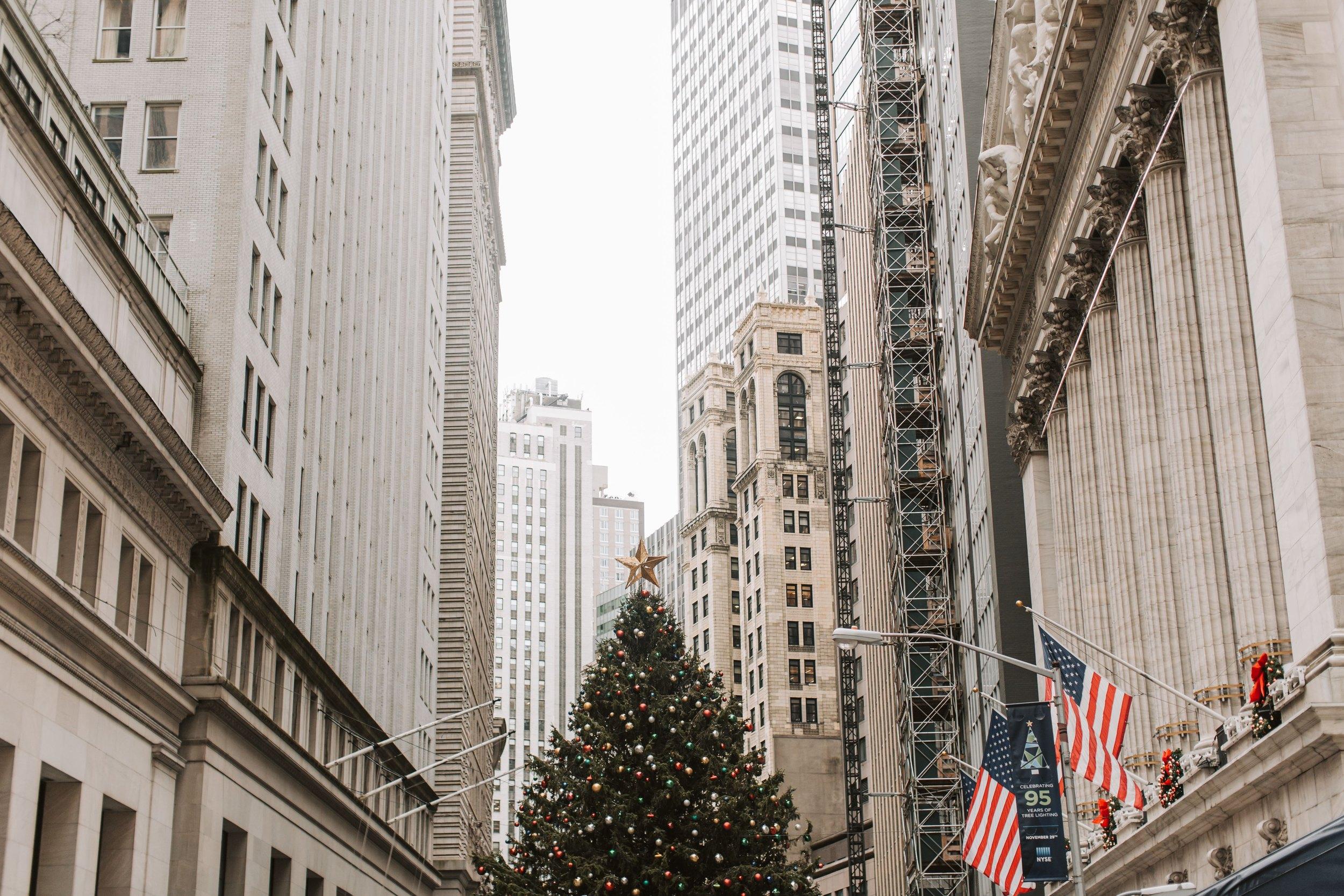
The City We Dream About in December
You know it before you arrive. It is in the way the cold is always described, bright and dry and faintly metallic, the kind of cold that makes a lit window look like an invitation. It is in the steam that rises from the street in so many films, and the yellow cabs sliding through it, and the coats: long, dark, collars turned up against a wind that comes down the avenues as though it had somewhere to be.
December changes the scale of the city. Towers that are merely tall in other months begin to feel like weather. By about half past four the daylight is gone and the ground floors take over, one lit window after another, each with its own small argument for stopping. The bare trees along the pavements are wound with tiny lights. People walk briskly, then slowly, then stop altogether in the middle of the footpath to look up, and everyone behind them steps around without complaint.
Then there is the other half of the picture, which is what makes it irresistible. Somewhere on every block a door opens, and the cold on one side of it meets the warmth on the other. Coats come off. A café fogs its own windows. Someone passes carrying a paper bag that is plainly hot. New York in December is built from this exchange, the street and the room, the sting of the air and the first breath of heated, coffee-scented indoors, and it is why the city is so much easier to love in winter than its reputation suggests.
A City Dressed for Christmas
Begin on Fifth Avenue, and begin without a plan.
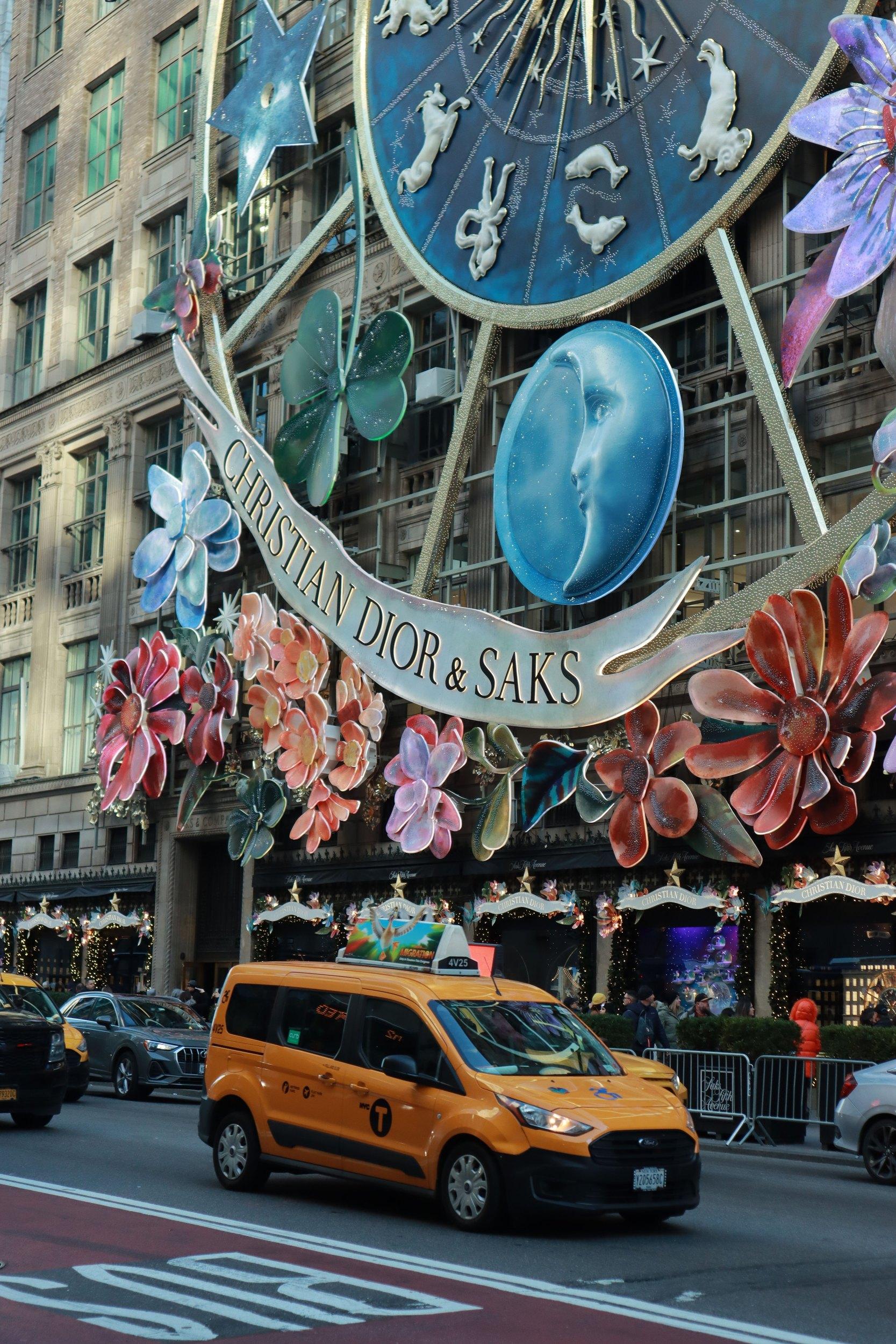
The department stores along it treat their windows as small theatres, and the pleasure is in how slowly the crowd moves past. Each window is a scene: a table laid for a party, a street in snow, a figure caught in some tiny act of preparation. People stand shoulder to shoulder, half turned to whoever is beside them, saying look, look at that. What is in the windows changes every year, which is part of the point. You are not going to see what you expected, and that is the pleasure.
A short walk away, at Rockefeller Center, stands the tree. It is larger than the photographs allow, and the plaza around it is crowded. It is also a much humbler idea than the spectacle suggests. The first one, in 1931, was a balsam fir about twenty feet tall, bought by construction workers on the site and hung with garlands their families had made. Everything since has grown from that small, slightly improvised gesture. Stand at the edge of the plaza in the evening, among the people holding up their phones, and it is oddly easy to hold both things in your mind at once: the great lit tree under its crystal star, and the picture of men in work clothes gathered round a fir that somebody had the nerve to decorate.
Dates and viewing hours change from year to year, so it is worth checking Rockefeller Center's own holiday page (opens in a new tab) before you plan an evening around the tree.
Between the grand things, and around them, are the streets, which do a quieter version of the same work. A wreath on a brass door. A single lit tree in a florist's window. The smell of roasting nuts from a cart on the corner. These details appear on no list, and they are what make the walk between the famous places worth doing on foot. The landmarks are where you point the camera. The small things are where you slow down.
An Afternoon on the Ice
At some point you will want to stop looking at Christmas and be inside it for a while. Walk north, and the tall edges of Fifth Avenue give way to something almost startling: the bare, dark trees of Central Park, and a sudden amount of sky.
The sound changes first. The traffic drops away, and in its place come the scrape of blades on ice, the crackle of a loudspeaker, someone laughing as they go down. Wollman Rink has stood at the southern edge of the park since 1950, and it is one of the few places where Midtown can be seen across open ground, a wall of towers above the branches while you go round in a slow circle.
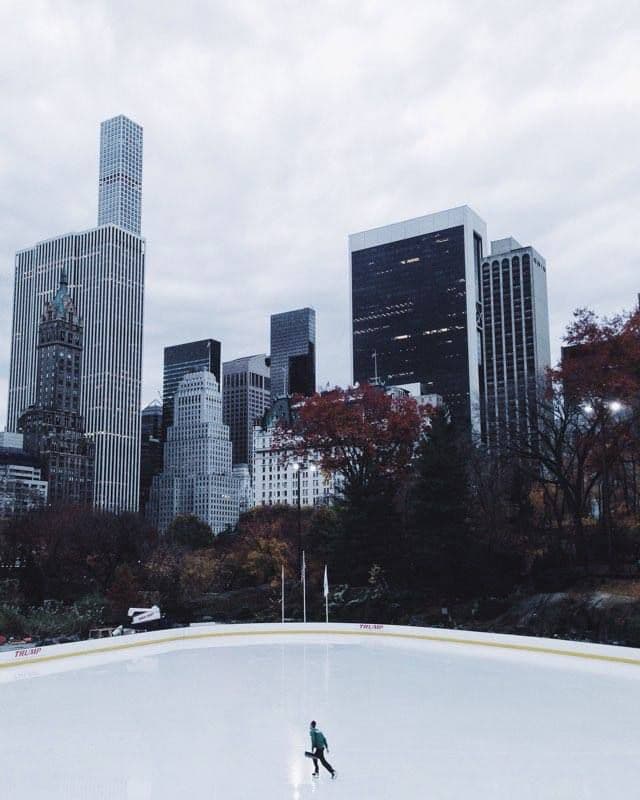
It is not a secret, and it is not quiet. On a December afternoon it is a public rink in one of the busiest cities in the world, and you will share the ice with a great many other people, most of them as unsteady as you. That turns out to be its charm. Nobody is watching. Everyone is concentrating on the next metre, and the cold gets into your hands and face in a way that feels earned.
Afterwards the pleasure is the reverse of the skating: the strange stillness of ordinary shoes, the ache in your ankles, the single-minded search for something hot to hold. A paper cup of chocolate will do. So will a table by a window anywhere with a radiator. The cold afternoon exists, really, for the warmth that follows it.
Opening dates, hours and tickets are set by the rink each season, and Wollman Rink's website (opens in a new tab) has the current details.
The Pleasure of Having Somewhere to Return To
There is a moment in every winter day in the city that has nothing to do with the sights. It is the moment you come in from the street with your face stiff and your hands not quite your own, and the door closes behind you. The noise drops. A radiator ticks. You take off the coat, then the scarf, then the boots, and you sit on the edge of a bed and do nothing at all for ten minutes. The city is still out there, lit and humming, but for now it is on the other side of the glass.
This is the part of a New York Christmas that the photographs leave out, and it matters more than it looks. A city this large and this loud is easiest to love in bursts, and how long the bursts last depends on what you are returning to. Where you stay changes how you experience New York.
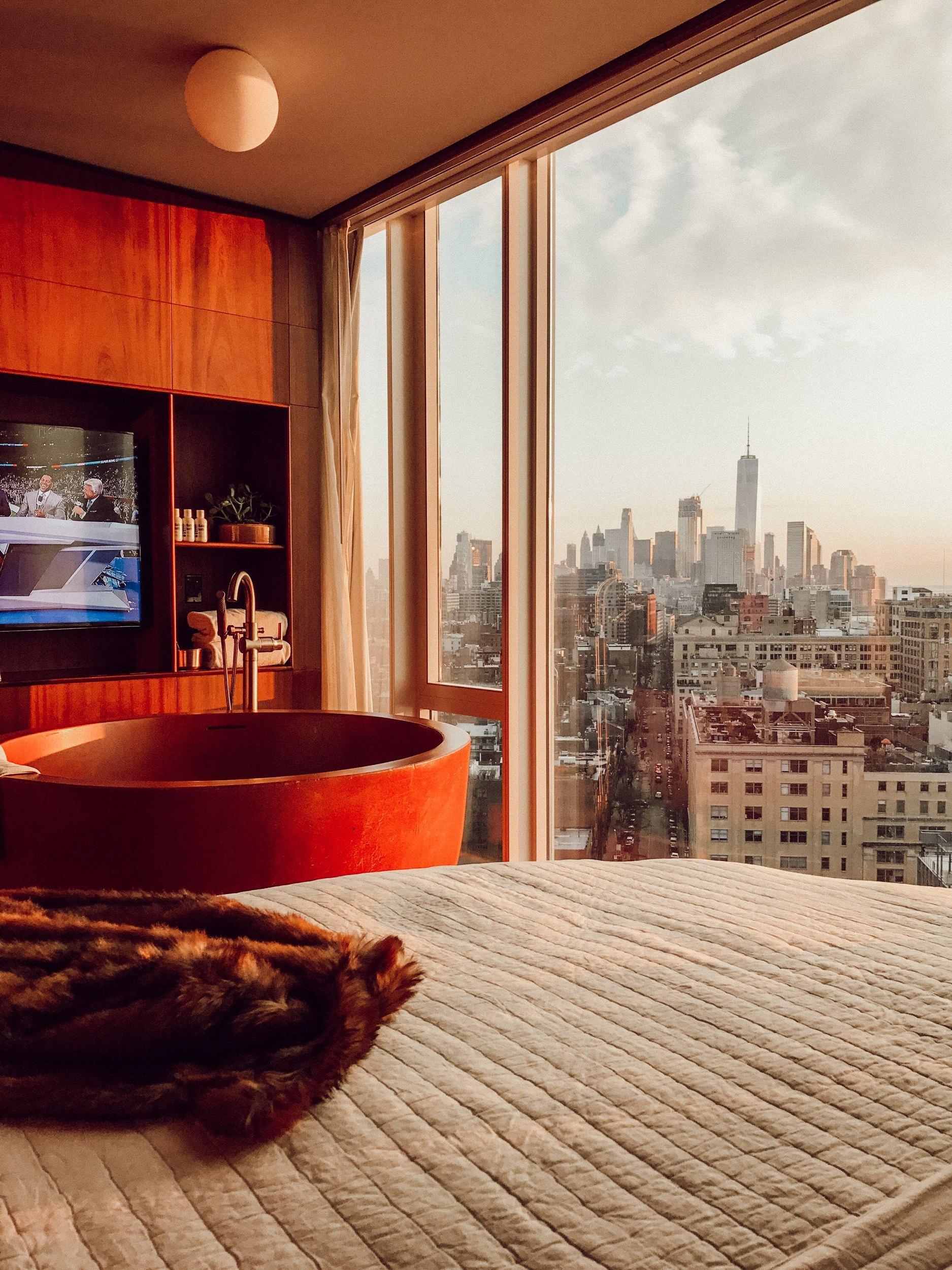
A hotel and a private home offer different kinds of return, and neither is better. A hotel takes the day off your hands. Someone else has made the bed and warmed the lobby, and the pleasure of coming back is the pleasure of being expected. The rooms we remember from hotel stays are rarely the grandest ones. They are the ones that did something for us: a window at the right height, a chair in the right light, a bath run at the end of a cold day.
A private home asks more of you and gives something different. You find the kettle. You learn which tap runs hot. You live for a few days inside someone else's arrangement of ordinary life, which is a different sort of arrival from a hotel's. In a city where everyone is on their way somewhere, a door of your own, a table you can lay and a window to watch the street from in your socks let you settle at the pace of someone who lives there. It suits a longer stay, or a group, or anyone who suspects the best part of a trip is the breakfast they made themselves.
If you would rather begin with a hotel, The Whitby opened in 2017 as the second Firmdale hotel in New York, with interiors by Kit Kemp: bold colour, pattern and art behind steel-framed windows, a short walk from Fifth Avenue and the southern edge of Central Park. Discover The Whitby Hotel (opens in a new tab), on Booking.com.
For the other kind of return, there are private homes to rent in the West Village, a residential neighbourhood on the west side of lower Manhattan. Explore private homes in the West Village (opens in a new tab), on Vrbo.
Whichever you choose, the room does the same quiet work. It resets the day. Within the hour the stiffness has gone from your fingers, the light at the window has turned from grey to blue, and the city, which was too much a little while ago, is exactly enough again. You put the coat back on. You go back out.
When the Lights Come On
The change comes faster than you expect. In December the light goes early, and in New York it goes with a little ceremony. The sky behind the towers deepens to the blue of a gas flame, and then, building by building, the windows answer. Shopfronts that looked ordinary at noon now glow like lanterns. The pavements, which were grey, take on reflections: red from a traffic signal, gold from a doorway, white from the headlights of a cab sliding past.
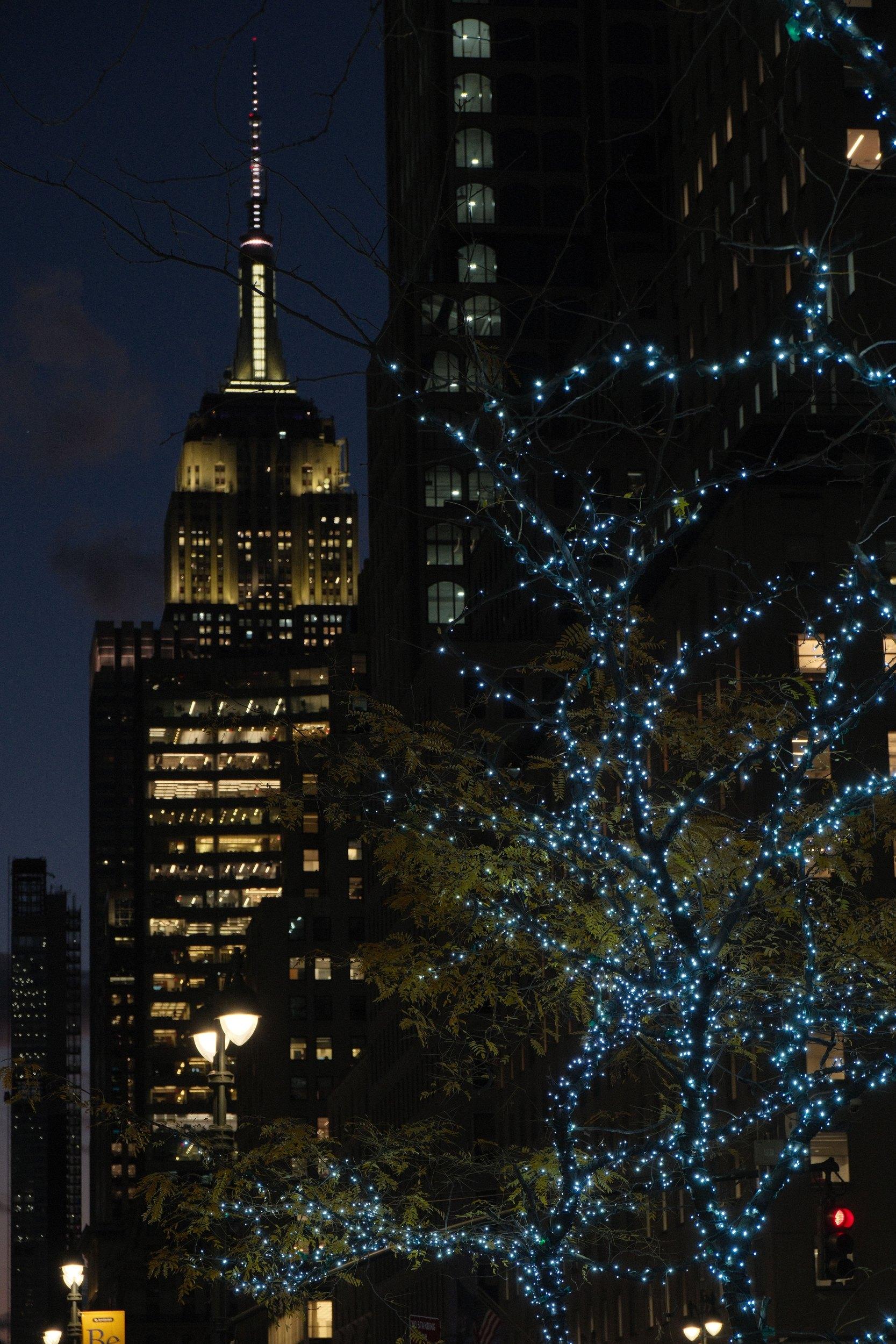
This is the hour to leave the plan at the door. Walk without a destination, one block at a time, and let the lit windows choose the route. Cross the avenue because the other side looks warmer. Stop, for no reason, in front of a window with one small arrangement in it: a bowl of clementines, a pair of gloves, a cake on a stand. The city after dark is generous with this sort of thing, and it rewards whoever lets themselves be steered.
There is nothing in particular to see. The streets are the show: the steam, the yellow of a cab, the music that escapes each time a door swings open, a couple on the corner arguing happily about which way to go. The cold sharpens all of it. And at the end of the walk there is somewhere to go back to, which is what makes it possible to stay out longer than you meant to.
A Little Room for the Unexpected
Somewhere in the middle of the week the list begins to feel heavy.
There is a way of visiting a famous city in which the sights are collected like stamps and the days are measured by how many have been done. It is satisfying, in its way, and it leaves very little behind. The things people remember from New York in December are rarely on the list. A café entered only to get out of the wind. A side street with a single house outlined in white lights. A man selling Christmas trees from the kerb, stacked like a small forest, who wishes you a good night as though he means it.
Leave an afternoon unplanned. Go into the place you were only passing. Sit for longer than is sensible. The difference between collecting a city and experiencing it is mostly a matter of allowing something to happen to you.
The Christmas We Take Home
It is the contrasts you carry home. The cold of the street and the warmth of the room that received you. The great lit tree, and the small scene on a side street that you could not find again on a map. The noise of the avenue and, later, the particular quiet of a room with the curtains drawn and the whole city humming on the other side of the glass.
You arrive wanting to see everything. You leave wanting a little longer, and that, more than any single sight, is how you know a place has worked on you. The anticipation of arriving and the reluctance to leave turn out to be the same feeling, seen from either end of the week.
Home may be somewhere the December air is warm, with the doors open and the table outside, and the memory will travel well all the same. It needs very little to survive: a small light in a kitchen, a cup held in both hands at the end of an afternoon.
What you take home is not the tree, or the windows, or even the ice. It is the feeling of coming in from the cold and finding the light already on.
Keep this one
Save it to Pinterest.
Share this story
The Twenty Acres Club
An archive of things worth noticing. Receive our private seasonal notes on the wardrobe, the house, travel and the small details that make a life its own.