
The Best Linen Sheets for Everyday Use
The Best Linen Sheets for Everyday Use
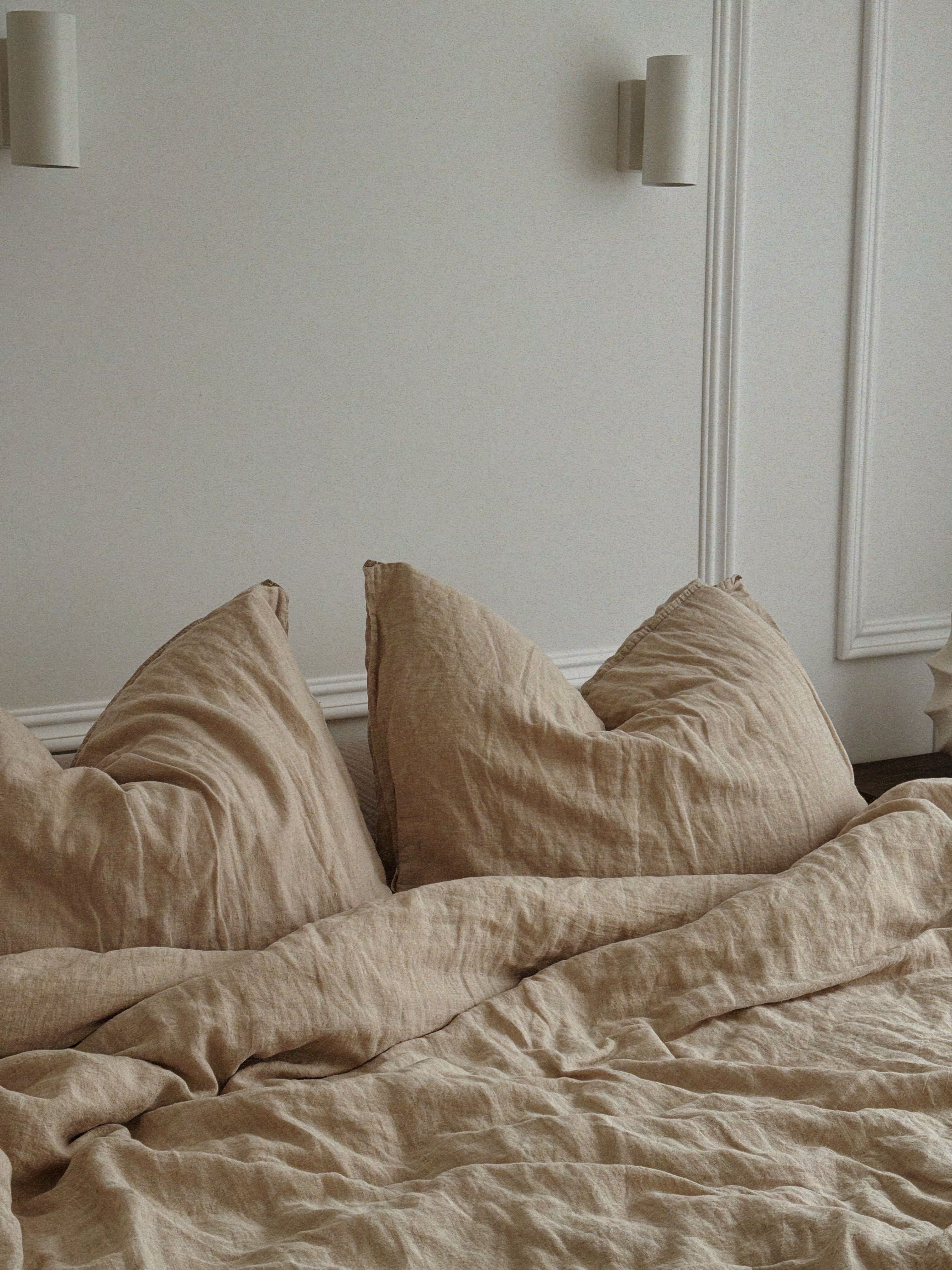
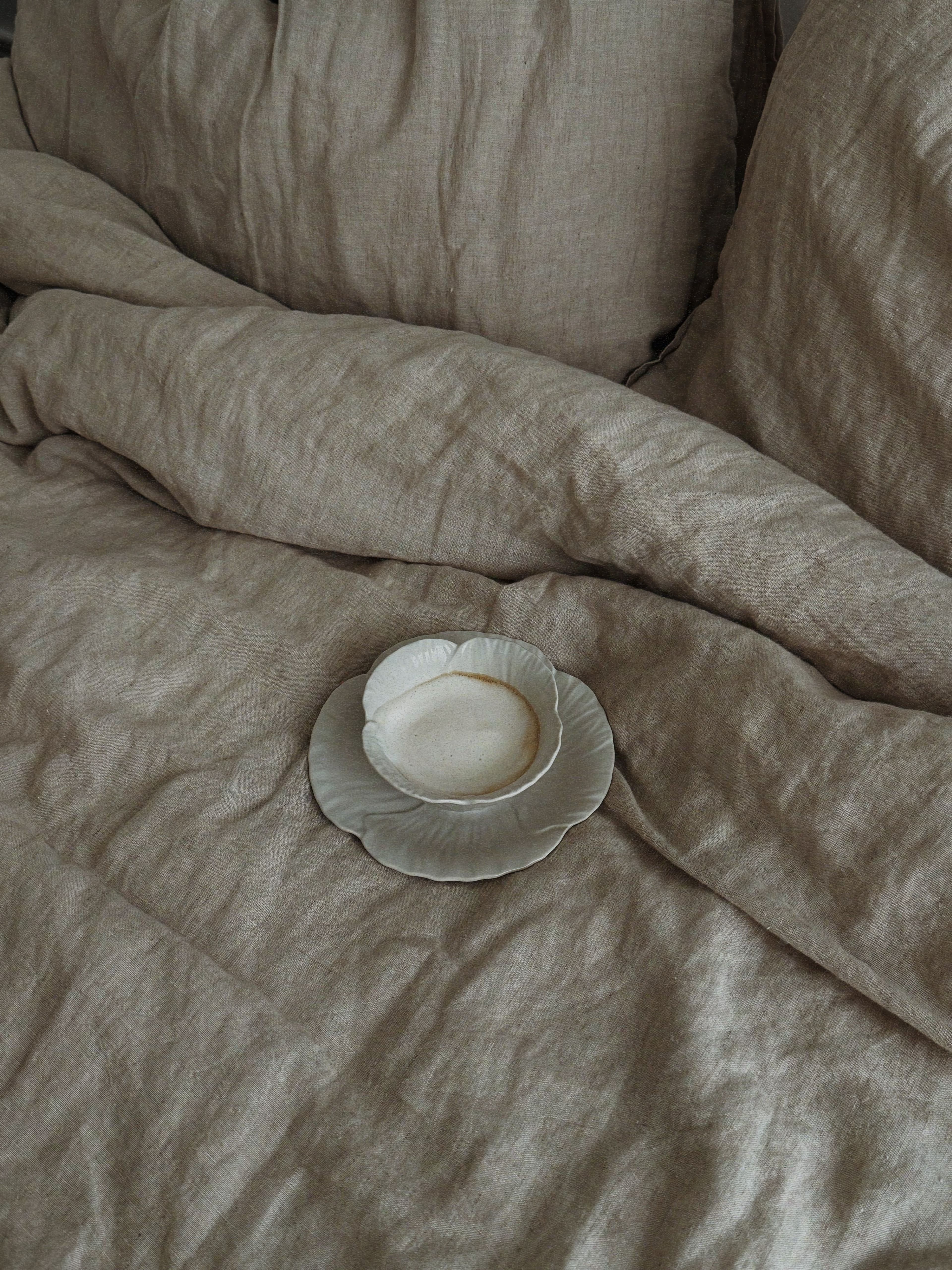
Linen is one of those materials where the first impression isn't necessarily the point. A new set arrives creased from its packaging, a little stiff, sometimes stubbornly wrinkled no matter how it's shaken out. That's not a flaw to be forgiven. It's the beginning of what the fabric actually is. Linen changes through washing, through use, through the ordinary friction of a bed being slept in night after night, and the sheets that are genuinely worth buying are the ones that get better for it, not the ones that look most convincing in a product photograph.
That puts linen in the same category as the vintage denim, the polished silver and the glassware kept for everyday use rather than for guests: things whose value only becomes obvious with time, not on delivery day. Buying linen for the way it lives, rather than the way it looks on arrival, changes which questions are worth asking before you buy.
What Makes a Good Linen Sheet?
There's no single specification that settles the question. A good linen sheet is the sum of several separate decisions made by the manufacturer, fibre, provenance, fabric weight, weave and finishing, construction, and the fit and care instructions that follow from all of it. A high GSM number doesn't rescue poor construction. A well-known provenance mark doesn't guarantee the finished fabric feels the way you want it to. Each of these tells you something real, but none of them tells you everything, which is exactly why linen resists being reduced to a single "best" number the way thread count once did for cotton.
Start With the Flax
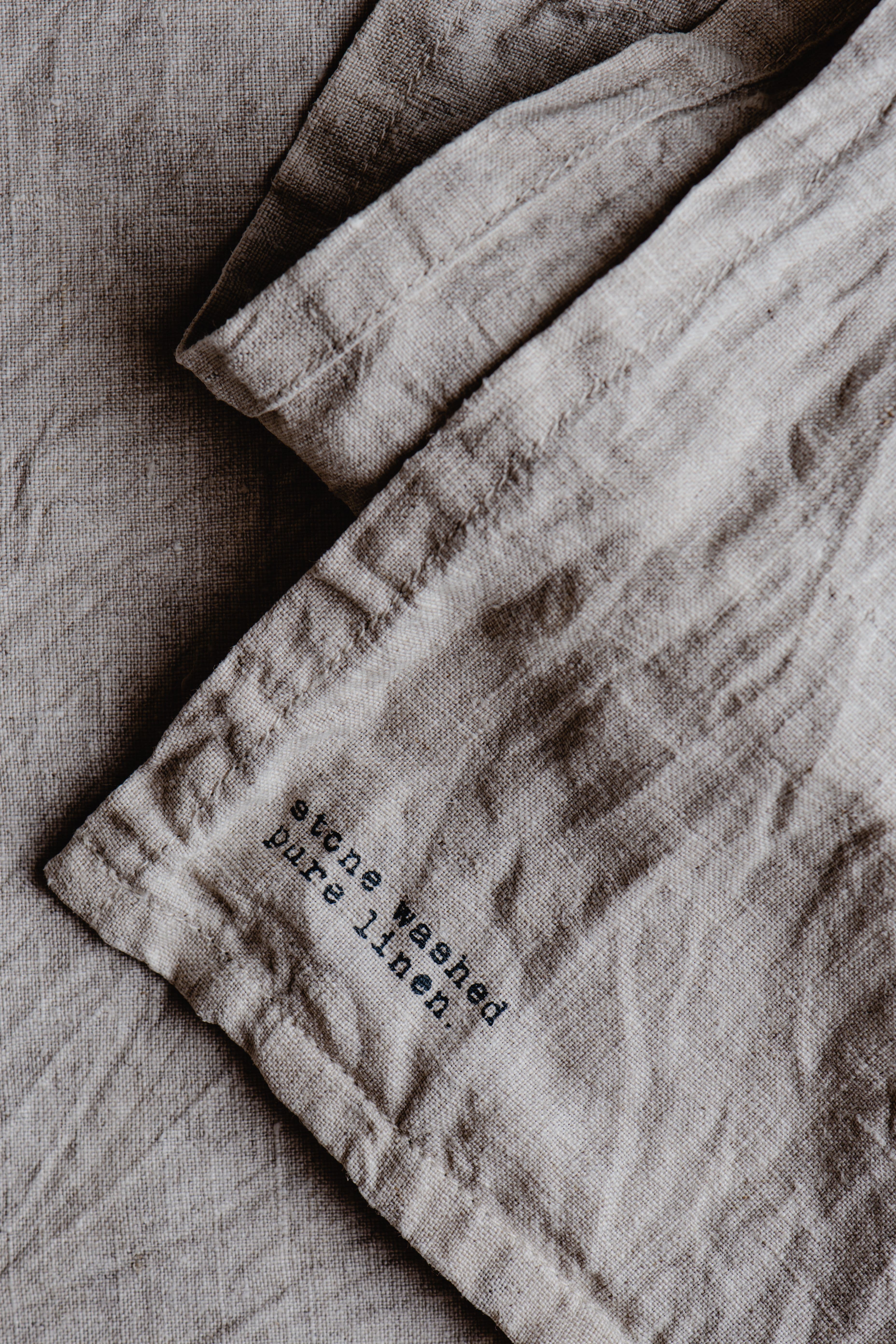
Linen is made from flax, a bast fibre taken from the stem of the plant. Flax fibre is notably strong and durable, with good natural lustre, but it has comparatively low elasticity, which is part of why linen creases in a way that cotton often doesn't, and part of why pressing it flat rarely lasts. It's chemically similar to cotton but stronger, stiffer, and faster drying. Flax has good moisture-handling and thermoregulating properties, characteristics that contribute to the particular feel of linen bedding. Those characteristics, more than any brand story, are what give linen bedding its particular texture, drape and tendency to relax with wear.
What "European Flax" and "French Flax" Actually Mean
Provenance claims are everywhere in linen marketing, and they're worth understanding rather than trusting at face value. The Alliance for European Flax-Linen & Hemp administers two current certification systems. Masters of FLAX FIBREâ„¢ is the current name for the certification formerly known as European Flaxâ„¢, and guarantees Western European flax fibre origin and traceability through the value chain. Masters of LINENâ„¢ applies to certified European spinning, weaving and knitting activities and has its own traceability requirements. They are related certifications, but they do not mean exactly the same thing, and neither is a quality grade. They tell you about the origin and traceability of the fibre and its processing, not about how well the finished fabric was spun, woven or finished.
"French flax" is a narrower claim again. It describes where the flax was grown, typically in France. It doesn't by itself say anything about the yarn spinning, the weave, the finishing or the weight of the fabric that fibre eventually becomes. A brand can grow excellent French flax and still turn it into a mediocre finished sheet, or turn it into an excellent one. Provenance is the beginning of the story, not the whole of it. Cultiver, Bed Threads and I Love Linen, three of the brands covered further down, all build their marketing around European or French flax provenance in some form, which makes them a reasonable starting point for understanding what these claims do and don't promise.
What Does GSM Actually Tell You?
GSM, grams per square metre, measures how much a given area of fabric weighs. GSM can give you a useful indication of how substantial the fabric is likely to be. It is not, on its own, a quality score. Examples from the brands covered in this piece span a wide range: Cultiver's linen sheet set is specified at 165 GSM, Bed Threads and I Love Linen both sit at 170 GSM, Linoto's flax sheet set is woven at 210 GSM, and Rough Linen's heavyweight St. Barts fabric is specified at 7.7 oz per square yard, approximately 261 GSM.
There's no correct answer among these, and a higher GSM doesn't automatically mean better linen. A lighter linen, like Cultiver's 165 GSM, can feel more fluid and airy against the skin, with a softer drape from the first wash. A heavier fabric, like Rough Linen's St. Barts weight, has more presence and structure, with a more traditional, substantial hand. GSM tells you which end of that spectrum a sheet sits on. It doesn't tell you whether the weave is even, whether the finishing was done well, or whether the fitted sheet corners will hold. Construction and finishing still matter, whatever the number on the label says.
Why Thread Count Matters Less Here
Cotton bedding has trained most shoppers to treat thread count as shorthand for luxury, the higher the number, the better the sheet, or so the marketing goes. That framework doesn't transfer cleanly to linen. Thread count isn't the most useful standalone measure when comparing linen sheets, and an unusually high thread-count claim shouldn't automatically be read as superior linen. Fibre provenance, fabric weight, construction and finishing tell you more about a linen sheet than its thread count ever will.
Prewashed or Stonewashed Linen
Much contemporary linen bedding is prewashed or stonewashed, but the finish varies between makers. Cultiver's linen is specified as pre-washed for a soft feel from first use; I Love Linen's sheets are described as stonewashed; Linoto's Flax set is washed in unscented laundry soap before it ships. Prewashing or stonewashing affects the fabric's initial feel and appearance, softening and settling it before it reaches you. None of that makes prewashed linen automatically "better" linen. A sheet that arrives crisp and untreated isn't lower quality; it's simply starting its life with you a few steps earlier in the process.
Linen Changes With Use
This is the part of linen ownership that's easiest to undersell and easiest to oversell in the wrong direction. Linen genuinely does soften and relax through repeated washing and use, that's a widely observed characteristic of the fibre, not marketing language. What it doesn't do is become indefinitely stronger, last forever regardless of care, or turn into some objectively superior textile compared to every other option on the market. It's a material that changes in a particular, fairly predictable direction: softer, more supple, more creased, more clearly itself the longer it's used. Whether that appeals to you is a genuinely personal question, and it's really the central one this entire piece is trying to help answer.
Linen Versus Cotton
Neither fabric is objectively the better choice, they're suited to different ideas of what a bed should feel like. Linen is textured, naturally rumpled, comparatively low in elasticity, strong, good at handling moisture, and develops character with continued use; it also generally costs more than basic cotton bedding. Cotton, depending on how it's woven, can be smoother and crisper, particularly in a percale weave, or denser and slightly slicker in a sateen weave; it spans a far broader range of prices and quality tiers, and most people already know roughly how to care for it.
The honest way to frame the choice isn't which fabric wins. It's that you're not choosing the "better" textile, you're choosing the kind of bed you actually want to live with, night after night, for years.
Look Beyond the Fabric Description
A specification sheet only tells part of the story. Fitted sheets vary between makers in elastic construction, pocket depth, mattress compatibility and finishing. The important thing for a reader is whether the manufacturer clearly specifies the intended mattress depth and construction, rather than leaving it to be worked out after the sheet arrives. Linoto offers standard, deep and even shallow pocket options for exactly this reason, and Rough Linen currently offers a 14-inch fitted sheet recommended for mattresses up to 12 inches deep, and a 19-inch version recommended for mattresses up to 17 inches. Measure your mattress and any topper together before assuming a "standard" fitted sheet will actually reach.
Construction details such as pillowcase closures, borders and finishing can also tell a reader something about how thoughtfully a set has been made. Cultiver's pillowcases use an envelope-style closure and its flat sheet carries a 5cm border finish; other makers use a deep tuck closure instead. None of these details are dealbreakers on their own, but a product page that actually explains them is telling you more than one that simply says "luxurious."
Linen Needs Looking After, But Not Fussing Over
Linen isn't inherently difficult to wash, but the instructions genuinely vary between manufacturers, and treating any single brand's care label as a universal linen rule is a mistake. Cultiver recommends a warm machine wash, line drying or a warm tumble cycle, and advises against bleaching, soaking or prolonged sun exposure. Bed Threads specifies a cold, gentle wash with liquid detergent, low tumble-drying at most, and no bleach, ironing or dry cleaning. I Love Linen recommends a gentle machine wash in cold or lukewarm water with a mild liquid detergent, air-drying in the shade, or a gentle low tumble. Linoto's Flax set can be machine washed warm and tumble dried low, with no ironing required. Rough Linen's heavier St. Barts fabric can be tumble dried on hot or medium, with the maker recommending that it be removed while still slightly damp.
The safest approach is to follow the care instructions supplied by the maker, because washing and drying recommendations vary between linens. What does hold across all of them: avoid unnecessary bleach where instructed, don't overload the machine, don't leave wet linen sitting balled up, and accept a reasonable amount of creasing as simply part of owning it.
Because that last point is worth saying plainly. Linen wrinkles. That isn't a manufacturing defect or a sign of poor quality, it's the fibre's low elasticity doing exactly what it does. If what you actually want is hotel-smooth, pressed bedding every single morning, linen probably isn't the right material for you, prewashed or not. If what appeals to you is texture, movement, and a bed that looks more lived-in the longer you've owned it, linen makes a great deal more sense.
Linen Sheets Worth Knowing
These aren't ranked, scored, or presented as the five best linen brands on the market. They're examples of different approaches to linen bedding, useful for understanding the range of what's actually out there before you buy.
Cultiver takes a refined, everyday approach to European flax. The manufacturer currently specifies 100% certified European flax linen at 165 GSM, prewashed, OEKO-TEX certified and made in Portugal, with continuous elastic on the fitted sheet, an envelope-style pillowcase closure, and a 5cm border on the flat sheet.
Bed Threads leans into colour and accessibility. The brand describes its sheets as 100% French flax linen, with a currently specified 170 GSM fabrication, OEKO-TEX certified and prewashed, offered across an unusually wide colour range for the category.
I Love Linen is an Australian maker built around clear provenance and certification. The manufacturer's current product page describes the sheets as 100% French flax linen at 170 GSM, stonewashed, carrying both Certified European Flax® and OEKO-TEX® Standard 100 certification.
Linoto makes a noticeably heavier, more substantial linen. The manufacturer currently specifies its Flax Linen Sheet Set as woven at 210 GSM in Italy and hand-finished in the USA, with a choice of standard, deep and shallow fitted-sheet pocket depths.
Rough Linen sits at the heavyweight, more traditional end of the category. The manufacturer currently specifies its St. Barts fabric as 100% European linen at 7.7 oz per square yard, approximately 261 GSM, with a 14-inch fitted sheet recommended for mattresses up to 12 inches deep and a 19-inch version recommended for mattresses up to 17 inches deep.
These are examples of how construction and specification differ between makers, not evidence that any one approach, heavier, lighter, more or less certified, is automatically the better one.
What to Look for Before Buying
A short checklist, useful regardless of which brand you're actually looking at:
Fibre. Is it genuinely specified as 100% linen, or blended with something else?
Provenance. Does the manufacturer actually explain where the flax was grown, rather than gesturing vaguely at "European" quality?
Certification. Are any certifications named clearly and specifically, rather than implied through vague language?
GSM. Is the fabric weight disclosed at all? If it isn't listed anywhere, that's worth noting.
Finish. Is the fabric prewashed or stonewashed, or will it arrive in its raw, untreated state?
Construction. How is the fitted sheet actually built, and how are the pillowcases closed?
Fit. Will the fitted sheet's pocket depth actually accommodate your mattress and any topper?
Care. Are the washing and drying instructions clearly stated, rather than left to be worked out after the first wash?
Feel. Does the manufacturer describe the actual character of the fabric, or just reach for the word "luxurious" and leave it there?
Price. Does the price make sense given the material, the weight and the construction, not just the brand name attached to it?
The best linen sheets aren't necessarily the ones that look most perfect the day they arrive. They're the ones that become part of the house, softer with every wash, more clearly themselves the longer they're used, better suited to a bed than to a photograph. Linen rewards a particular kind of buyer: someone who doesn't mind texture, doesn't need everything pressed flat, and is genuinely happy to own something that keeps changing, rather than something that's finished the moment it's unwrapped.
Keep this one
Save it to Pinterest.
Share this story
Things worth noticing
A note from Twenty Acres, occasionally. New stories, beautiful things, and the details we're keeping.