
The Hairbrush Worth Keeping
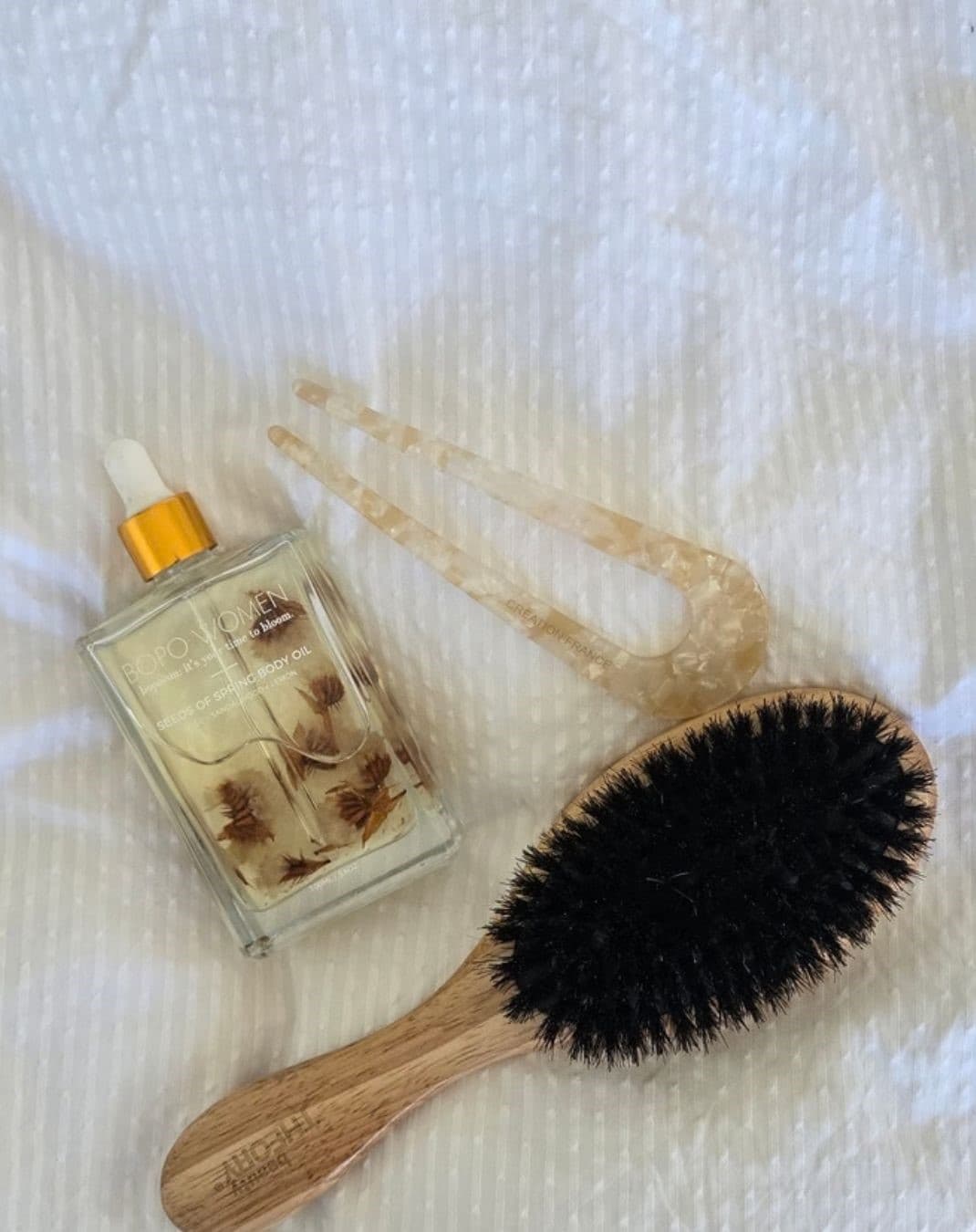
Most people have accumulated hairbrushes without ever really deciding what each one is for. A paddle brush from years ago, a vent brush bought for travel, a round brush picked up because it looked like the one a hairdresser used, a detangler kept out of habit. A drawer full of brushes can still leave someone unable to create the simple, polished blowout they actually want, because none of them were chosen for a reason — they were chosen because they were there.
A hairbrush is a tool. Like any tool, it's worth understanding what it actually does before deciding which one earns a permanent place in a routine. The ’90s blowout — soft roots, smooth lengths, ends curved gently under or out — is a useful way into that understanding, because its shape depends almost entirely on the interaction between brush, hair and dryer. Get that interaction right and the look follows. The blowout isn't the subject here. It's the demonstration.
What a Good Hairbrush Actually Does
A brush doesn't create volume, shine or movement by itself. It's one part of a small system: hair, brush, airflow, heat, tension and technique, working together. What a good brush actually contributes is control over five things — tension, direction, smoothness, lift and shape. It holds a section steady enough to work heat into it evenly, guides the hair in a specific direction as it dries, and helps determine how much bend the finished section holds once it cools.
That's a modest claim, deliberately. A brush is not doing something mysterious to the hair shaft. It's giving the person holding the dryer a way to apply heat and tension precisely, instead of randomly.
The Round Brush Is Still the Useful One
Heated air brushes, all-in-one styling tools and hot-air stylers have multiplied in the last decade, mostly by combining a brush and a dryer into a single device. They're faster and easier for a beginner. But a traditional round brush, used with a separate dryer, still gives more control over root lift, bend, and how the ends finish — because the two motions (rotating the brush, directing the airflow) are handled independently rather than fixed together.
That's the case for keeping one well-made round brush even in a house full of newer tools: a simple object can be more versatile than a complicated one, once you understand how to use it.
Why Barrel Size Matters More Than Most People Think
Barrel size is the single biggest variable in what a round brush actually does, and it's the one most people choose almost by accident.
The general relationship holds across brush makers, even though the exact measurements they use don't: a smaller barrel wraps the hair more tightly, which produces a stronger curl or bend and gives more control close to the root — useful for shorter hair, fringes, and root lift. A medium barrel is the most broadly useful size for shoulder-to-mid-length hair, producing the bounce and gentle movement associated with a classic blowout. A larger barrel covers more hair per pass and produces a softer, looser bend — better suited to longer hair, or to a smoother, less obviously "curled" finish.
Exact sizing varies meaningfully between manufacturers — one brand's "medium" is close to another's "large" — so a specific measurement in millimetres or inches is less useful than the underlying relationship: smaller barrel, tighter shape and more control; larger barrel, looser shape and more coverage. The hair should also be able to wrap around the barrel at least once; a brush too wide for the hair's length mostly just glides past it without gripping.
Boar, Nylon or Both?
Boar bristle is valued for smoothing and polishing — the bristles are fine and densely packed, and they help distribute the hair's natural oils along the length as you brush, which is often described as adding shine and reducing frizz on finer or straighter hair. Boar bristle tends to be gentler, with less grip, which makes it better suited to finishing and polishing than to working through denser or more resistant hair.
Nylon bristles are smoother, more widely spaced and considerably stronger. They grip and move through hair more assertively, which makes them more effective for denser or coarser hair and for the actual mechanical work of blow-drying — holding tension, guiding direction, working through a section without the bristle bending or losing grip.
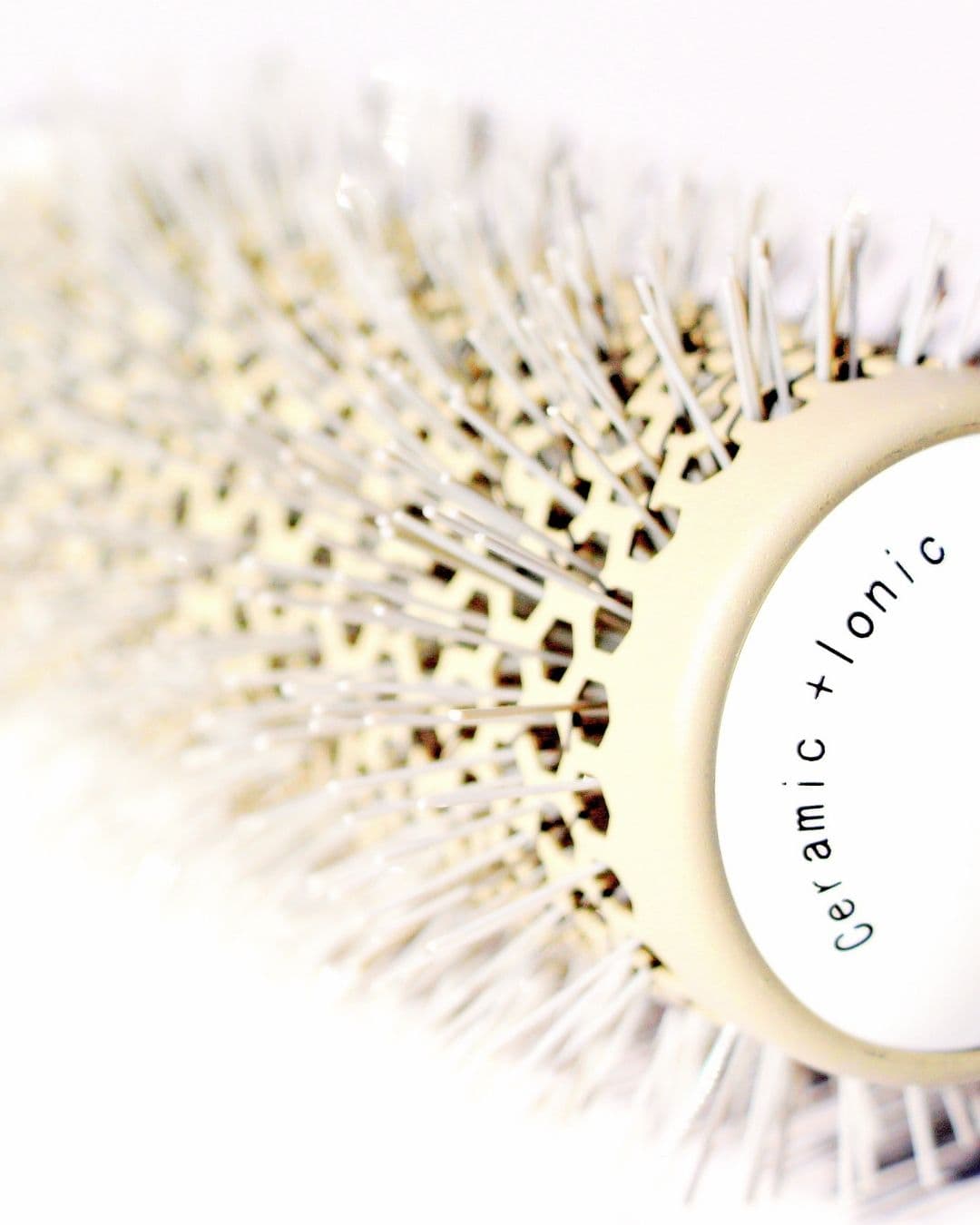
Mixed-bristle brushes combine the two for a reason: a longer nylon pin does the structural work of gripping the section and creating tension, while the surrounding boar bristles smooth and polish as the brush moves through. For a single, versatile round brush intended to do most of the actual work of a blowout, this is arguably the most practical combination — not because boar or nylon is inferior on its own, but because a blowout brush needs to grip, direct and smooth in the same pass, which is exactly the job a mixed construction is built for.
That's an editorial judgement, not a rule. A pure boar brush still earns its place as a finishing or polishing tool for someone who wants a separate smoothing step. A pure nylon brush can be the better choice for genuinely dense, resistant hair where grip matters more than polish.
Ceramic, Metal or Natural Barrel?
The barrel material affects how heat moves into the section, not whether the brush works.
A ceramic-coated barrel tends to warm evenly and hold that warmth for longer, which generally supports a smoother, more consistent drying process — the barrel becomes part of the heat delivery rather than a passive support. Metal or aluminium barrels conduct heat quickly and can reach a higher temperature faster, which some people prefer for speed but which also demands more careful heat management, since an uncoated metal barrel can get uncomfortably hot against the scalp. Natural, unheated barrel materials (wood is the common example) don't retain or transfer heat the same way, which shifts more of the styling work onto the dryer's airflow and the person's technique rather than the barrel itself.
None of this should be overstated. Barrel material changes how heat behaves during styling; it doesn't determine whether hair is damaged. Damage from heat styling is a function of temperature, duration, how dry the hair already is, and how many times a section is passed over — not the barrel material of the brush holding it. A ceramic barrel isn't inherently gentler on hair, and there's no good basis for treating it as a health or safety feature rather than a styling-consistency one.
The ’90s Blowout Is a Good Test
The classic look — lift at the root, smooth through the mid-lengths, ends curved softly under or out, movement rather than a rigid curl — is a genuinely useful way to test whether a brush and technique are actually working together, because every part of the shape depends on a different variable already covered above: barrel size determines how much bend the ends hold, bristle construction determines how smooth the mid-lengths look, and barrel material affects how evenly the heat sets the shape as it cools.
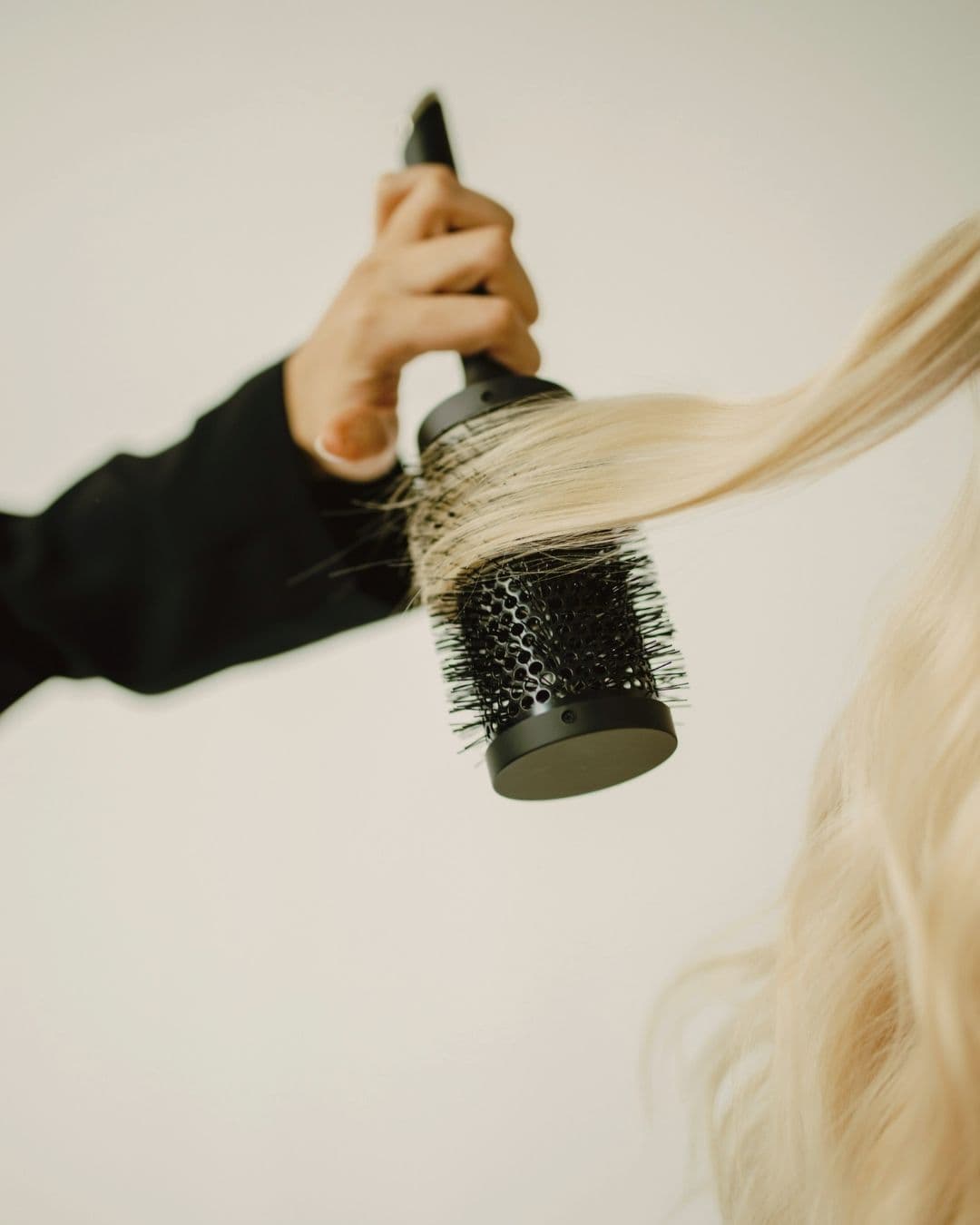
A medium barrel with mixed bristles, worked with a dryer and a concentrator nozzle, is a straightforward way to produce this result. It isn't the only way — but if a brush and technique can produce this look cleanly, they can produce most other everyday blowout finishes too.
How to Use One Properly
- Rough-dry first. Don't try to shape soaking-wet hair — bring it substantially toward dry with the dryer alone before introducing the brush.
- Work in manageable sections. Smaller sections hold tension better and dry more evenly than trying to style large amounts of hair at once.
- Start at the root. Place the brush under the section close to the scalp and lift it away from its natural fall before rolling the brush through.
- Follow the brush with the dryer, not around it. Keep the airflow moving along the section in the same direction the hair is being smoothed, ideally through a concentrator nozzle held a few inches away, rather than blasting air generally at the head.
- Shape the ends deliberately. Roll or curve the ends around the barrel according to the finish you want — under, out, or left straighter.
- Let it cool before brushing it out. Hair holds a shape better once it's cooled from the heat that set it; brushing through immediately tends to soften the result.
- Finish lightly. A small amount of product goes further than a heavy one; the point of the technique is the shape, not a layer of product sitting on top of it.
Technique matters more than continually upgrading the tool. A well-made brush used properly will outperform an expensive one used carelessly.
Choosing One for Your Hair
Fine hair does better with a manageable barrel size and a lighter touch — enough tension to shape the hair without overworking it, and a construction that doesn't add unnecessary weight.
Thick or coarse hair generally needs stronger grip and a sturdier construction — a mixed or robust bristle brush that can work through denser sections without losing tension halfway along.
Long hair benefits from a larger barrel, simply because there's more length to cover per pass and a smaller barrel becomes inefficient and repetitive.
Short or layered hair usually wants a smaller-to-medium barrel that can get close to the root and manage shorter sections with more precision.
None of this produces one universally correct brush. The right choice depends on length, density, and how much curl or smoothness you actually want — which is exactly why a single "best" recommendation, divorced from the person's actual hair, isn't a useful answer.
Keeping a Brush Worth Keeping
A good brush earns the word "worth keeping" partly through maintenance, not just construction. Shed hair and product residue build up in the bristles over time, and a brush working through that buildup grips and directs hair less effectively than a clean one — the difference is often mistaken for the brush "not working as well anymore," when it's really just dirty.
Clear shed hair out regularly rather than letting it accumulate at the base of the bristles. Wash away product and natural oil buildup periodically, following whatever the manufacturer actually recommends for that specific bristle and barrel material — boar bristle, nylon and ceramic-coated barrels don't all tolerate the same cleaning approach. Let it dry properly and fully before the next use, rather than storing it damp. Check the bristles and base occasionally for genuine wear — bristles that have gone stiff, sparse, or come loose from the base are a sign the brush's actual construction has deteriorated, not just that it's been used.
There's no fixed replacement schedule that applies to every brush and every routine — "replace every six months" is the kind of arbitrary rule that ignores how differently people actually use and care for their tools. The more useful principle is that maintenance extends the working life of a well-made object, and a brush that's cleaned and dried properly should remain genuinely useful for years, not months.
What Not to Spend Money On
Most people don't need five round brushes in slightly different sizes, a different brush for every styling mood, or a brush chosen because it's fashionable rather than well made. The variables that actually matter are barrel size, bristle construction, barrel material, handle and weight, and overall durability — not branding, packaging, or how often a particular shape appears online.
One well-made round brush, matched to your actual hair and the finish you actually want, does most of what a drawer full of mismatched ones is trying and failing to do.
The Brush Worth Keeping
The best hairbrush isn't the most expensive one, the most heavily marketed one, or the one that happened to go viral. It's the one whose construction actually suits how you wear and style your hair, well made enough to become part of a routine rather than something replaced every year.
Choose one that fits your hair. Learn what it's actually doing while you use it. Keep it clean. There's very little to gain from owning ten mediocre versions of the same tool, and quite a lot to gain from understanding the one you already have.
Keep this one
Save it to Pinterest.
Share this story
Things worth noticing
A note from Twenty Acres, occasionally. New stories, beautiful things, and the details we're keeping.