
The Case for a Reformer at Home
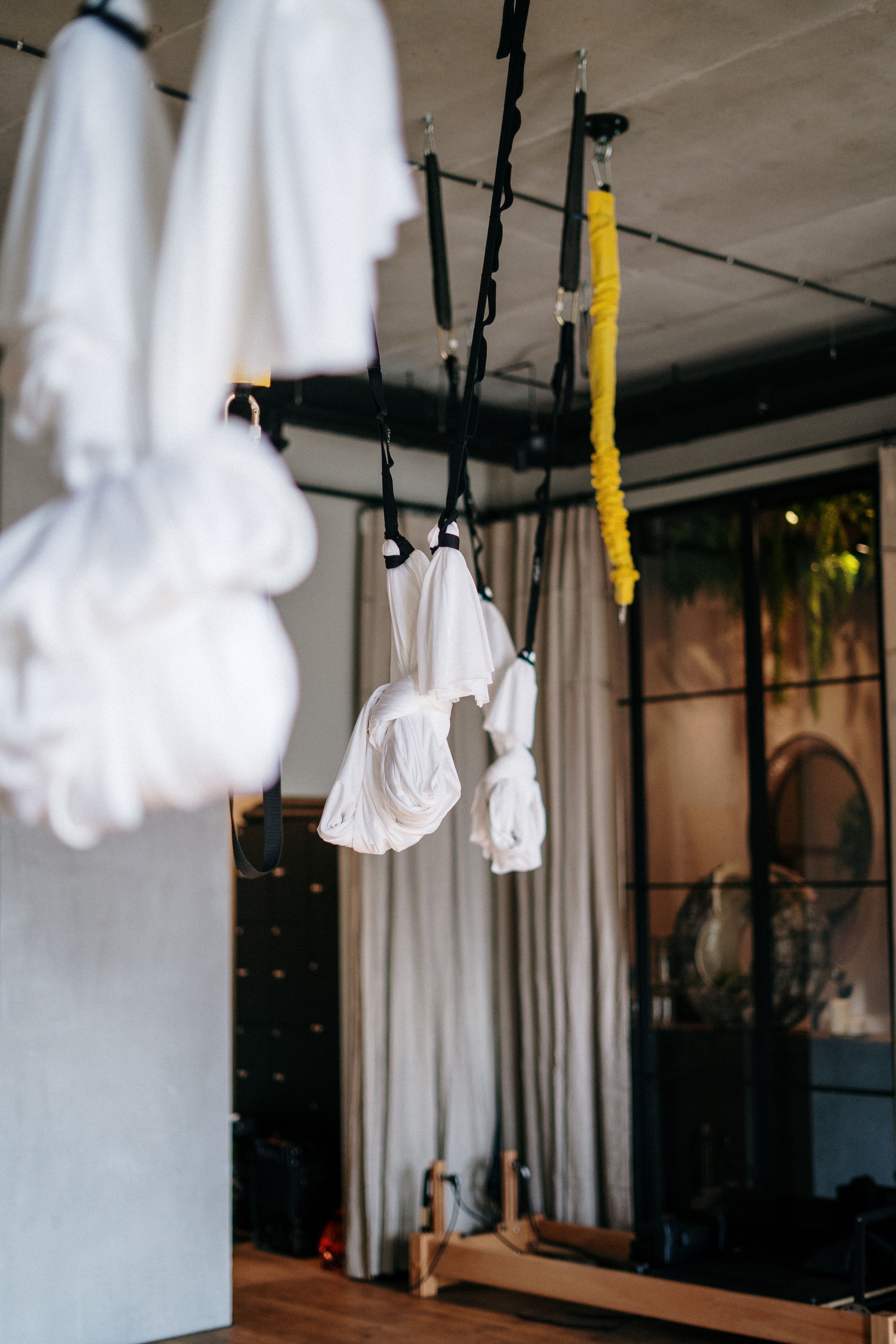
Most exercise equipment arrives with a promise and ends up as somewhere to hang a towel. The bike faces the wall of the spare room. The weights stay in their box. Anything that asks for a decision every time you walk past it, whether you have the energy, whether you have the hour, tends to stay exactly where it was put.
A Pilates reformer at home can be different, and the difference has more to do with how it sits in a life than with the machine itself. It is long and low, closer in scale to a daybed than to a gym. It has a carriage that moves when you touch it and springs that answer in the same way every morning. It can stay in the room where you'll pass it, ready, so that a short session is still a session and nobody has to change into anything elaborate first.
This is a case for the reformer, not a promise about what it will do to you. The idea underneath is one Twenty Acres keeps returning to: the best routines are often the ones that become part of the shape of a life.
Why Pilates Has Lasted
Joseph Pilates was a German-born physical trainer who called his method Contrology. During the First World War, while interned in Britain, he worked with springs taken from beds as a form of resistance for people who were bedridden. The equipment that developed from this early work became part of the apparatus associated with his method. In 1926, Pilates moved to New York and opened a studio where dancers became an important part of his clientele. The Universal Reformer that followed was patented in 1927.
The history matters partly because the central ideas have proved remarkably durable. Pilates is still built around controlled movement, attention and resistance that can be adjusted. Very little in it needs to be fast, loud or new. What it offers is familiarity with the body: over time you notice which side is stronger, where you hold your breath, how much of a movement you have been skipping. That is a modest thing to be given, and it has turned out to be durable.
What a Pilates Reformer Actually Does
Reformer Pilates happens on a low frame with a padded carriage that slides along it. Springs connect the carriage to one end of the frame, and the springs provide the resistance: push the carriage away and they stretch, then pull it back. At the foot end there is an adjustable bar, the footbar, to push against with feet or hands. Ropes run through pulleys to loops and straps for the hands or feet, and a headrest and shoulder rests hold you in place when you lie down. Depending on the movement, you lie, sit, kneel or stand.
The springs are usually supplied in different tensions, so resistance can be changed by adding or removing them. Unlike a weight, a spring pulls back through the movement, and the carriage has to be controlled on the way out and just as carefully on the way back. Much of the attention goes to that return journey.
None of it is complicated: a bed with springs at one end and a bar at the other, and a great deal of variety follows.

The Pleasure of Repetition
Pilates does not ask for novelty. The value comes from returning to the same movements and slowly getting to know them: how far the carriage travels before you have to slow it, how the footbar feels under a heel, how a movement that was clumsy in March is merely quiet by September. Repetition is usually treated as the price of getting somewhere. Here it is closer to the point.
It resembles a piece of music you have played for years, or a recipe you no longer look up. The first weeks are spent learning the vocabulary. Later your attention is free to go elsewhere, to the breath, to the small adjustments, to the discovery that today is a stiffer day than yesterday. That kind of noticing needs a familiar room and familiar movements. It is not a workout plan, and nothing here should be read as a prescription.
Pilates as Maintenance
The word that fits best is maintenance. Not transformation, not correction, not a project with a finish line, but upkeep, in the way you keep a house, a garden or a good pair of boots. Strength, mobility and control are qualities worth maintaining, and they are better served by regular use than occasional bursts of enthusiasm. The aim is modest and worth having: to feel capable in a normal day, and to go on feeling that way.
The Australian Government's current 24-hour movement guidelines for adults aged 18 to 64 recommend moderate- to vigorous-intensity activity for 30 minutes or more on most days, muscle-strengthening activities on two or more days a week, and functional activities targeting mobility, balance and coordination on three or more days. Pilates is one way of contributing to those recommendations. It is not the only way, and a reformer is not required.
What the research says about Pilates itself is more measured than the marketing. A 2023 umbrella review in the Journal of Science and Medicine in Sport gathered 27 systematic reviews with meta-analyses. One was rated high quality, one moderate, 15 low and 10 critically low. The review found associations with benefits across several outcomes, but the certainty of evidence was mostly very low to moderate and the authors called for higher-quality trials.
Pilates is not a medical treatment, and anyone managing an injury or a health condition is better guided by their own doctor or physiotherapist than by an article, this one included.
Why Have a Pilates Reformer at Home?
The case is mostly practical. There is no travel and no timetable. You can practise at six in the morning or ten at night, for five minutes as readily as fifty. There is privacy: nobody to compare yourself with, nobody watching you be a beginner. And because the equipment is always there, a home Pilates routine can be established without negotiating with a class schedule.
None of this makes a reformer necessary. A studio gives things a house cannot: a teacher who can see what you can't, the company of other people, a reason to leave the house. Many people are better served by a weekly class, or by a mat and a good teacher. A reformer is also a considerable outlay, and it only repays itself in use. It suits someone who would rather have the thing in the house than the appointment in the diary. If you are new to Pilates, a few sessions with a qualified teacher before working alone are worth having.
A Pilates Reformer Has to Earn Its Place
A reformer that is beautiful but difficult to store or use will serve you less well than one that fits naturally into the house. Most of what matters can be checked before you buy.
Space first. Measure the reformer's full length as it will be used, then add room to get on and off, to stand at the foot end and to reach the ropes and springs. Balanced Body's own specifications illustrate how much the footprint can vary: the Metro IQ extends to 249 centimetres but compresses to 157 centimetres for storage, while the Allegro 2 is a full-size 239 centimetres long.
Then the machine. Does the carriage run smoothly and quietly, without a rattle or a seam you can feel? Is the frame steady when you get on and off? How many springs come with it, and can you add more? Do the footbar and headrest adjust easily, and could you do it mid-session? Are the ropes and loops comfortable and quiet, or do metal clips clink? Is the upholstery easy to wipe clean? Noise matters: a carriage on rails at six in the morning carries over floorboards.
Storage. Some reformers telescope, some fold, some stand on end. Ask how often you would have to do it and whether you could do it alone. The Metro IQ is designed to shorten for storage and can be stored under a bed or upright in a closet; Balanced Body specifies nine inches of clearance for under-bed storage.
The long view. Look at the warranty and what it actually covers, whether springs, ropes, straps and upholstery can be bought separately, who answers when something goes wrong, and whether the machine can grow with you. Some designs take a tower, a sitting box or a jumpboard later. Others do not.
If you can, lie on one before you buy it.
The Reformers Worth Considering
Three home Pilates reformers follow, each suited to a different kind of room and way of living. Their specifications are included so you can consider the practicalities before buying. They are not ranked, and none is the answer for everyone. Prices and availability can change, so check the manufacturer's current page before buying.
Balanced Body Metro IQ. Designed around the problem of space. Its aluminium frame telescopes from 249 centimetres in use to 157 centimetres for storage, is 61 centimetres wide and weighs 39 kilograms. It has five Balanced Body Signature Springs, a four-position footbar, three-position headrest and wheels for moving it between rooms or storing it under a bed or upright in a closet. Balanced Body's current warranty gives the Metro IQ a two-year warranty for non-commercial use. It is currently listed by Balanced Body's Australian distributor as custom order only. It suits a room where a full-size reformer cannot simply be left in place.
Balanced Body Allegro 2. The full-size option, and the more permanent one. It is 239 centimetres long and 64 centimetres wide at the frame, or 79 centimetres wide including the footbar, and stands 22 centimetres high without legs or 38 centimetres with them. It weighs about 68.5 kilograms without legs. Its five-spring system provides up to 46 resistance combinations, and the footbar adjusts vertically and horizontally. It can be stacked and, with the appropriate wheel kit, stored on end. A tower and mat conversion can be added, allowing the system to grow without changing the basic reformer footprint. Balanced Body's current warranty lists 10 years for the Allegro 2 frame. The US manufacturer currently publishes starting prices on its collection pages; Australian pricing is supplied on request. It suits a room where the reformer can stay put and a practice that may grow.
Your Reformer Original. Built for the home, with a maple timber frame and a deliberately warmer presence than the usual black studio machine. The US model is currently listed at US$2,750, with continental-US shipping available. It is 235 centimetres long, 64 centimetres wide and between 26 and 36 centimetres high, weighs 132 pounds and has a maximum user weight of 264.6 pounds. It has a five-position footbar, three-position headrest, eight-wheel carriage and five commercial-standard springs: two heavy, two medium and one light. The current warranty is two years limited. The Original rolls for storage; the separately listed Original Folding has the same price and folds to roughly 122 centimetres long. It suits a room where the reformer needs to feel like part of the furniture rather than an intrusion into it.
None of the three is the answer for everyone. The useful distinction is simply what each asks of the room: the Metro IQ makes storage easier, the Allegro 2 is built around a permanent and expandable practice, and the Your Reformer Original brings timber and upholstery into the room alongside the other objects already there.
The Reformer as Part of the House
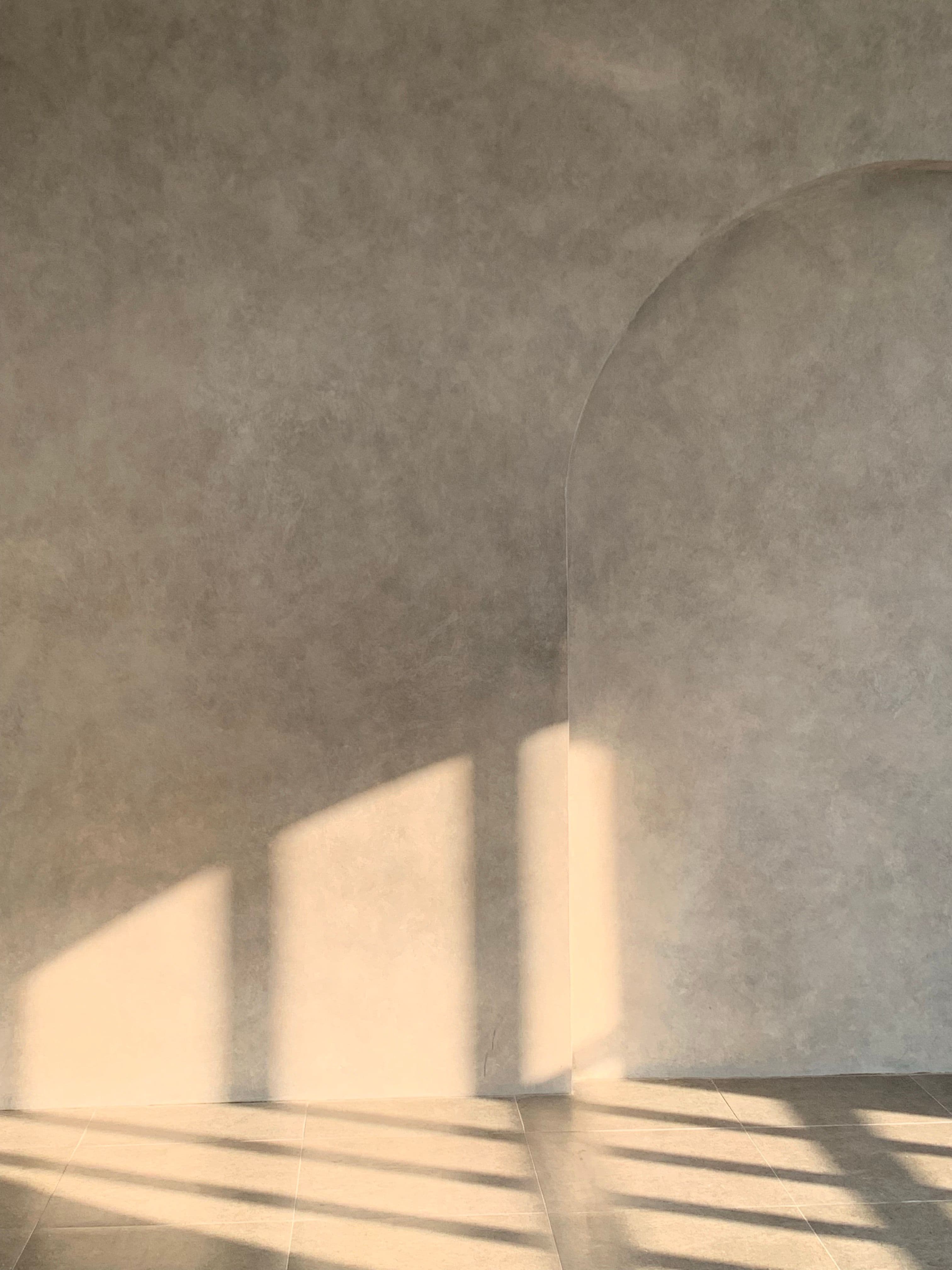
Morning light across a floor. Bare feet, or grip socks, on a carriage that is cool at that hour. A window open a few centimetres. A folded towel and a glass of water on a chair within reach. The same room, the same order of movements, and the reformer standing ready.
So much exercise equipment is hidden, under the bed, behind a door, in a corner of the garage, which is a small admission that it is an interruption. A reformer with a timber frame in a bedroom or at the end of a living room says something different: that the room has a purpose beyond furniture. It sits with the other things used every day that look the better for it: the kitchen table, a good chair, a bowl by the sink.
The upkeep becomes part of the ritual. The makers ask for small attentions: dusting the rails, washing the loops. Your Reformer also suggests rotating the springs and leaving one red spring attached when the machine is not in use so the carriage stays where it is. Small, sensible habits, and they make a room feel looked after.

The Small Things That Make You Return
The reformer is the largest piece of Pilates equipment in the house and the least of it. What makes a practice easy to begin is smaller: grip socks, so feet stay where they are put; clothes that move with you and don't catch on the ropes; a towel; a glass of water; a mat to one side for floor work; a ring or a pair of light weights, if you like them.
Keep them where they will be found. A shallow basket, a shelf or a drawer in the same room does more for consistency than any resolution, because starting is easier when nothing has to be looked for. None of these things needs to match, or to be new.
A Practice You Can Keep
The point was never to own an impressive reformer. It is to have a practice you can return to: after a slow week or a long one, in the same room at roughly the same hour, with movements you know well enough to stop thinking about and start noticing. The object matters only so far as it makes that easy.
A good one, chosen for the room it is going into, kept clean and left ready, can be part of a house for years. The things worth keeping tend to be the ones that get used, and a practice is much the same. It earns its place the way a favourite chair does, by being there each time you come back.
Keep this one
Save it to Pinterest.
Share this story
Things worth noticing
A note from Twenty Acres, occasionally. New stories, beautiful things, and the details we're keeping.