
Christmas in Switzerland: A Winter Somewhere Else
The World Outside the Window
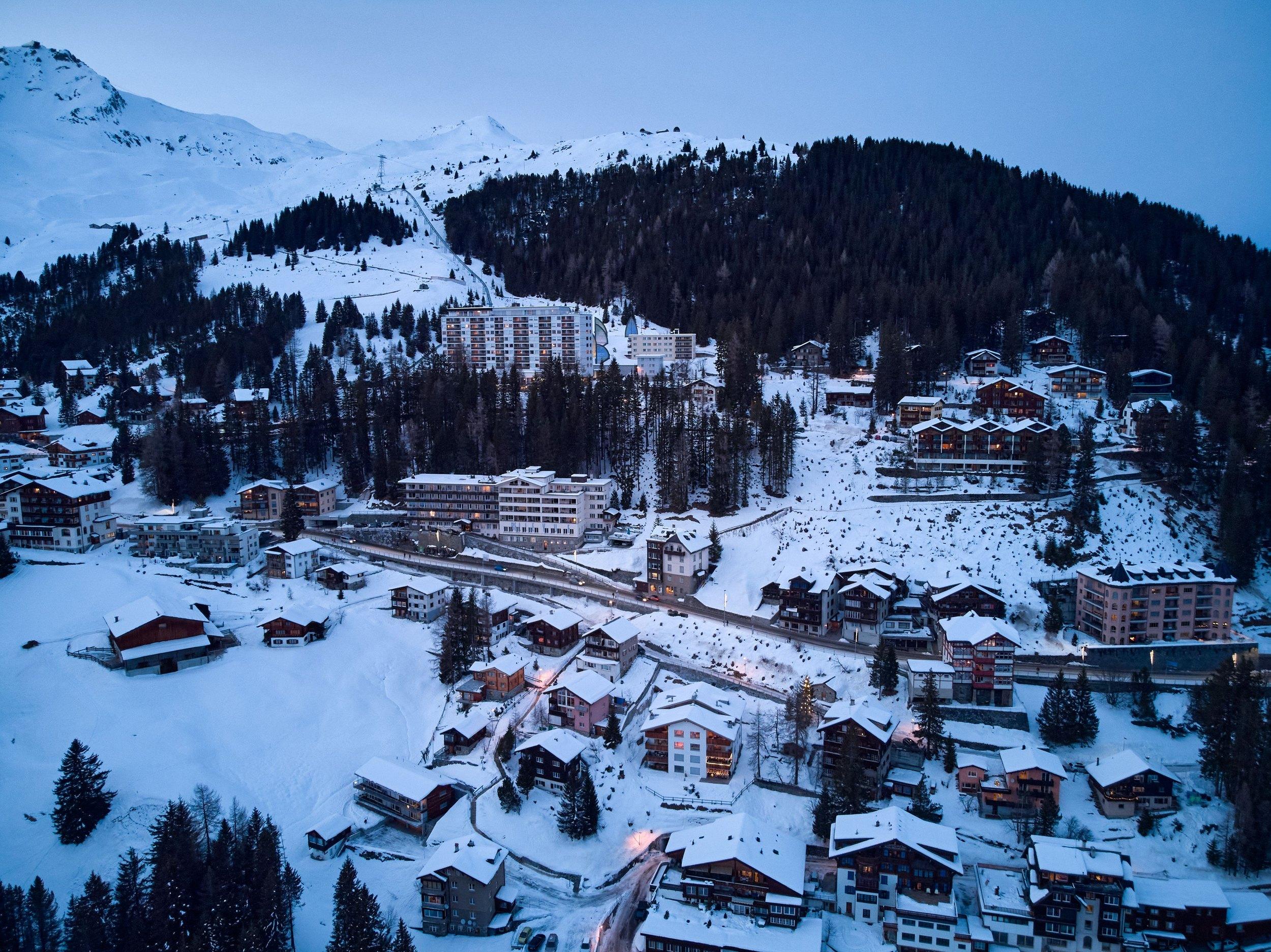
Some Decembers begin at a window. You look out and see what you always see: the same street, the same grey light, the list of things that must be done before the twenty-fifth. Then you picture another window, in another country, and everything on the far side of the glass has been replaced by snow.
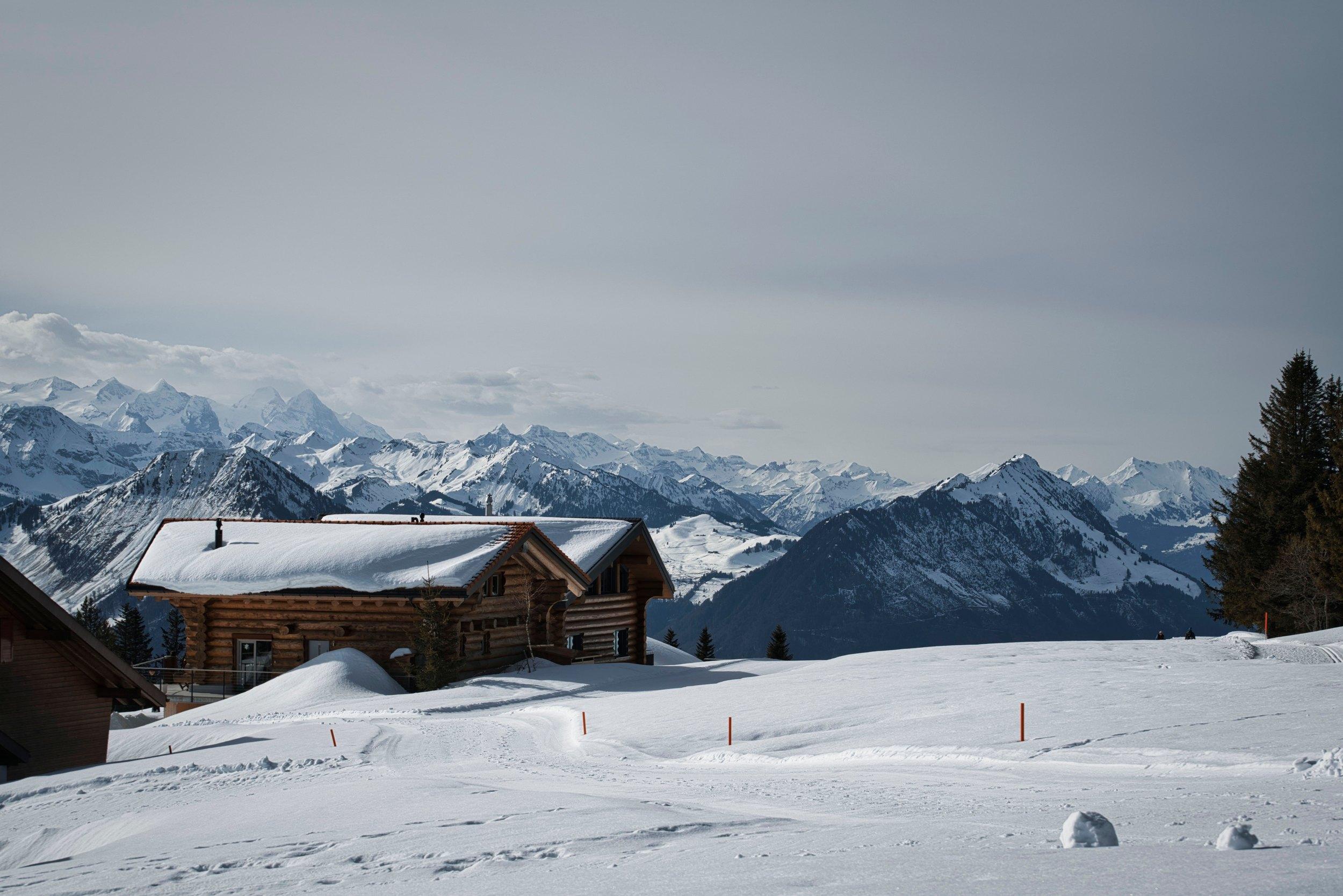
In that window the mountains are not scenery. They are weather. They change the scale of the day, so that a village looks like something set down carefully on a table, its roofs wearing a second roof of white, its windows beginning to glow while the light is still leaving the valley. Woodsmoke and cold air do the rest of the work. Nothing needs to be explained to you. You know at once that you are somewhere else.
That is the promise of a Swiss Christmas, and it is kinder than it sounds, because the cold outside is only half of it. The other half is the door that closes behind you: timber walls, a low lamp, the long, soft quiet of a room that has been made for winter. This is a journey through three places that keep that promise in three different ways: a village beneath the Matterhorn, a chalet town in the Bernese Oberland, and an old town on a lake.
Zermatt Beneath the Matterhorn
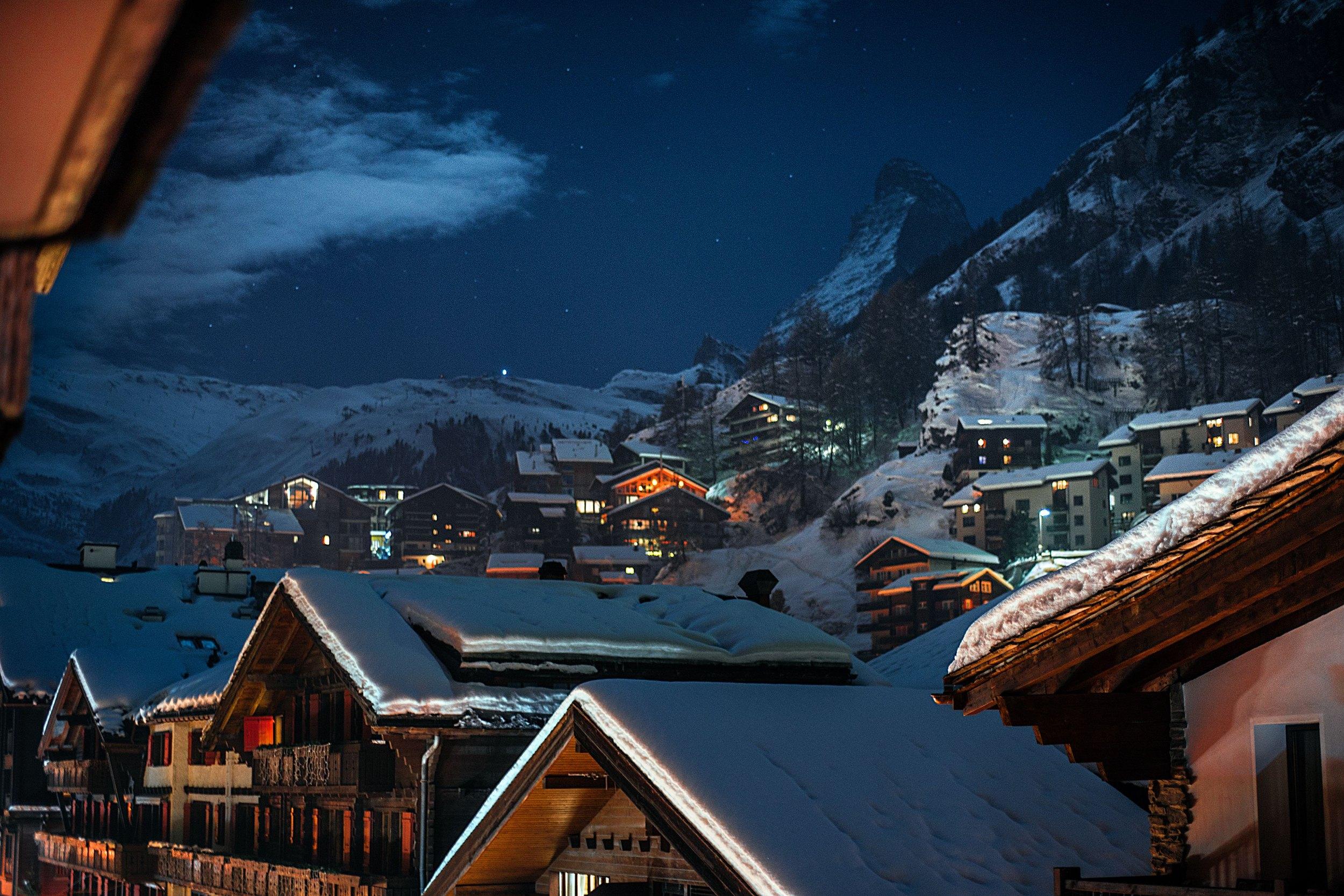
Zermatt asks you to arrive slowly. Cars stop in the valley, and the last stretch is made by train, a small ritual of leaving the ordinary behind. The village keeps traffic out, and it has a hush you notice before you can say why. Footsteps in snow. Bells, somewhere. The creak of a wooden balcony taking the cold.
Then there is the mountain. The Matterhorn is so exactly a mountain that it looks drawn by a child who has been told what one is: a single, steep, unmistakable peak, standing apart from the others. It was first climbed in 1865, and the village has never quite stopped looking up at it since. In low winter light the rock can turn rose and gold at either end of the day, and it is hard to walk past without pausing for a moment.
There are two ways to be in Zermatt at Christmas, and they pull in opposite directions. One is contemporary: modern design speaking in an alpine accent, set a little above the roofs. The other is older than the idea of a winter holiday.
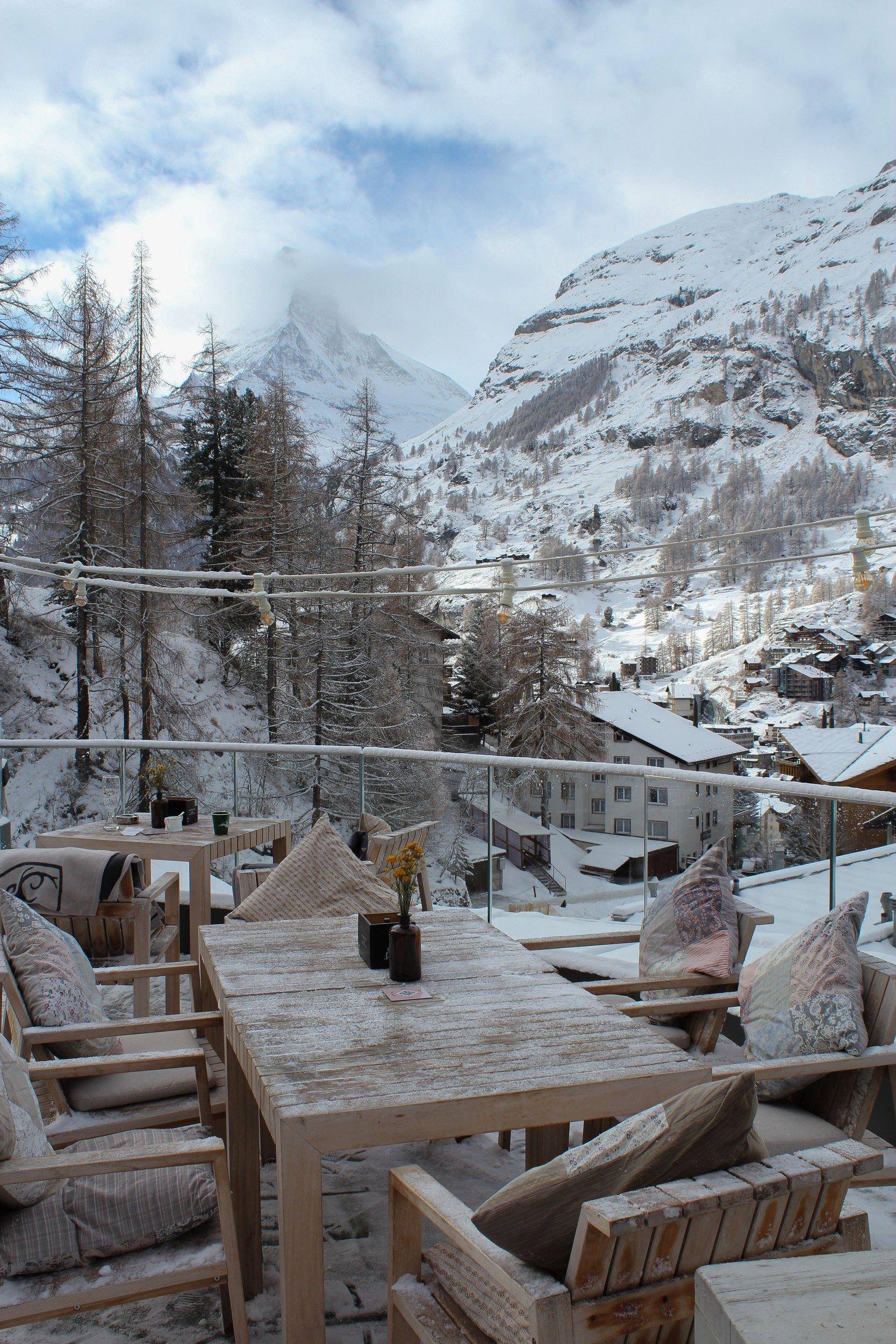
CERVO Mountain Resort opened in 2009 and is built as a cluster of separate chalets on the slope above the village, a contemporary reading of the mountain lodge. Discover CERVO Mountain Resort (opens in a new tab).
Monte Rosa belongs to the second way. It did not open for a winter season until 1960, because for much of its life the people who came to Zermatt came largely to climb, and came in summer. Its character is a different kind of warmth: the warmth of a house that has been receiving travellers since before the railway reached the village.
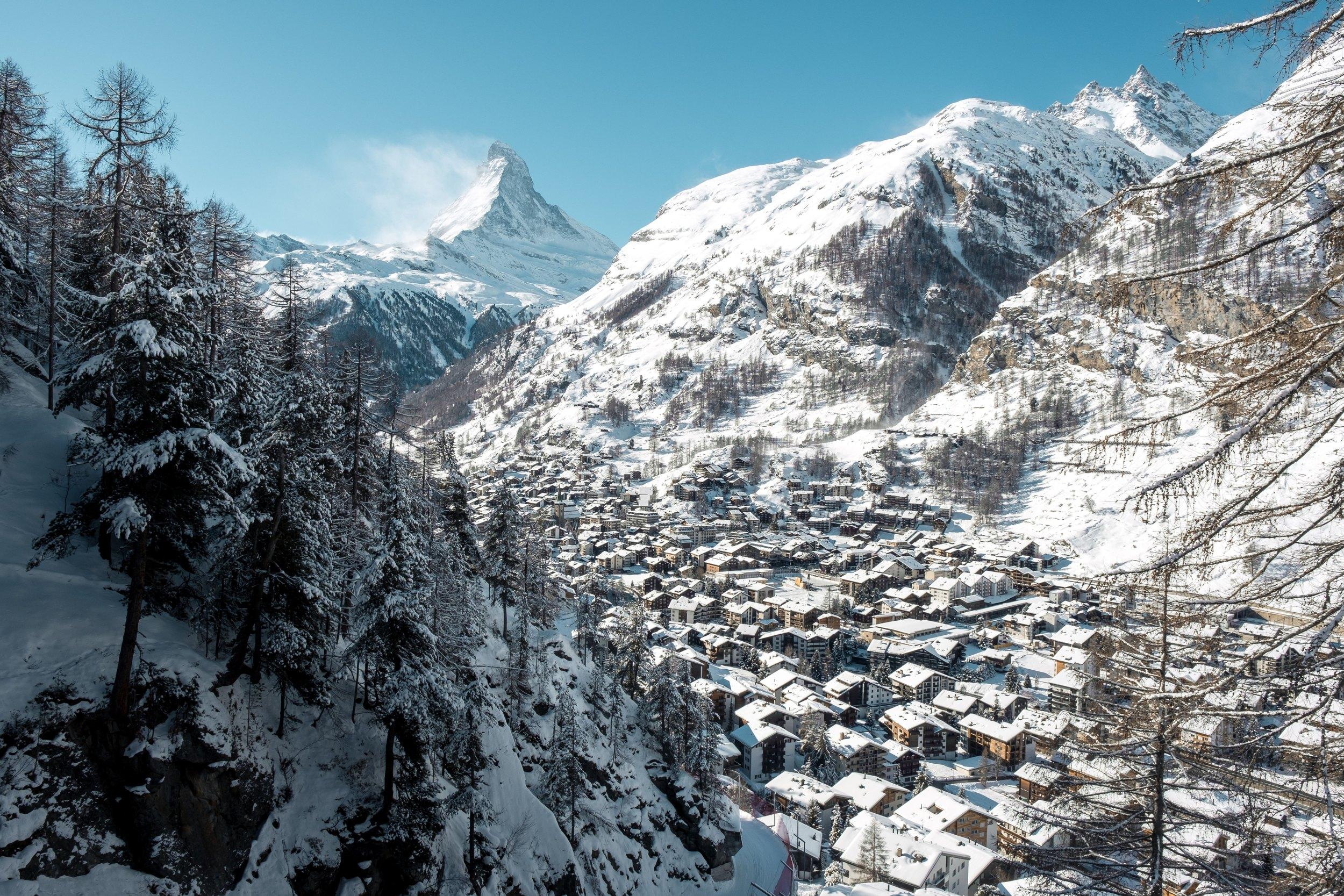
Hotel Monte Rosa grew from an inn of 1839 and took its present name in 1855. Edward Whymper stayed here before his first ascent of the Matterhorn in 1865. Explore Hotel Monte Rosa (opens in a new tab).
A Different Kind of Alpine Retreat
If Zermatt is dramatic, Gstaad is composed. The mountains here are broader and softer, and the village sits among them as though it had been placed with care. What gives it its character is the chalet: wide eaves, balconies, timber that darkens with the years, and carved and painted fronts that look as if they were made by someone who expected to be looking at them for a long time.
The look is not an accident. Gstaad has long held to its chalet style, and building rules help to keep it so, which means that even the new buildings borrow the old vocabulary. The pleasure is in how closely the architecture and the landscape agree. Wood and stone often come from the same hills the buildings sit in, and snow settles on the roofs as if it had always been part of the design.
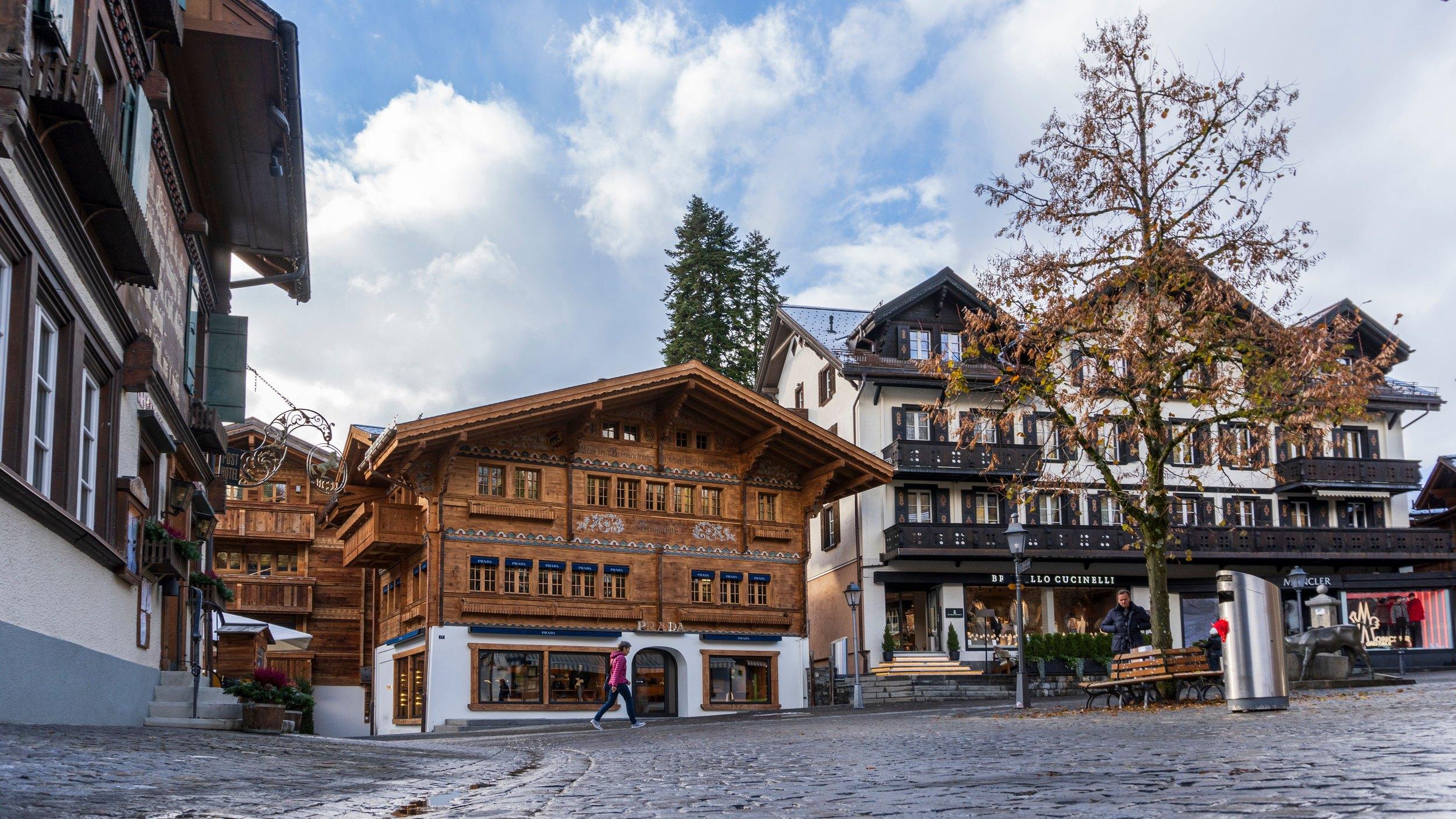
The Alpina Gstaad belongs to that conversation. It is new, but it was built in the language of the place rather than against it, which is a harder thing to do than it looks.
The Alpina Gstaad opened in 2012 on a hillside a short walk from the village, with a chalet exterior built to local rules and interiors that use stone and timber reclaimed from old farmhouses. Discover The Alpina Gstaad (opens in a new tab).
Christmas in the Old Town
Lucerne is Christmas at walking pace. The old town is small enough to cross in minutes and old enough to reward every one of them: narrow lanes, painted façades, and a river that carries the lights downstream. In December the old town is hung with lights and the Christmas markets open, among them one on Franziskanerplatz, set among the buildings of the oldest part of the city.
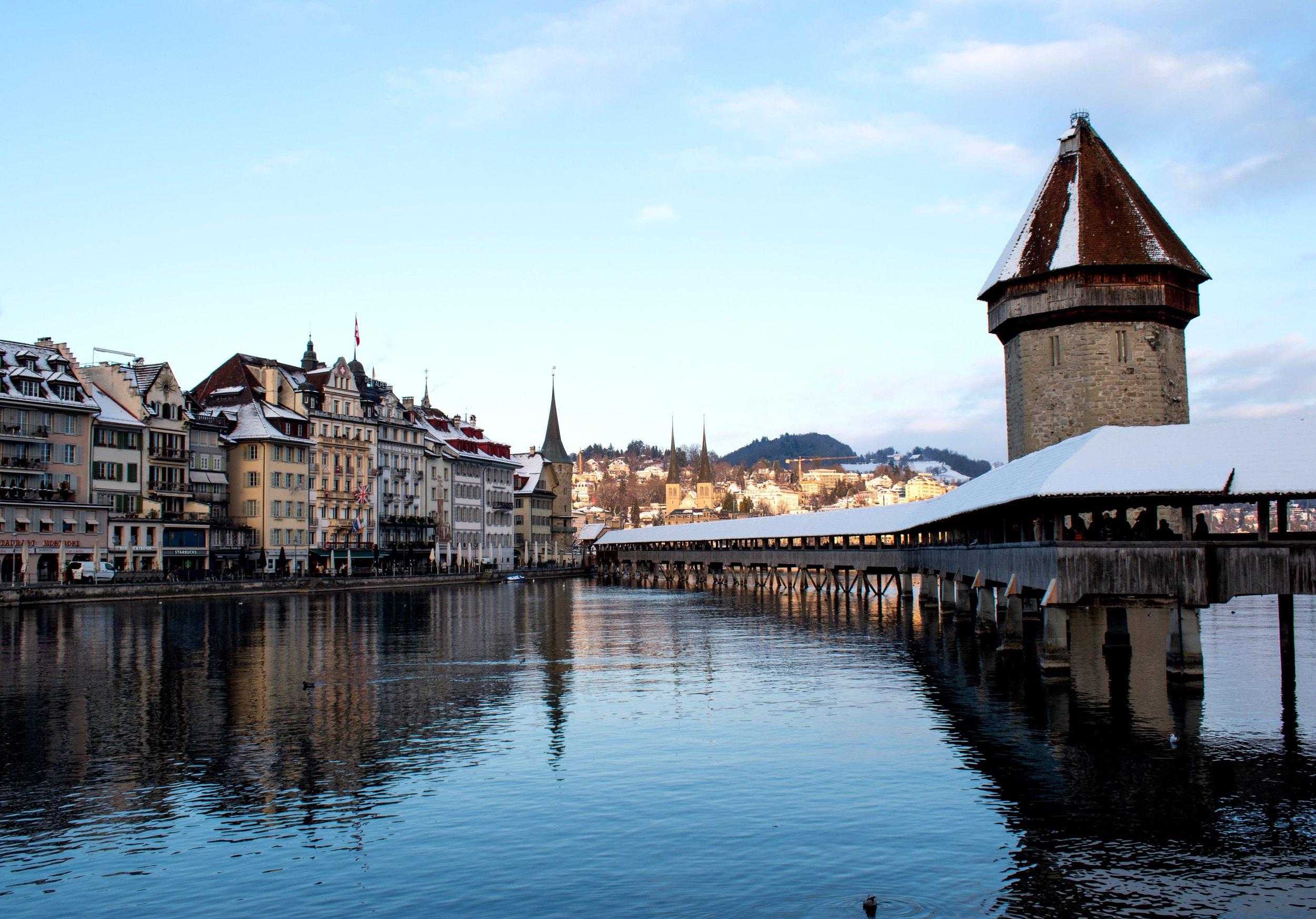
The old wooden Chapel Bridge crosses the Reuss with the stone Water Tower at its side, one of the most familiar views in Switzerland. The bridge dates from the medieval period, though much of what you walk on was rebuilt after a fire in 1993, which says something about how the town treats its past: it mends it and keeps going. Beyond the roofs there is the lake, and beyond the lake, mountains, so that a city and a landscape seem to share the same window.
Dates and opening hours for the markets change every year, so Lucerne Tourism's Christmas page (opens in a new tab) is the place to check before you plan an evening around them.
The lakefront is where the town's hospitality has always gathered. Grand hotels were built along it in the nineteenth century, when Lucerne first understood that people would travel a long way to look at water and mountains.
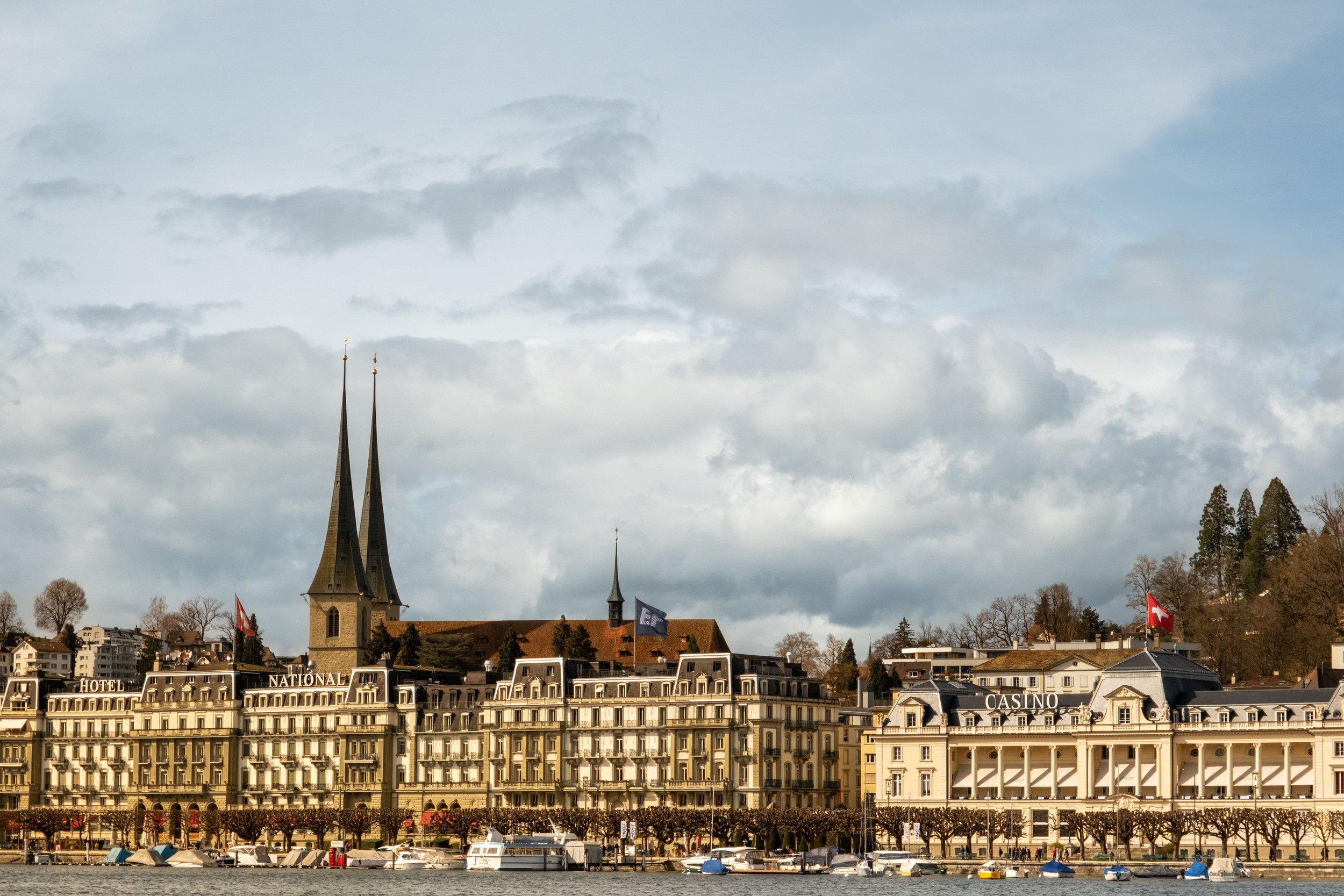
Grand Hotel National opened in 1870 on the Lucerne lakeshore, and in its early years was managed by César Ritz, with Auguste Escoffier in the kitchen. Explore Grand Hotel National (opens in a new tab).
Somewhere to Stay
The four places in this story are not alternatives so much as answers to different moods.
Zermatt offers two. One is modern, a cluster of chalets in a contemporary idiom. The other is historic, a hotel with a long history of receiving travellers. Gstaad offers the quiet confidence of chalet architecture, new buildings that know how to belong. Lucerne offers the older tradition of lakeside hospitality, where a grand building looks out over water and the town is a short walk away.
Which one suits you depends on the Christmas you are imagining. If it is a mountain seen from a terrace, choose the village. If it is the calm of a village built in timber and stone, choose the chalet. If it is a walk through lit streets and back to a hotel on the lake, choose the town. None of them asks you to be anyone other than a person who wanted a different December.
The Pleasure of Coming Inside
Every winter journey turns on the same small moment. You have been out in the cold long enough for it to get into your hands and your face, and then a door opens and the temperature changes all at once. The air smells of wood. Your coat feels suddenly too heavy. You sit for a minute in a chair beside a window and watch the light go from white to blue over snow that is no longer your concern.
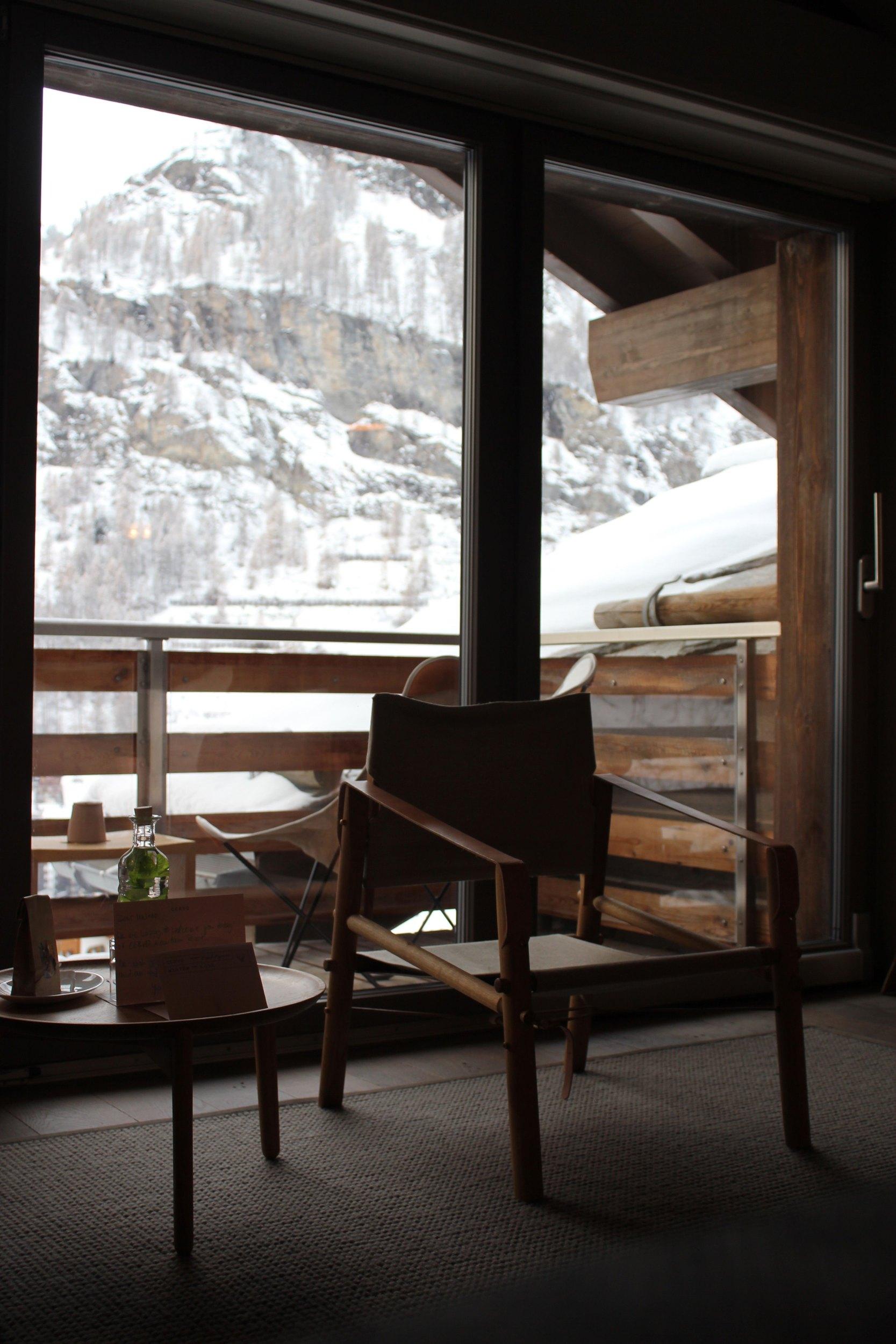
It is easy to underrate this part of a trip, because it never appears in a list of things to see. But it is the part you remember. A room at the end of a cold day does something no landmark can. It lets the day finish. It is the reason the first evening of a trip can feel like a small ceremony, and the reason a quiet hour by a window can outlast every photograph.
The mountain places of Switzerland are good at this. The cold becomes a reason to come inside, to slow down, to let a lamp and a view do the work of an entertainment.
A Christmas Remembered
Christmas somewhere else changes the rhythm of a season you thought you knew. The things that usually decide the days, the shopping, the cooking, the arrangements, are left on the other side of the world, and what remains is smaller and clearer: a walk, a meal, an evening that is allowed to take as long as it takes.
You do not bring much home from a week like that. A little snow in a photograph. A taste, perhaps. But you bring back a different sense of what December can be, and a memory of snow falling beyond a window while you sat inside and did nothing at all. It is the kind of Christmas that returns, years later, on some ordinary evening, when you turn on one lamp and the room goes quiet.
Keep this one
Save it to Pinterest.
Share this story
The Twenty Acres Club
An archive of things worth noticing. Receive our private seasonal notes on the wardrobe, the house, travel and the small details that make a life its own.