
Lapland: The Far North at Christmas
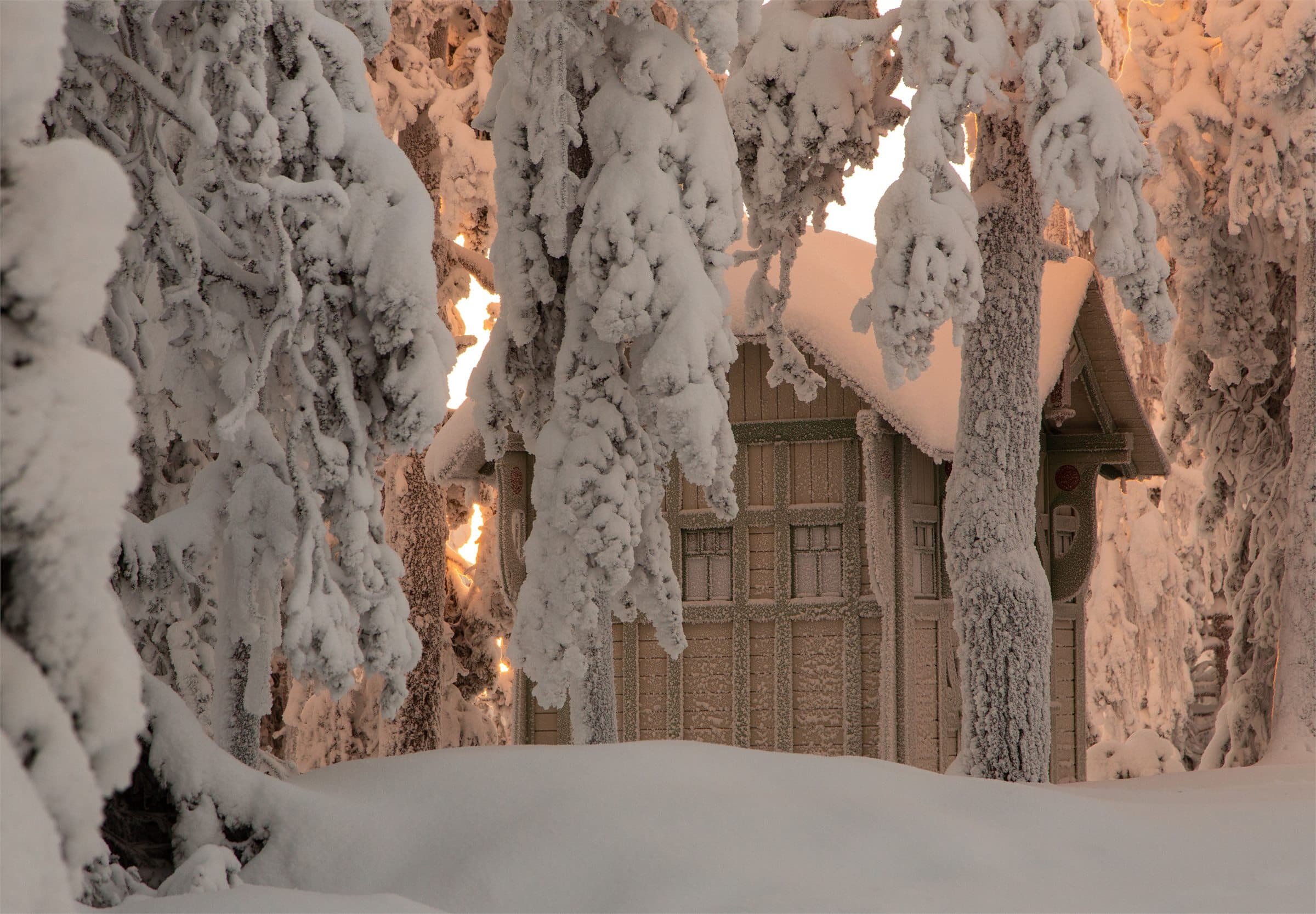
Snow-covered forests, glass-roofed hideaways and the extraordinary quiet of the Arctic, from the first winter snow to the long light of summer.
The Lapland we imagine
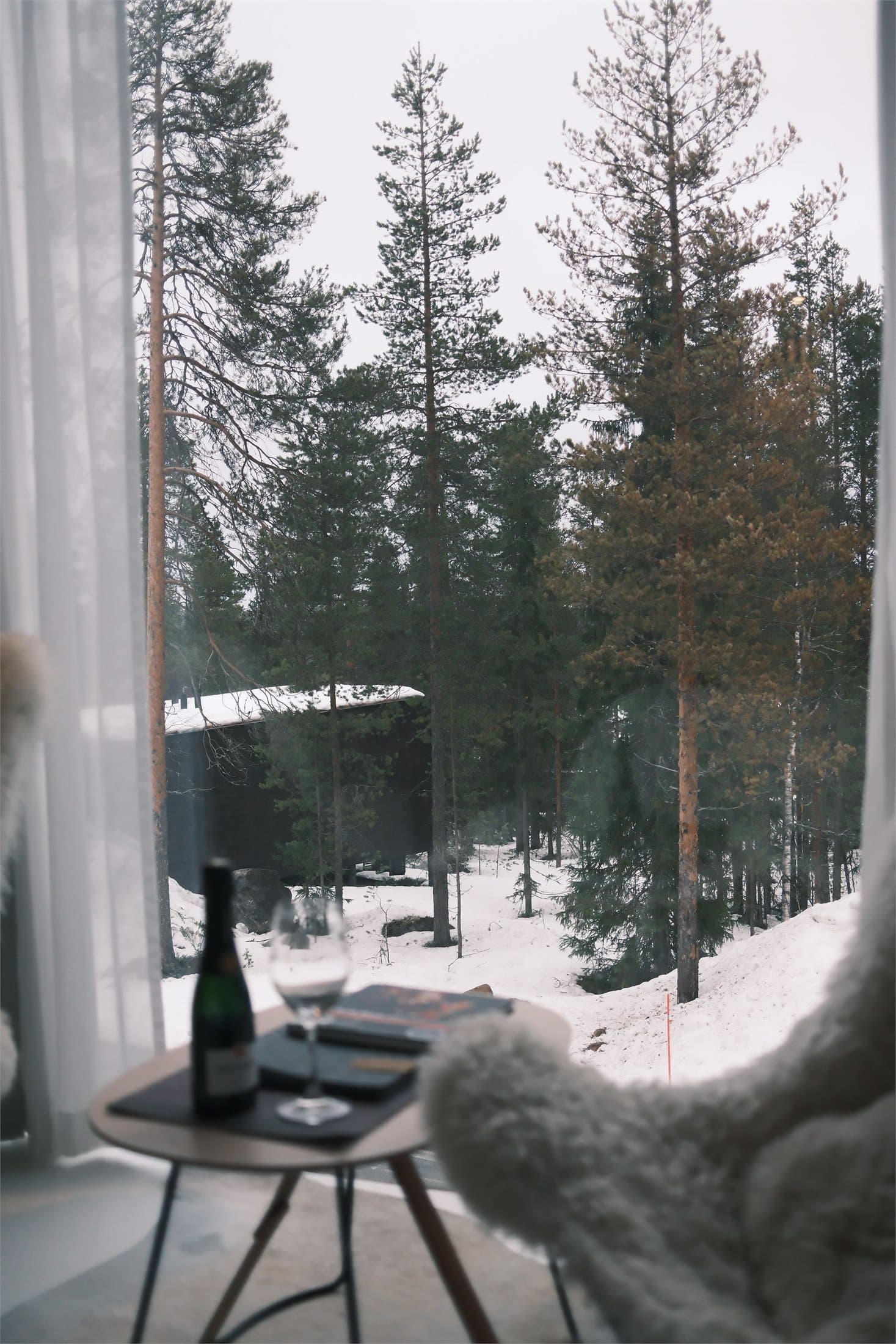
Begin with the forest. Pines stand in a thick quilt of snow, each branch carrying its own small weight, and the light between them is low and blue, as if the day had decided against reaching full height. There is almost no sound. Boots creak. Somewhere a branch lets go of its load. Then a door opens on a warm room, and the contrast is so complete that it feels like arriving twice.
That is the picture most of us carry, and for many people it begins with Christmas. The reindeer, the lanterns, the village on the Arctic Circle: Christmas is how Lapland first arrives in the imagination. But the picture is only the doorway. Lapland is a wider northern region that reaches across national borders, and this article stays within the Finnish part of it. There, the landscape has its own seasons, its own food and its own quiet, and Christmas is one of several reasons to go.
A different kind of Christmas
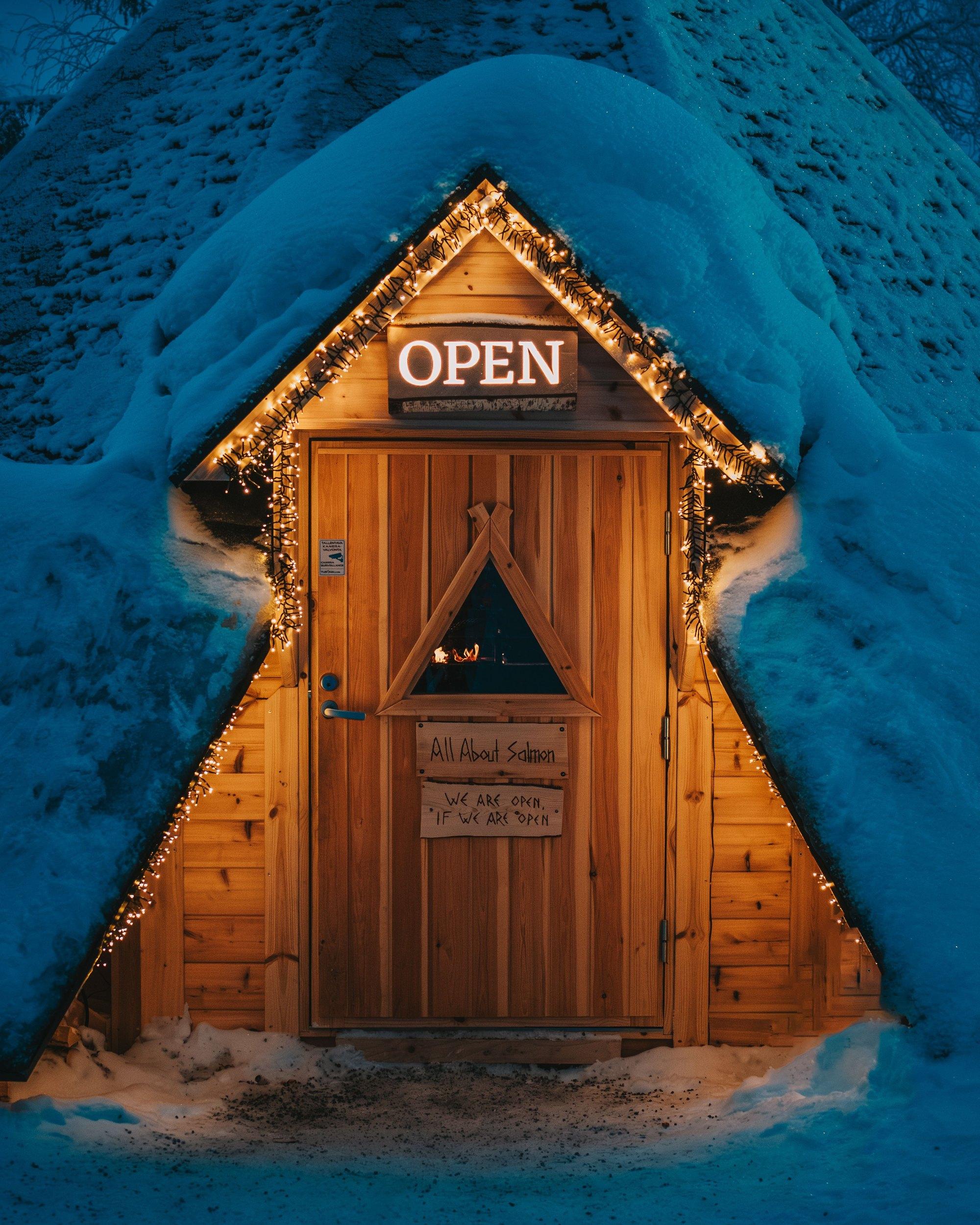
There are two ways to spend Christmas in Finnish Lapland, and they are not opposites. One is festive: a visit to Santa, a sleigh ride, a table laid for a family. The other is quieter, a few days in a warm room beside a dark forest, with time outdoors, a good meal and very little arranged.
The second is easier to underestimate. A trip like this does not need a packed itinerary. A walk in the snow before lunch, an hour in a sauna, an evening with the curtains open: these can be as memorable as any excursion, and they leave room for the landscape to do some of the work.
Be realistic about the season. Snow conditions vary from year to year and from week to week. Apukka Resort, near Rovaniemi, says plainly on its own site that the first snowfall of early winter can vanish as quickly as it arrives, which is why the resort uses stored snow and snow cannons to keep its early-season activities running. That candour is a useful reminder: the Lapland of the postcard is a possibility, not a promise.
Where to begin
Finnish Lapland is large, and where you base yourself shapes the trip. Three places are worth knowing.
Rovaniemi is the usual starting point for a Christmas journey. It is the home of Santa Claus Village on the Arctic Circle, a year-round attraction, and it has a good museum, a range of places to stay, and the easiest access to activities near a town. If the idea of Christmas in Lapland is built around Santa, it begins here. It is also a workable base for a quieter stay, because forest settings are close to the town.
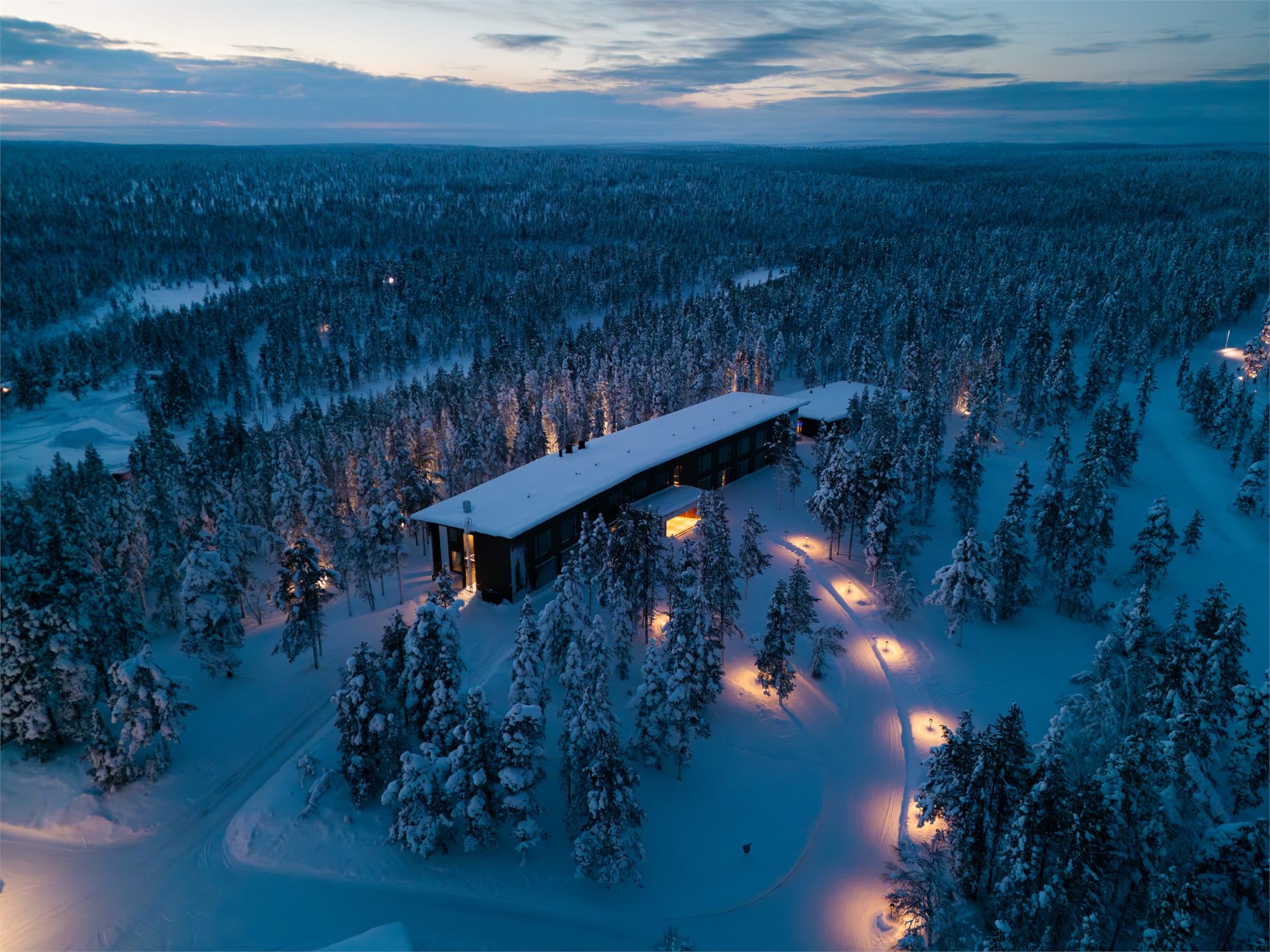
Levi is a fell resort, set among rounded northern hills rather than mountains, and it suits people who want a hotel-led stay with the landscape close at hand. About ten kilometres outside the village, on the slopes of Utsuvaara, Levin Iglut makes the most of that position.
Saariselkä and the far north are for those drawn to the wider wilderness. The hotel Gáldu stands at Laanila, just outside Saariselkä, on the edge of the Urho Kekkonen National Park. Further north means a quieter, more remote feel, though it is worth being exact: it is a resort area with services, and no stay anywhere in Lapland can promise a sight of the aurora.
Santa Claus Village is a short visit, not a whole region. A trip that sees only that sees very little of Lapland.
Places to stay
Four places, each with a different character. None is the best, and none is for everyone. They are chosen because each gives a distinct answer to the same question: what should it feel like to come back indoors? Each is linked to its own website, where current rooms, rates and seasons are kept.
Gáldu Hotel & Spa
Gáldu is the Sámi word for an ice plunge or a cold spring, and the name hints at the idea behind the hotel: that the best part of a cold day is what follows it. It is a family-run boutique hotel with 31 rooms, set at Laanila, at the edge of the Urho Kekkonen National Park, with the forest as its immediate neighbour.
The spa is outdoors, among the trees, and it is the reason the hotel belongs in this story. There are three saunas, one with a wood-burning heater and panoramic views, a steam room, a jacuzzi looking over the snowy forest, a warm pool and a cold plunge, with an indoor bar by the fireplace for the moments in between. It is a sequence more than a facility: heat, cold, quiet, and warmth again. The standard rooms have bathrooms inspired by the spa, and there are two larger suites. It is a good choice for a stay built around the north itself rather than around a programme. You can see the rooms, spa and seasons on Gáldu Hotel & Spa's own website (opens in a new tab).
Levin Iglut
Levin Iglut is a glass-roofed idea taken seriously. Twenty-seven glass igloos stand on the Utsuvaara slope, 340 metres above sea level and about ten kilometres from Levi village, and the hotel describes the position as far enough from the village lights to leave the sky uninterrupted. The experience is the roof: you lie in bed and the weather, the stars and the changing light of the season are above you.
The hotel describes itself as a family dream realised, and its own account of its season is useful. It is open from late summer to early spring, which means the same room can show you the colours of autumn or the snow of midwinter. Some igloos have a private terrace and jacuzzi, and the resort also has a villa, the Northern Lights House, for groups. Be wary of reading the name as a promise: the aurora may appear from late autumn to early spring, but it is never guaranteed, and the hotel itself says "may". The sensible approach is to choose it for the room, and to treat any display as a gift. The igloos, the villa and the seasons are described on Levin Iglut's own website (opens in a new tab).
Arctic TreeHouse Hotel
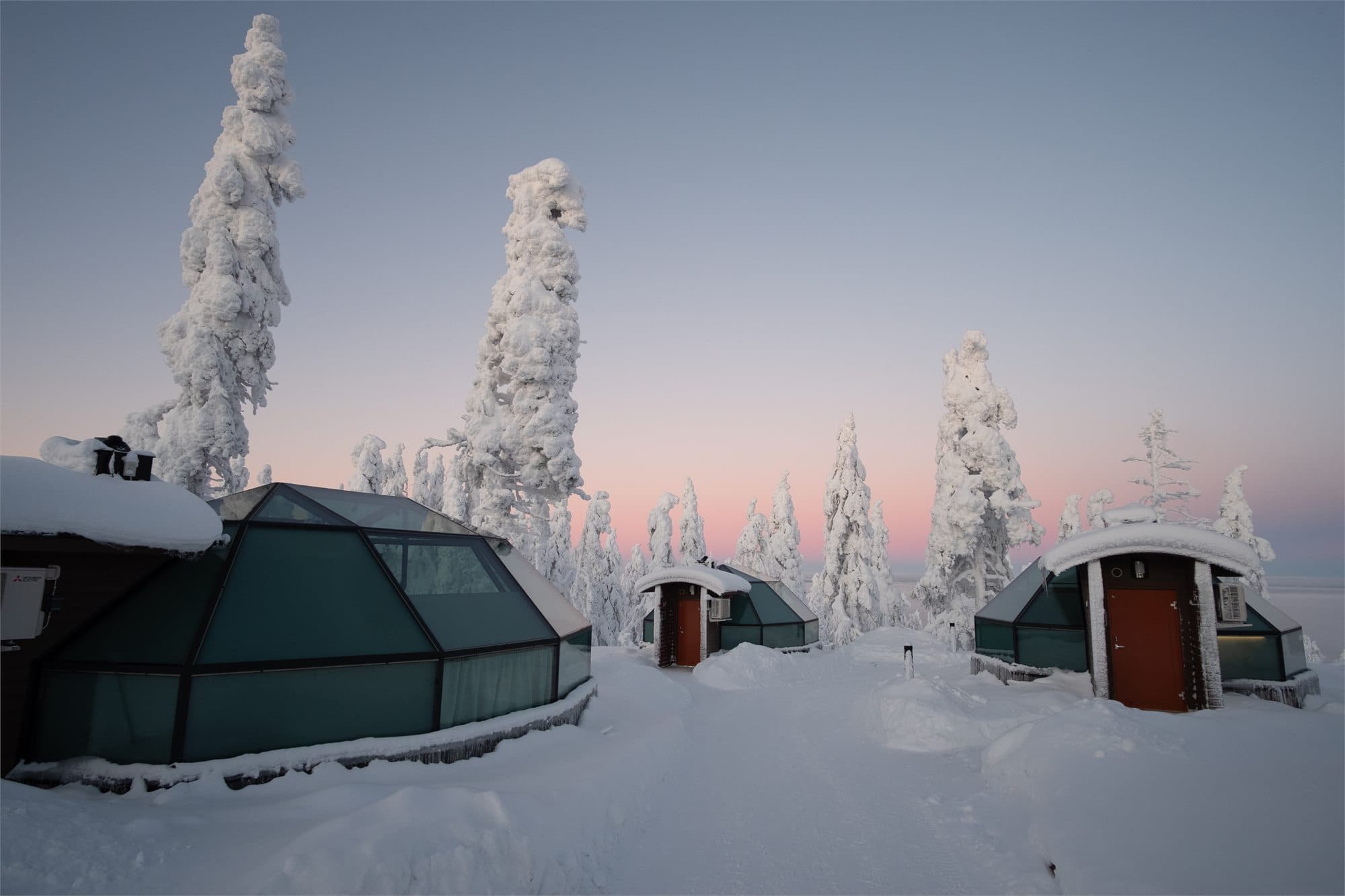
The Arctic TreeHouse Hotel is an architectural answer, and a close one: it stands on the Arctic Circle at Rovaniemi, on a steep wooded hillside, with suites that are described as nest-like and panoramic windows facing the forest and sky. The GlassHouses add a private sauna. The hotel says that Santa Claus Village is within walking distance, which makes it useful for travellers who want a design-led hotel without leaving the edge of town. It is not a wilderness retreat, and it does not pretend to be; its appeal is a considered room in a forest setting, close to Rovaniemi's services. The hotel's restaurant, Rakas, is covered below. The suites, GlassHouses and seasonal packages are on the Arctic TreeHouse Hotel's own website (opens in a new tab).
Apukka Resort
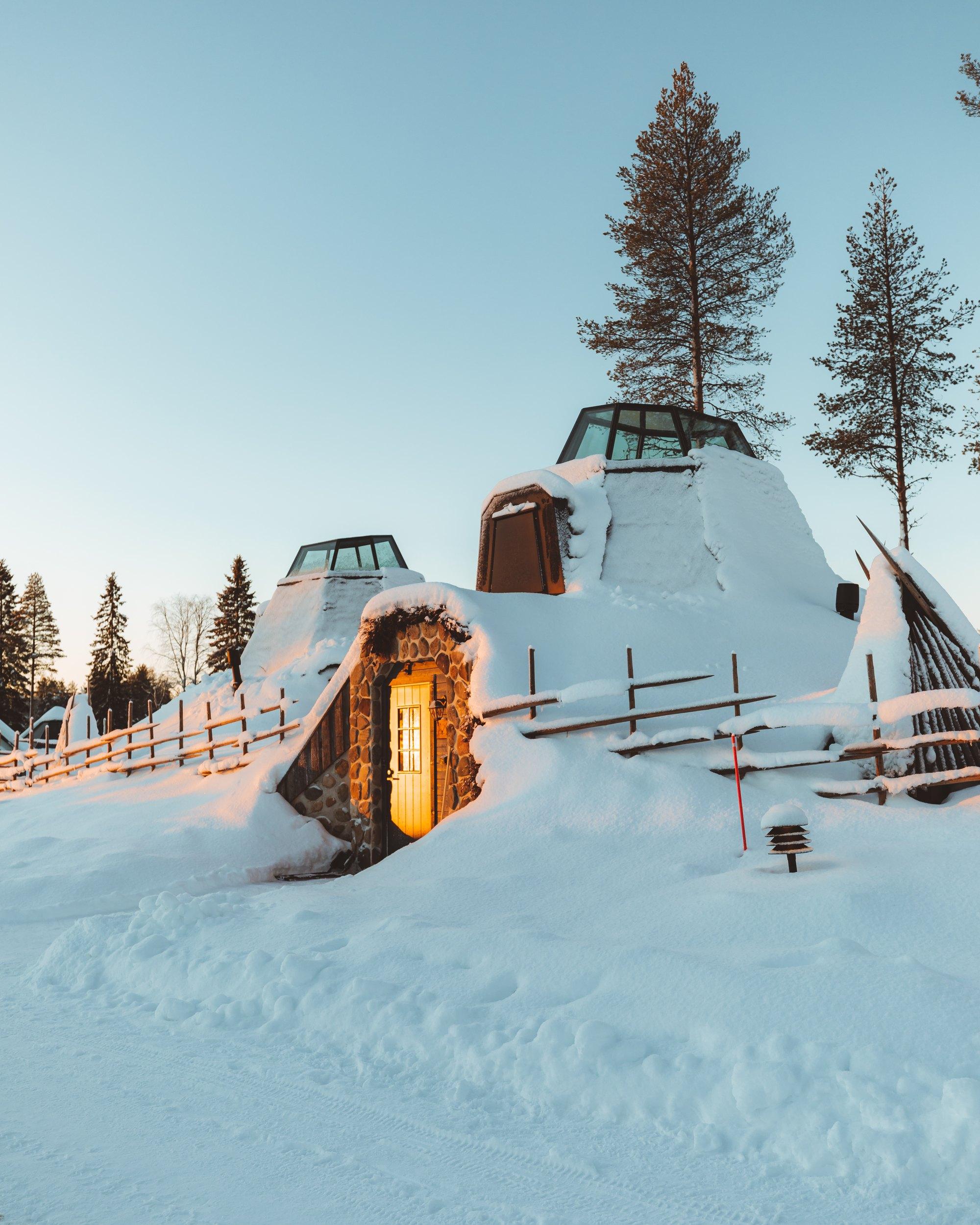
Apukka Resort stands by Lake Olkka, a short drive from Rovaniemi, in a wilderness area of lakes and forest that the resort says it has next door. The accommodation is the reason to look at it first. Its glass igloo cabins and suites have roofs of glass, so that the sky, and in the right conditions the aurora, can be watched from bed, and the resort also offers lakeview suites and a villa. Apukka Resort's Kammi Glass Igloo Suites (opens in a new tab) are one of the glass-roofed options on its own site, and a good place to see what the rooms are like and how they differ from the resort's other cabins.
What sets Apukka apart from the other three is that it is a working resort built around a programme. Gáldu is about a spa, Levin Iglut about a roof, the Arctic TreeHouse about a room in the forest. Apukka's own husky farm, restaurants and activity calendar are all within a few minutes' walk, and a shuttle bus runs between the resort, Santa Claus Village and Rovaniemi city centre. That suits people who want a stay with things to do, and who would rather not arrange each outing separately.
It also asks for some homework, because the resort's year is divided into seasons. Early winter runs for part of November, winter from December into early April, and a summer and autumn season from August to early November, with different activities in each, so an experience offered in December may not be offered in November or in August. The resort's own pages list the current dates, and its activities page (opens in a new tab) shows what runs when. Confirm anything you have set your heart on.
Photography: Apukka Resort
The experiences worth making room for
A few experiences are worth planning around. Most of the rest can be left to chance.
The northern lights. Aurora viewing depends on dark skies, clear weather and solar activity, and it cannot be booked with certainty. Hotels and operators can improve your chances by taking you away from light and cloud, but none can promise a sighting. Treat it as a bonus, not the reason for the trip.
Santa Claus Village. The village sits on the Arctic Circle outside Rovaniemi. It is not only a December attraction: it is open beyond the Christmas period, with hours that vary by season, and Visit Rovaniemi's page (opens in a new tab) has the current visitor information. It is a place for crossing the Arctic Circle and meeting Santa, and it works best as one stop among several.
Arktikum. For context, Arktikum (opens in a new tab) in Rovaniemi is a museum and science centre devoted to the Arctic. It is a good indoor hour, and it gives some background to the landscape and to the people who live in it. Check its visitor information before you go.
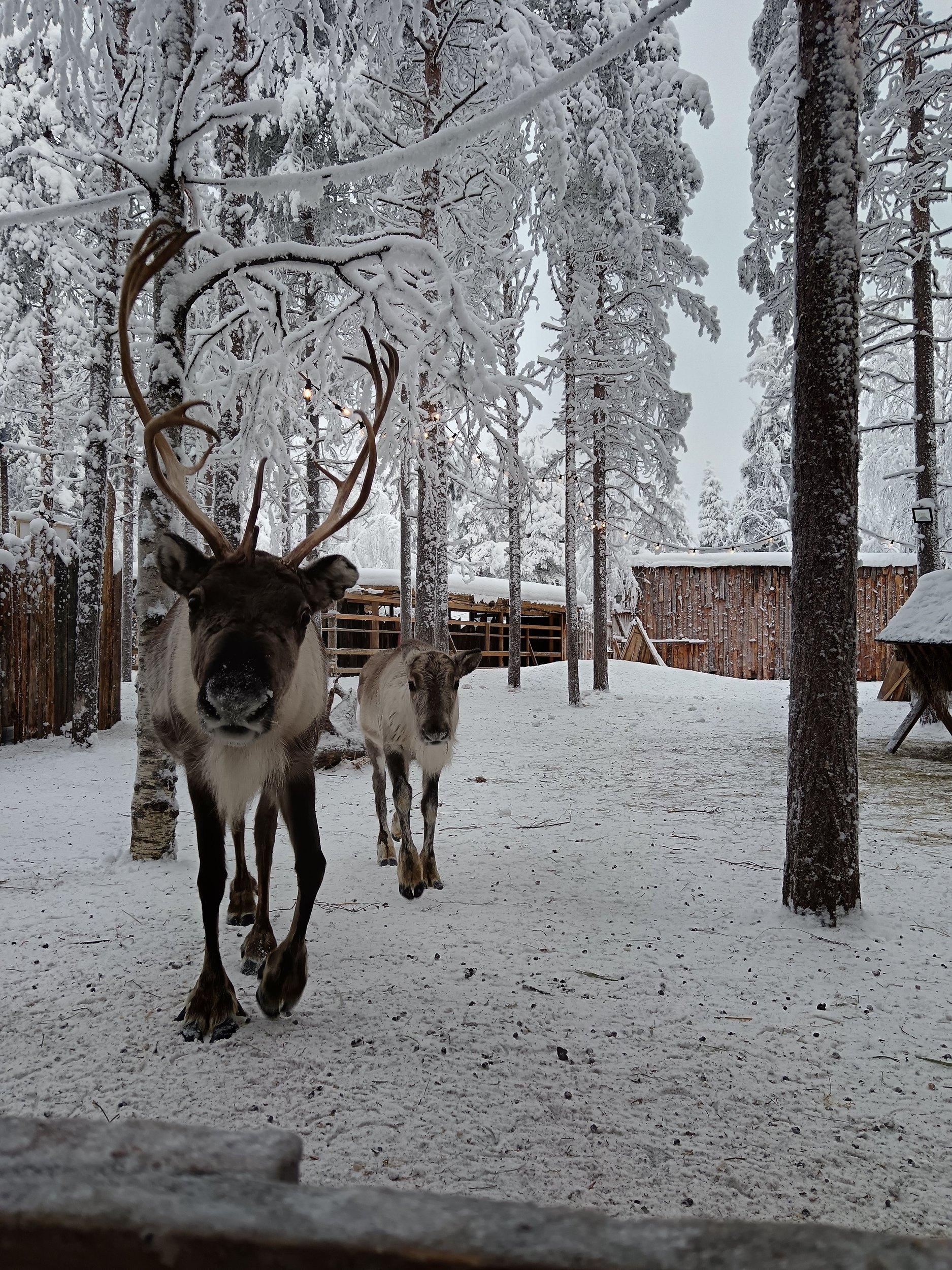
Time in the snow. Winter in Lapland offers guided activities such as husky and reindeer rides, snowmobile safaris, snowshoeing and sauna experiences, all of which resorts like Apukka list among their winter options. Choose a few rather than many, ask the provider how the animals are cared for, and confirm that an activity is running on your dates and suits your group.
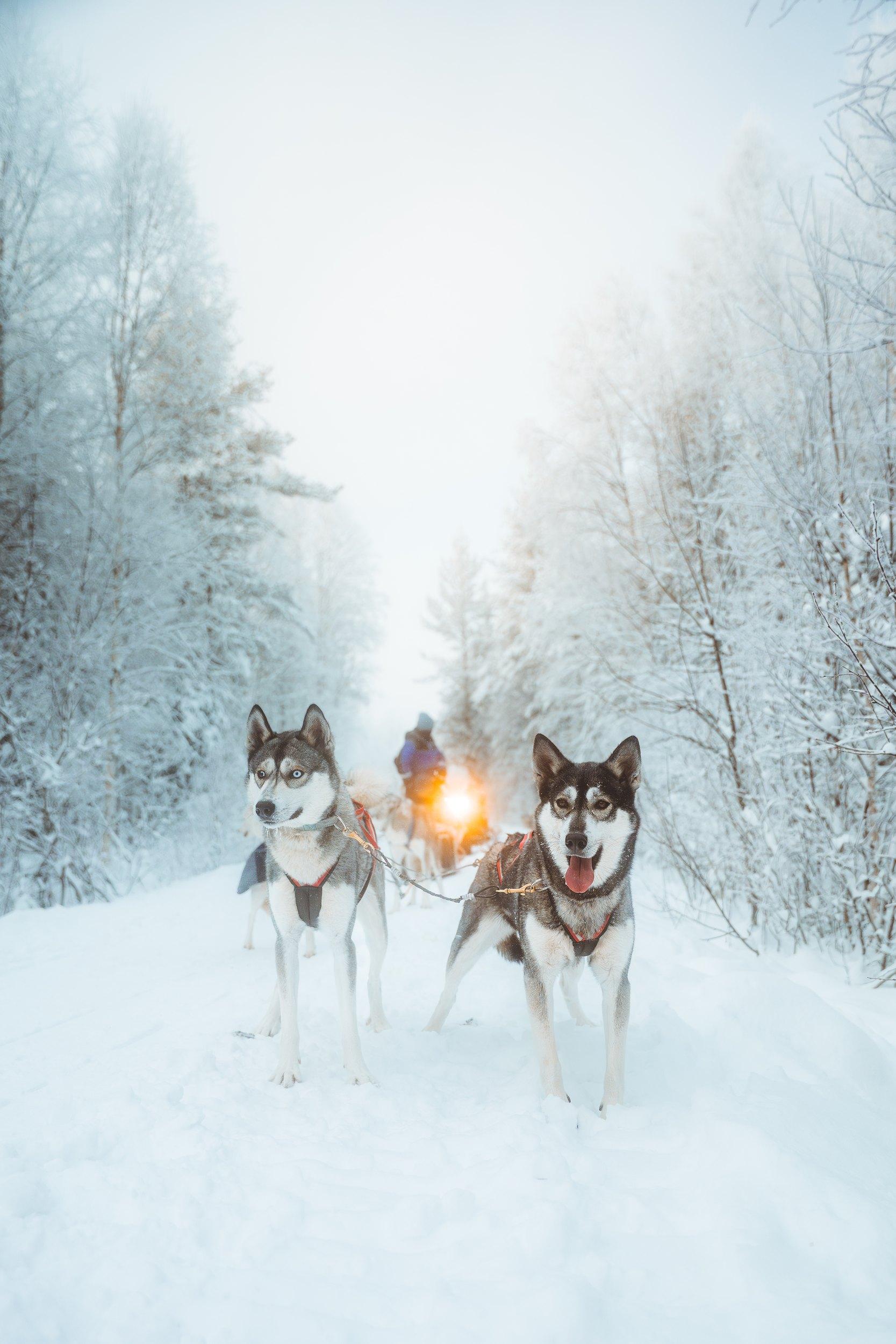
Driving a husky team. Most husky rides put you in the sled as a passenger. The Apukka Husky Adventure (opens in a new tab) is different: after instruction from the resort's mushers, guests drive the team themselves, and the guides do not drive the sleds. The page describes a two-hour outing that includes time with the dogs and a ride through the forest, and it asks for enough fitness, balance and body control to manage a sled. (The page gives the length of the ride in more than one way, so it is worth confirming the distance when you book.) Each sled is narrow and carries a combined weight limit, children travel as passengers and cannot drive, and the page sets out the rules for families.
Photography: Apukka Resort
On the ice. When the lakes freeze, fishing changes entirely. Apukka's Ice Fishing Like a Finn (opens in a new tab) is a two-and-a-half-hour outing in which guests settle on a reindeer skin while the guide drills a hole, and wait by a fire for perch and other freshwater fish. It runs from late November into early April, but only once the ice has been confirmed thick enough, so it depends on the weather. It is a quiet experience, the opposite of a husky ride, and suits people who like a slow afternoon.
Autumn: ruska. Ruska is the Finnish word for the autumn colours, when birches and low bushes in the north turn red and gold. Lapland's autumn is a different place from its winter: the air is clear and the nights are dark enough for the aurora to return. Apukka describes September as the time when the foliage turns and the aurora season begins, and Levin Iglut places the colours between late summer and November. The timing varies from year to year and from place to place, so treat the dates as approximate.
Autumn is also when the water is open again, and the pace is slower. Apukka's guided fishing tour on Lake Olkka (opens in a new tab) takes guests out for pike, perch and pike-perch, with the guide helping with technique and a snack by the campfire. The page lists it at about three and a half hours, with gear and a lifejacket provided, on selected mornings in August and September only. Late summer and autumn are also the huskies' training season, and the resort's autumn husky tours (opens in a new tab), a ride on a wheeled cart, a farm visit or a walk with the dogs, let you meet them without snow.
Summer: the midnight sun. In summer the pattern reverses. Days are long, the light is gold for hours, and the landscape is open for walking, paddling and fishing. How long the sun stays above the horizon depends on how far north you are: at the Arctic Circle it is brief, and the further north you go, the longer the period lasts. A summer visit is a different journey from a Christmas one, and a quieter way to see the same forests.
Early winter and peak winter. The seasons also divide within winter. Early winter, in November, is for people who want the first snow and a calmer atmosphere, but the snow can be thin or arrive late, and some resorts rely on stored snow to keep activities going. Peak winter, from December into March, brings the deepest snow, the full range of activities and the highest demand. Late winter has longer days and, depending on conditions, snow that is still good. Each resort keeps its own dates, so check them.
Christmas is one reason to come. It is not the only one, and a first winter visit often leaves people planning a second in another season.
Where to eat
Photography: Apukka Resort
A small, considered selection rather than a directory. All four are worth reserving ahead, and none has hours that should be assumed.
Restaurant Utsu is at Levin Iglut, in the Utsuvaara fells, and takes its character from its setting: glass-roofed architecture, panoramic views and seasonal multi-course dinner menus. The restaurant says it serves a table-served lunch in the peak season, from December to April, and that its hours vary through the year, so its own page (opens in a new tab) is the place to check. It is not open every day of the year, and its seasons follow the resort's.
Rakas is the restaurant at the Arctic TreeHouse Hotel in Rovaniemi. Its name is Finnish for "beloved," and the restaurant describes a seasonal menu built from the ingredients of the north. The restaurant has its own site (opens in a new tab), and Christmas Eve and Christmas Day arrangements are worth asking about directly.
Nili is in the centre of Rovaniemi, on Valtakatu. Visit Finland lists it as a Lappish restaurant and explains the name: a nili is an old Lappish food storage building, raised on a tree stump. The Visit Finland listing (opens in a new tab) has the details, and it is the one to choose if you want a dinner in town rather than at a hotel.
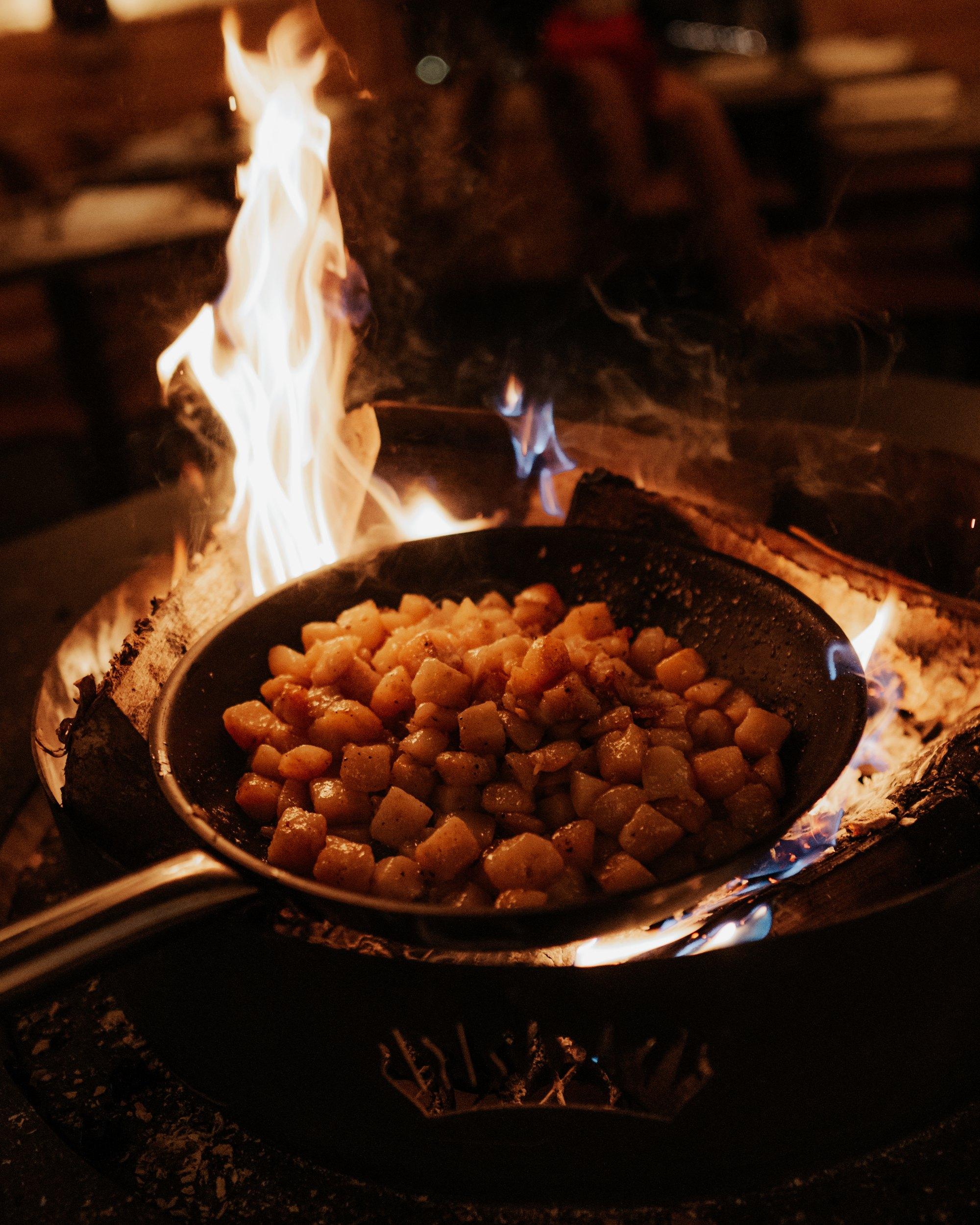
Restaurant Kota is at Apukka Resort, in a small wooden building organised around a fire. Its own page describes the scent of smoke and the warmth of the flames, and promises a place where you can come as you are, in comfortable clothes, after a day outdoors. Dinner is a three-course set meal in two seatings, and the page asks guests to reserve a table. The menu on the page at the time of writing offers choices such as smoked reindeer soup or wild mushroom soup, open-fire salmon or reindeer shank, and a blueberry cake, but the menu changes, and the restaurant opens for the season in November, so check Restaurant Kota at Apukka Resort (opens in a new tab) for what is current.
A few other places to stay
Some accommodation links below are affiliate links. If you book through them, Twenty Acres may receive a small commission at no additional cost to you.
Four stays are enough for a story, and Lapland is large. Five more are worth knowing, for travellers who want to go further north, closer to Inari, or somewhere more private.
Northern Lights Ranch is in the Levi area, at Köngäs, about 15 kilometres from Levi and 30 kilometres from Kittilä airport. It is a boutique hotel of Sky View Cabins, in six styles, each with a heated glass roof, floor-to-ceiling windows and ensuite bathroom, and most with a private outdoor hot tub. The restaurant looks out on a reindeer enclosure. It suits people who want a glass-roofed cabin in the Levi area at the scale of a small hotel. See the cabins on Northern Lights Ranch's own website (opens in a new tab), or check dates and availability (opens in a new tab).
Jávri Lodge is a small, family-run, adults-only hotel in Saariselkä, with thirteen rooms and the national park trails on its doorstep. Its rates are full board and include outdoor clothing, guided daily activities and use of the saunas and pool, with a two-night minimum, and its restaurant serves guests only. The rooms have no televisions or telephones, which is part of the point. It is for travellers who want quiet and a short list of things to do. Jávri takes bookings directly, and rooms and rates are on Jávri Lodge's own website (opens in a new tab).
Wilderness Hotel Inari stands on the shore of Lake Inari, the largest lake in Finnish Lapland, at Inarintie 2 in Inari. It offers glass-roofed Aurora Cabins, log cabins, chalets and simple rooms, and Restaurant Ukko, which serves Lappish cooking with a view of the lake. Inari is the centre of Sámi culture in Finland, and the hotel lists a guided visit to the Sámi Museum Siida and a Sámi handicraft visit among its activities. It is open through the year except May. Rooms and seasons are on the Wilderness Hotel Inari page (opens in a new tab), and you can check dates and availability (opens in a new tab).
Kakslauttanen Arctic Resort stands in the wilderness south of Saariselkä, at Kiilopääntie 9, and has been operating since 1974. Its glass igloos are available through the northern lights season, which the resort puts at roughly late August to the end of April. It also offers kelo-glass igloos, which pair a log chalet with a glass-roofed bedroom, as well as log cabins, a century-old traditional house, a planetarium and an igloo tower. The resort is split into an East and a West Village, so it is worth checking which you are booking. It suits travellers who want the far north for its own sake. Rooms, seasons and dining are on Kakslauttanen's own website (opens in a new tab), and you can check dates and availability (opens in a new tab).
Octola Private Wilderness is a different proposition: a private estate near Rovaniemi, described by outside sources as about 300 hectares and roughly 20 minutes from the airport. Its own site presents it as an off-the-grid retreat built around privacy and local ingredients, and at the time of writing it asks visitors to join a waitlist or its membership, so it is a place to enquire about rather than to browse. It is for a family or small group that wants seclusion more than a programme. Enquiries go through the estate's own site, Octola Private Wilderness (opens in a new tab).
Planning the Journey
Lapland is a long way from many travellers' starting points, so the route deserves as much thought as the stay itself. Connections, journey times and seasonal services vary, and it is worth allowing room for delays rather than planning every transfer too tightly.
Getting there. Depending on where you begin your journey, you may connect through Helsinki or another European hub before continuing north. Check current routes for your departure city and travel dates, and leave generous time between connections. Finnair's Finland destination page (opens in a new tab) is one place to begin exploring services to Finland.
Which airport. Finavia (opens in a new tab) operates the airports of Lapland, and the three most likely to matter are Rovaniemi, Kittilä and Ivalo. The right one depends on where you are staying. Rovaniemi suits the hotels near the town. Levin Iglut names Kittilä and Rovaniemi as its options for reaching Levi. For Saariselkä, Ivalo is the airport most often used, but it is worth asking Gáldu about transfers. Not every airport serves every hotel equally conveniently, so work backwards from where you plan to sleep.
The night train. VR's night trains (opens in a new tab) run between Helsinki and Rovaniemi and are an alternative worth investigating, with the pleasure of waking up in the north. Check current routes, dates and timetables, and remember that you will still need a transfer to your hotel. Levin Iglut notes that Levi guests who travel by train go to Rovaniemi or Kolari first, then continue by bus, taxi or rental car.
Choosing a season. The right season depends on the trip you imagine.
Christmas and peak winter bring a festive atmosphere, the fullest range of winter activities and the highest demand. Late winter is for those who want the snowy landscape with a calmer feel, depending on conditions. Autumn brings ruska and a different palette. Summer brings long days, the midnight sun and outdoor exploration. None of these can promise particular weather, snow or aurora on a given date.
A note on booking
Christmas and the weeks around it are among Lapland's busiest periods, so it is worth arranging accommodation well ahead, particularly if you have a particular hotel or experience in mind. Before confirming a stay, check what is included in the rate: transfers, meals and guided activities may be offered separately or as part of a package. Restaurant opening dates can vary with the season, and popular tables are worth reserving in advance.
The four featured stays, Gáldu, Levin Iglut, the Arctic TreeHouse Hotel and Apukka, link to their own websites, where current rooms, rates and seasons are kept. Of the five further places, Jávri Lodge and Octola link only to their own sites, while Northern Lights Ranch, Wilderness Hotel Inari and Kakslauttanen also have a link marked as an affiliate link for checking dates. The map above is a separate, wider search of Finnish Lapland; it does not include every property named here. If you are still deciding where to stay more broadly, you can also explore accommodation in Finnish Lapland (opens in a new tab) and compare options for your dates. Check cancellation terms carefully, allow generous time for transfers between destinations, and confirm transport connections before finalising your itinerary. Winter weather can affect travel, while some activities operate only during particular months. The northern lights are never guaranteed, so it is best to choose a stay you would enjoy even if the sky remains cloudy.
Travel with context
Lapland is not only a landscape. It sits within the Sámi homeland, and the Sámi are the only Indigenous people in the European Union, with communities in Finland, Sweden, Norway and Russia. Their culture is not a Christmas decoration, and it is not one uniform thing.
The Sámi Parliament of Finland has published a responsible visitors' guide (opens in a new tab), based on ethical guidelines it adopted in 2018. Its starting point is simple: visitors are guests in a place with its own customs, and the wellbeing of the people who live there comes first. The Parliament distinguishes between tourism led from within the Sámi community and tourism that borrows Sámi imagery from outside it, and it warns that the second has too often produced a misleading picture of Sámi life. It also notes that Sámi costume carries deep meaning and that its use is tied to Sámi background, which is a reason to be wary of anything that offers it as a costume.
In practice, this means seeking out experiences developed in genuine collaboration with Sámi communities, favouring Sámi-led businesses where appropriate, and being wary of offerings that reduce a living culture to a performance. The region is a home as well as a destination, with customs, livelihoods and traditions that continue beyond the visitor season. The Sámi Parliament's guide is worth reading before you go.
Lapland beyond Christmas
Christmas may be the season that first brings Lapland to mind, but the landscape belongs to every season. In autumn, the forests turn red and gold; in summer, the light lingers long past midnight. Winter is one way to know this place, but it is not the only one.
What stays, when you come home, is quieter: the sound of the forest after a snowfall, the soft glow of a lantern against the dark, and the first minute of warmth after the cold.
Keep this one
Save it to Pinterest.
Share this story
The Twenty Acres Club
An archive of things worth noticing. Receive our private seasonal notes on the wardrobe, the house, travel and the small details that make a life its own.